


China cut import tariffs on a wide range of goods, including food, consumer items and parts for manufacturing smartphones, continuing Beijing’s drive to lower trade barriers and spur domestic demand.
The Chinese Ministry of Finance yesterday published a list of 859 types of products that will enjoy tariffs lower than the standard rates for this year. It included frozen pork as a key item aimed at alleviating shortages of the meat due to the outbreak of African swine fever.
Pork imports jumped 151 percent from a year earlier to 229,707 tonnes last month, Chinese customs data showed. Shipments in the first 11 months increased almost 58 percent to 1.7 million tonnes.
Chinese buyers might not be able to source enough pork from Europe, as extra supplies might have almost dried up. China is to crack down on hoarding meat and market price manipulation, and boost sales from reserves to ensure enough supplies ahead of the Lunar New Year holidays, Chinese Vice Premier Hu Chunhua (胡春華) said at a meeting over the weekend.
China is to cut pork import tariffs to 8 percent from 12 percent Wednesday next week, the ministry said.
Overall imports of the listed items totaled US$389 billion last year, according to Bloomberg calculations.
The provisional levies on the items are to take effect from Wednesday next week.
While the move is not directly related to the US-China trade dispute, it supports the government’s claim to be further opening its economy as it pursues a deal with the administration of US President Donald Trump. With economic growth seen slowing next year to 6 percent or below, officials also have an interest in lowering the cost of imported consumer goods.
Since 2017, China has been cutting import tariffs on consumer goods including wine, baby products, whiskey and seafood, items that remain on the expanded list for next year. Drugs for treating asthma and diabetes were added to the list. Smartphone camera sensors, glass used in liquid crystal displays and organic LED screens found in high-end TVs and smartphones, and semiconductor testing and sorting equipment are also included.
“The move in lowering import tariffs reflects that the government wants to reaffirm its stance to the world on freer trade amid the trade war,” said Gary Ng (吳卓殷), an economist at Natixis in Hong Kong. “Domestically, lowering import tariffs are helpful in reducing business and consumer costs.”
Separately, at the weekend the Chinese government released further measures to shore up the private sector, including opening previously closed industries to non-state investors.
The list allows lower tariffs on goods coming from WTO members. For countries with which China has free-trade agreements, duties can be lower still. They include New Zealand, Peru, Costa Rica, Switzerland, Iceland, Singapore, Australia, South Korea, Georgia, Chile and Pakistan, the ministry said in a statement.
The tariff reduction measures “facilitate the open economy to a new level,” the statement said.
China’s import growth has stalled this year amid the broader slowdown in the economy, helping to widen the trade surplus. As part of the “phase one” trade deal agreed with the US this month, the nation has committed to ramping up purchases from there by as much as US$200 billion over the next two years.

The demise of the coal industry left the US’ Appalachian region in tatters, with lost jobs, spoiled water and countless kilometers of abandoned underground mines. Now entrepreneurs are eyeing the rural region with ambitious visions to rebuild its economy by converting old mines into solar power systems and data centers that could help fuel the increasing power demands of the artificial intelligence (AI) boom. One such project is underway by a non-profit team calling itself Energy DELTA (Discovery, Education, Learning and Technology Accelerator) Lab, which is looking to develop energy sources on about 26,305 hectares of old coal land in
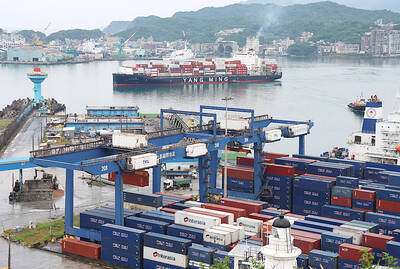
Taiwan’s exports soared 56 percent year-on-year to an all-time high of US$64.05 billion last month, propelled by surging global demand for artificial intelligence (AI), high-performance computing and cloud service infrastructure, the Ministry of Finance said yesterday. Department of Statistics Director-General Beatrice Tsai (蔡美娜) called the figure an unexpected upside surprise, citing a wave of technology orders from overseas customers alongside the usual year-end shopping season for technology products. Growth is likely to remain strong this month, she said, projecting a 40 percent to 45 percent expansion on an annual basis. The outperformance could prompt the Directorate-General of Budget, Accounting and

Netflix on Friday faced fierce criticism over its blockbuster deal to acquire Warner Bros Discovery. The streaming giant is already viewed as a pariah in some Hollywood circles, largely due to its reluctance to release content in theaters and its disruption of traditional industry practices. As Netflix emerged as the likely winning bidder for Warner Bros — the studio behind Casablanca, the Harry Potter movies and Friends — Hollywood’s elite launched an aggressive campaign against the acquisition. Titanic director James Cameron called the buyout a “disaster,” while a group of prominent producers are lobbying US Congress to oppose the deal,
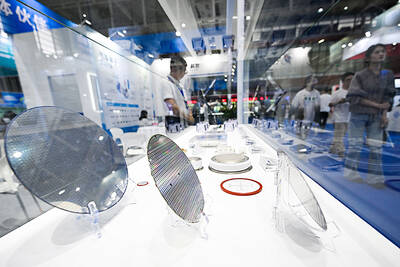
Two Chinese chipmakers are attracting strong retail investor demand, buoyed by industry peer Moore Threads Technology Co’s (摩爾線程) stellar debut. The retail portion of MetaX Integrated Circuits (Shanghai) Co’s (上海沐曦) upcoming initial public offering (IPO) was 2,986 times oversubscribed on Friday, according to a filing. Meanwhile, Beijing Onmicro Electronics Co (北京昂瑞微), which makes radio frequency chips, was 2,899 times oversubscribed on Friday, its filing showed. The bids coincided with Moore Threads’ trading debut, which surged 425 percent on Friday after raising 8 billion yuan (US$1.13 billion) on bets that the company could emerge as a viable local competitor to Nvidia


 RSS
RSS