


Local electronic component maker Lite-On Technology Corp (光寶科技) yesterday said it was optimistic about its Smart Life and Applications strategic business group, predicting 30 percent year-on-year growth in sales next year.
The group, which contributes 15 to 20 percent of Lite-On’s overall revenue, is benefiting from growing market demand for smart video surveillance systems, thanks to various applications in artificial intelligence and Internet of Things technologies, a company official told the Taipei Times by telephone yesterday, citing remarks made by Taylor Yang (陽廷瑞), president of the group, a day earlier.
The group was boosted by orders transferred from Chinese video surveillance product manufacturer Hangzhou Hikvision Digital Technology Co Ltd (海康威視) amid the US-China trade dispute, the official, surnamed Chang (張), cited Yang as saying.
“We expanded the production capacity at our Kaohisung plant a while back,” Chang said, adding that the company has clear order visibility for smart video surveillance systems that reaches the second half of next year.
With telecommunications companies rolling out 5G base stations and applications, the unit is focusing on antenna calibration solutions, which reduce maintenance costs for base stations, Lite-On said.
Facing international competitors such as Nokia Oyj, Huawei Technologies Co (華為) and Ericsson AB, Chang said that Lite-On strives to remain competitive through lower pricing and better services, while seeking to integrate hardware manufacturing with software design.
The group also has an LED streetlight segment, with sales under the brand Leotek contributing about 10 percent of the unit’s revenue, Chang said.
The group's networking segment and Internet communications module segment contribute another 30 percent apiece, while industrial automation makes up the remaining 5 percent, Chang said.

The demise of the coal industry left the US’ Appalachian region in tatters, with lost jobs, spoiled water and countless kilometers of abandoned underground mines. Now entrepreneurs are eyeing the rural region with ambitious visions to rebuild its economy by converting old mines into solar power systems and data centers that could help fuel the increasing power demands of the artificial intelligence (AI) boom. One such project is underway by a non-profit team calling itself Energy DELTA (Discovery, Education, Learning and Technology Accelerator) Lab, which is looking to develop energy sources on about 26,305 hectares of old coal land in

Taiwan’s exports soared 56 percent year-on-year to an all-time high of US$64.05 billion last month, propelled by surging global demand for artificial intelligence (AI), high-performance computing and cloud service infrastructure, the Ministry of Finance said yesterday. Department of Statistics Director-General Beatrice Tsai (蔡美娜) called the figure an unexpected upside surprise, citing a wave of technology orders from overseas customers alongside the usual year-end shopping season for technology products. Growth is likely to remain strong this month, she said, projecting a 40 percent to 45 percent expansion on an annual basis. The outperformance could prompt the Directorate-General of Budget, Accounting and

Netflix on Friday faced fierce criticism over its blockbuster deal to acquire Warner Bros Discovery. The streaming giant is already viewed as a pariah in some Hollywood circles, largely due to its reluctance to release content in theaters and its disruption of traditional industry practices. As Netflix emerged as the likely winning bidder for Warner Bros — the studio behind Casablanca, the Harry Potter movies and Friends — Hollywood’s elite launched an aggressive campaign against the acquisition. Titanic director James Cameron called the buyout a “disaster,” while a group of prominent producers are lobbying US Congress to oppose the deal,
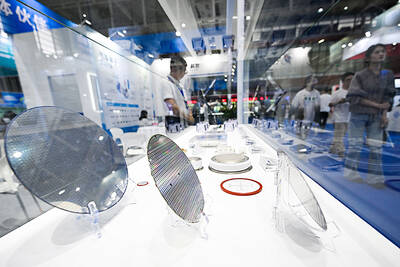
Two Chinese chipmakers are attracting strong retail investor demand, buoyed by industry peer Moore Threads Technology Co’s (摩爾線程) stellar debut. The retail portion of MetaX Integrated Circuits (Shanghai) Co’s (上海沐曦) upcoming initial public offering (IPO) was 2,986 times oversubscribed on Friday, according to a filing. Meanwhile, Beijing Onmicro Electronics Co (北京昂瑞微), which makes radio frequency chips, was 2,899 times oversubscribed on Friday, its filing showed. The bids coincided with Moore Threads’ trading debut, which surged 425 percent on Friday after raising 8 billion yuan (US$1.13 billion) on bets that the company could emerge as a viable local competitor to Nvidia


 RSS
RSS