

Hon Hai Precision Industry Co (鴻海精密), the biggest assembler of Apple Inc’s iPhones, yesterday said it has launched an internal investigation following reports of fraud at its plant in Zhengzhou, China.
Hon Hai, known internationally as Foxconn Technology Group (富士康科技集團), said in a statement that, based on company policy, it would not comment on market rumors about its clients or products.
The company has begun assessing its standard operating procedures while authorities investigate the matter, Hon Hai said, adding that it would not indulge employees implicated in such acts.
The statement came after the Chinese-language online Mirror Media reported on Tuesday that top managers at Hon Hai have been involved in misappropriating assets since at least 2016, by selling defective iPhone casings, originally meant for destruction, under the table.
Citing an anonymous Taiwanese vendor who played the role of middleman, the report said the casings were mended and resold to wholesalers, who would then distribute them to Chinese and Taiwanese retailers.
The vendor was quoted as saying that some iPhone components from the Zhengzhou plant were rendered defective on purpose so that they could be distributed on the black market.
With an 80 percent gross margin for such transactions, a total of about NT$1.3 billion (US$43 million) in profits were made, the report said.
Apple is purportedly aware of the matter as the vendor e-mailed its chief executive officer, Tim Cook, about the situation six months ago, after having a fallout with a Hon Hai manager surnamed Wu (吳), the report said.
The vendor had also told Hon Hai executives of the matter, but to no avail, it said.
According to an e-mailed response from Apple to the vendor, the US-based firm has launched an investigation through its business assurance and audit team in the Asia region, the report said.
However, Apple has yet to follow up on the matter and has to date failed to reply to the vendor’s demand for compensation for reporting the matter, it said.
Hon Hai founder and former chairman Terry Gou (郭台銘) yesterday said that he was oblivious to the situation, as he has left the company, the Chinese-language Liberty Times (the Taipei Times’ sister newspaper) reported.
Hon Hai executives should shoulder the responsibility, Gou said.
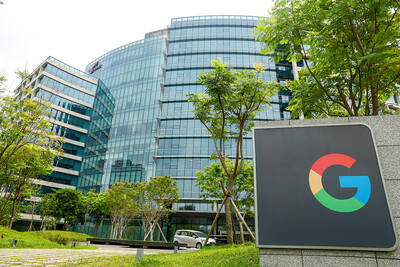
READJUSTMENT? Despite the rumors, a senior Google official said that the company plans to expand its AI research center in Taipei’s Shilin District Google Taiwan is reducing its workforce as the company continues to adjust operations to improve efficiency and focus resources on core goals, the Chinese-language Liberty Times (sister paper of the Taipei Times) reported yesterday. The Alphabet Inc unit said the organizational adjustments have begun and would continue, even though it did not put a figure on the number of potential job cuts or specify the affected departments in its Taiwan operations. The company’s response came after rumors circulated on social media about major job cuts at Google Taiwan. Some posts said the downsizing would target the company’s consumer electronics-related departments
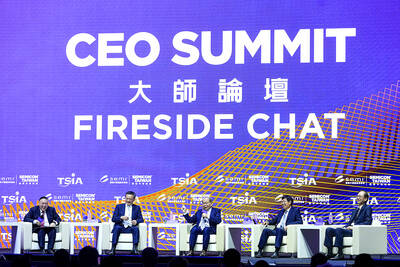
Taiwan Semiconductor Manufacturing Co (TSMC, 台積電) is accelerating capacity expansion fivefold this year, but it is still unable to keep up with the booming demand for artificial intelligence (AI), TSMC deputy cochief operating officer Cliff Hou (侯永清) said yesterday. This year alone, the company is building 25 chip manufacturing fabs and advanced packaging facilities worldwide, including 13 plants in Taiwan, which is unprecedented, Hou said at a CEO Summit fireside chat at Semicon Taiwan in Taipei. In the past, the company was able to build five or six factories a year, said Hou, who is also chairman of the Taiwan Semiconductor Industry
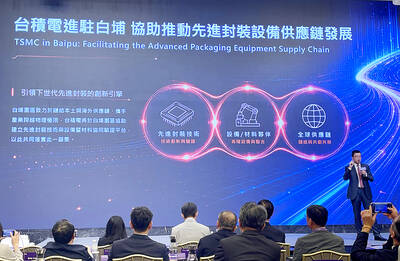
EXPANSION: The 3-hectare site would include small clean rooms and laboratories as well as a world-class training base for advanced packaging talent, the company said Taiwan Semiconductor Manufacturing Co (TSMC, 台積電) is to establish a presence in the Baipu Industrial Park (白埔產業園區) in Kaohsiung to accelerate the testing and validation of semiconductor materials and equipment, a company executive said on Tuesday. The company is working with the Ministry of Economic Affairs and the Kaohsiung City Government on the plan, which is expected to improve validation efficiency by 25 to 50 percent, TSMC vice president of advanced packaging technology and service Jun He (何軍) said at a 3D IC global summit held ahead of the Semicon Taiwan trade show, which opened in Taipei yesterday. TSMC would also conduct
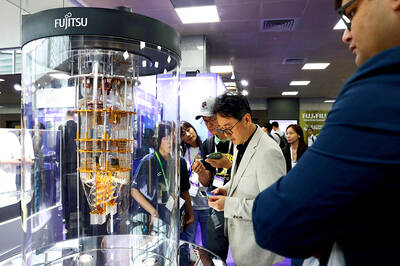
Visitors look at a 64-qubit superconducting quantum computer on display at the Fujitsu booth at the Semicon Taiwan trade show in Taipei yesterday.


 RSS
RSS