


Yandex NV, Russia’s largest Internet firm, said its self-driving vehicles have passed 1 million miles (1.6 million kilometers) in fully autonomous driving mode since it started testing the technology in December 2017, joining an elite group in the emerging robotaxi industry.
The milestone matters for Yandex’s quest to compete with the likes of Alphabet Inc’s Waymo for a share of the market, which UBS Group AG says could exceed US$2 trillion by 2030.
Getting to 1 million miles indicates the company is on its way to verifying its technology — showing that it is reliable and safe. That is key for getting regulators to accept vehicles in the streets with no one at the wheel.
Most of the company’s mileage was driven on public roads in Moscow, including in the snow and rain, and in Tel Aviv, Israel, known for “haphazardly parked cars in the city’s intense heat,” Yandex said in a statement on Thursday.
The company already runs Russia’s largest ride-hailing service, Yandex.Taxi, which posted 16.4 billion rubles (US$260 million) of revenue in the first half of the year and turned profitable in the second quarter.
The other large players in the self-driving industry include Waymo, GM Cruise, Baidu Inc (百度) and Uber Technologies Inc.
Yandex plans to expand its self-driving fleet to 1,000 vehicles within two years from about 50, which would enable it to run 1 million miles a week, Yandex autonomous business head Dmitry Polishchuk said in an interview.
Polishchuk, 34, moved into the division’s top job three years ago after heading Yandex’s browser division and overseeing Navigator, its geolocation app.
He is a graduate of the Russian Federal Security Service Institute of Cryptography, Communications and Computer Science.
Yandex is working with regulators to allow a pilot project in two cities — Innopolis and Skolkovo — to test rides with no engineer on board, he said.
Now, when people there order a self-driving ride from the Yandex.Taxi app, an engineer sits in the front passenger seat with a red emergency button.
Companies in the industry can struggle to meet their deadlines for getting their vehicles on the road.
The software can be a greater technological challenge than many had anticipated, while developers and governments are still grappling with the human cost of development after an Uber test vehicle killed a pedestrian crossing a road in Arizona in March last year.
The economics of a self-driving taxi fleet that operates as much as 24 hours a day could now compete with the cost of a human-operated taxi service, Yandex founder and chief executive Arkady Volozh said at a business conference in Yerevan, Armenia, earlier this month.
The annual cost of the autonomous technology that gets added on to a vehicle has dropped from about US$50,000 last year to US$30,000 — the same as the average annual wage bill for a team of drivers operating a single taxi for about 18 hours a day.
The company believes the cost of the self-driving apparatus will fall further.
Since customers are unlikely to pay significantly higher prices for self-driving vehicles, the most logical model for companies in the industry is to operate fleets of vehicles to carry passengers, Polishchuck said.
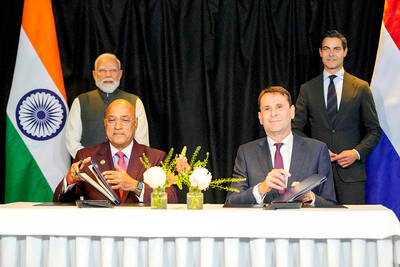
NEW MARKET: The partnership opens up India to the Dutch company, which already has a strong hold in the semiconductor market of South Korea, Taiwan and China ASML Holding NV entered into a partnership agreement with Tata Electronics Pvt Ltd aimed at ramping up India’s goal to develop domestic chip-manufacturing capabilities. The Dutch company’s technology would help power Tata Electronics’ planned 300 millimeter (mm) semiconductor foundry in Gujarat, according to a joint statement from the two companies on Saturday. The signing of a memorandum of understanding coincides with a visit by Indian Prime Minister Narendra Modi to the Netherlands, which is looking to deepen bilateral relations with New Delhi. ASML, whose top customers include Taiwan Semiconductor Manufacturing Co (台積電) and Samsung Electronics Co, makes lithography machines that can print
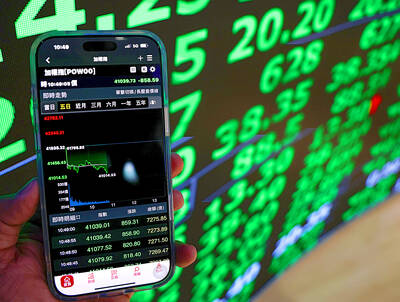
PORTFOLIO REBALANCING: The adjustments in three global equity indices reflect rising investor appetite for semiconductor and artificial intelligence-related stocks Taiwan’s weighting in major global equity indices compiled by MSCI Inc is to rise modestly following the latest quarterly review, underscoring the market’s expanding role in emerging-market portfolios, as global investors continue to favor the nation’s technology sector. Taiwan’s weighting in the MSCI Emerging Markets Index is to increase by 0.30 percentage points to 23.76 percent, after the changes take effect at the close of the May 29 session. Its weighting in the MSCI All-Country Asia ex-Japan Index is to rise 0.37 percentage points to 27.16 percent, while that in the MSCI All Country World Index is to edge up slightly to
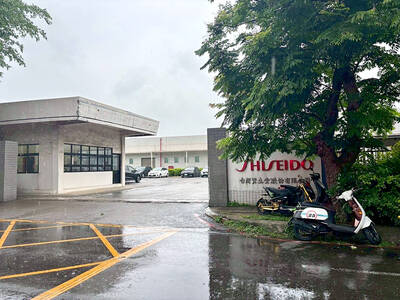
The Hsinchu County Government’s Labor Affairs Department yesterday said that it has received a plan from cosmetics brand Taiwan Shiseido Co (台灣資生堂) detailing mass layoffs at its plant in Hukou Township (湖口). While the labor authorities did not disclose the number of employees to be laid off, Japanese news media earlier in the day reported that the closure of the company’s factory in Hukou would result in 170 employees losing their jobs. Shiseido followed the law by reporting its layoff plan, the department said, adding that authorities would closely monitor negotiations between the management and affected employees and step in if any
Hon Hai Precision Industry Co (鴻海精密) on Tuesday confirmed a cyberattack targeting some of its North American facilities, but said the affected factories were gradually returning to normal. The company, known globally as Foxconn Technology Group (富士康科技集團), said that its cybersecurity team “activated the response mechanism and implemented operational measures to ensure the continuity of production and delivery.” “The affected factories are resuming normal production,” the company said in a statement. Hon Hai had previously described it as a “technical issue,” when news of the cyberattack first surfaced. The confirmation followed media reports of a large-scale information technology system incident that broke out at


 RSS
RSS