


Tung Ho Steel Enterprise Corp (東和鋼鐵) yesterday said its Vietnamese plant would remain in the red next quarter due to lower gross margin, but there was a chance for the plant to break even within one to two years.
The plant in Vung Tau City, Ba Ria-Vung Tau Province, reported combined losses of about NT$400 million (US$12.89 million) in the first half of this year, due to increases in manufacturing costs and weak steel pricing, the company said.
“Steel prices and customer demand did not improve this quarter, as customers remained conservative [about market outlook] amid the ongoing US-China trade dispute,” chairman and president Henry Ho (侯傑騰) told an investors’ conference in Taipei.
The plant, which has a capacity of 50,000 tonnes per month, has produced about 20,000 tonnes of steel a month since it started operations early this year, he said.
Formosa Ha Tinh Steel Corp (台塑河靜鋼鐵) earlier this year began selling billets earlier, adding to the already slumping steel market in Vietnam, Tung Ho said.
Ho said that he expected competition from Formosa Ha Tinh Steel would ease after the plant shifted its products to coils and wire rods in the next few years.
The company remains bullish about its Vietnamese facility, which accounted for 10 percent of its overall sales of NT$30.37 billion in the first eight months, as the Vietnam Steel Association forecast the market is to grow at a compound annual growth rate of 11.7 percent between 2013 and this year, the company said.
It expects rebar output in Taiwan would grow 10.48 percent year-on-year to 1.02 million tonnes this year, from 920,660 tonnes, as a growing number of local firms are to relocate their production lines from China and rollouts of public infrastructure projects, such as the MRT Wanda Line, would boost demand, the company said.
In the first half of the year, net income climbed 25.23 percent to NT$711.63 million from NT$568.4 million a year earlier. Earnings per share increased to NT$0.71 from NT$0.57, the company’s financial statement showed.
Gross margin dipped from 8.88 percent to 8.34 percent.

GROWING OWINGS: While Luxembourg and China swapped the top three spots, the US continued to be the largest exposure for Taiwan for the 41st consecutive quarter The US remained the largest debtor nation to Taiwan’s banking sector for the 41st consecutive quarter at the end of September, after local banks’ exposure to the US market rose more than 2 percent from three months earlier, the central bank said. Exposure to the US increased to US$198.896 billion, up US$4.026 billion, or 2.07 percent, from US$194.87 billion in the previous quarter, data released by the central bank showed on Friday. Of the increase, about US$1.4 billion came from banks’ investments in securitized products and interbank loans in the US, while another US$2.6 billion stemmed from trust assets, including mutual funds,

AI TALENT: No financial details were released about the deal, in which top Groq executives, including its CEO, would join Nvidia to help advance the technology Nvidia Corp has agreed to a licensing deal with artificial intelligence (AI) start-up Groq, furthering its investments in companies connected to the AI boom and gaining the right to add a new type of technology to its products. The world’s largest publicly traded company has paid for the right to use Groq’s technology and is to integrate its chip design into future products. Some of the start-up’s executives are leaving to join Nvidia to help with that effort, the companies said. Groq would continue as an independent company with a new chief executive, it said on Wednesday in a post on its Web

Even as the US is embarked on a bitter rivalry with China over the deployment of artificial intelligence (AI), Chinese technology is quietly making inroads into the US market. Despite considerable geopolitical tensions, Chinese open-source AI models are winning over a growing number of programmers and companies in the US. These are different from the closed generative AI models that have become household names — ChatGPT-maker OpenAI or Google’s Gemini — whose inner workings are fiercely protected. In contrast, “open” models offered by many Chinese rivals, from Alibaba (阿里巴巴) to DeepSeek (深度求索), allow programmers to customize parts of the software to suit their
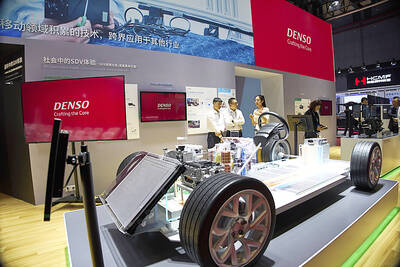
JOINT EFFORTS: MediaTek would partner with Denso to develop custom chips to support the car-part specialist company’s driver-assist systems in an expanding market MediaTek Inc (聯發科), the world’s largest mobile phone chip designer, yesterday said it is working closely with Japan’s Denso Corp to build a custom automotive system-on-chip (SoC) solution tailored for advanced driver-assistance systems and cockpit systems, adding another customer to its new application-specific IC (ASIC) business. This effort merges Denso’s automotive-grade safety expertise and deep vehicle integration with MediaTek’s technologies cultivated through the development of Media- Tek’s Dimensity AX, leveraging efficient, high-performance SoCs and artificial intelligence (AI) capabilities to offer a scalable, production-ready platform for next-generation driver assistance, the company said in a statement yesterday. “Through this collaboration, we are bringing two


 RSS
RSS