


MRT joint development projects in northern Taiwan could reach NT$15.5 billion (US$493.6 million) this year, the first time since 2009 that the number could surpass the NT$10 billion mark, on the back of a gradual, but steady recovery in the market, the Chinese-language Housing Monthly reported yesterday.
This is particularly true for development projects integrated with MRT systems in Taipei and Taoyuan, as the two municipal governments seek to capitalize on public infrastructure facilities with help from major developers, the publication said.
Radium Life Tech Co (日勝生活科技), known for its MRT joint development ventures despite some legal disputes, is preparing to launch a presale residential project above MRT Daqiaotou Station in Taipei’s Datong District (大同).
The project will feature apartments of 27 ping to 62 ping (89m2 to 205m2) and could generate NT$3 billion in sales, it said.
Sotai Construction Co (首泰建設) plans to roll out a mixed-use building on top of MRT Xinyi-Anhe Station that could cost NT$2 million per ping for units for the upper floors, the most expensive price per ping for an MRT joint development project, the publication said.
The project will have 34 floors above ground, with the 3rd to 18th floors set aside as office space and the upper floors as luxury homes of 88 ping, 120 ping and 180 ping, it said.
The Neihu-based developer could keep 24 units upon completing the Xinyi Anhe project that could bring in NT$4 billion in revenue, it said.
“It will be the first MRT joint development building that carries a price tag of more than NT$2 million per ping,” Housing Monthly research manager Ho Shih-chang (何世昌) said.
Kindom Construction Corp (冠德建設) has introduced a mixed-use presale project at the Taoyuan Sports Park station (桃園體育園區) on the Taoyuan Airport MRT that is expected to generate NT$8.5 billion in sales.
The project will feature shopping space on the lower floors and apartment units with one to three bedrooms on the middle and upper floors, Ho said.
A separate report by Sinyi Realty Inc (信義房屋) confirmed the market’s upswing, stating that the number of mortgages had increased by 78,000 in the first four months of this year, a five-year high.
That suggested an addition of 19,000 new home buyers per month, with mortgage burdens averaging NT$6.64 million, Sinyi researcher Tseng Ching-der (曾敬德) said, citing the latest government data.
With loan-to-value ratios mostly standing at 70 percent, newly purchased homes cost an average of NT$950,000 per unit, Tseng said.
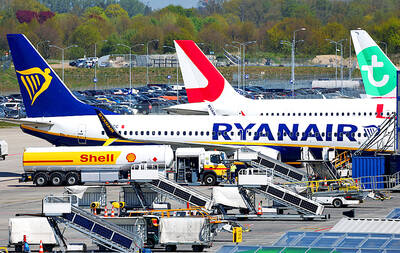
Ryanair, Transavia, Volotea and other low-cost airlines are feeling the financial pain from high jet fuel prices as a result of the Middle East war and are cutting flights. The closure of the Strait of Hormuz has taken a huge chunk of oil supplies off the market, sending the price of jet fuel soaring and triggering fears of shortages that could force airlines to cancel flights. Airlines are not waiting for a lack of supplies to react. “Travel alert: Airlines are cutting thousands of flights right now,” Travel Therapy host Karen Schaler said in an Instagram reel this past weekend.
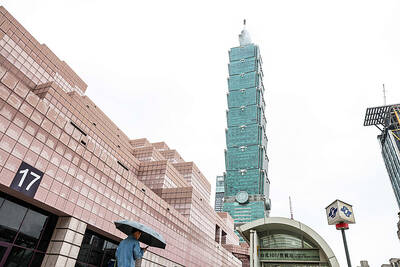
MANAGING RISKS: Taiwan has secured LNG sufficient to cover 95 percent of electricity demand for next month, UBS said, describing the government’s approach as proactive UBS Group AG has raised its forecast for Taiwan’s economic growth this year to 8 percent, up from 6.9 percent previously, and said expansion could reach as high as 8.6 percent if external energy shocks are avoided. The upgrade reflects a stronger-than-expected first-quarter performance and sustained momentum in artificial intelligence (AI)-driven exports, which UBS said are providing a firm foundation for growth despite geopolitical and energy risks. Taiwan’s GDP expanded 13.69 percent year-on-year in the first quarter, the fastest growth since the second quarter of 1987, the Directorate-General of Budget, Accounting and Statistics (DGBAS) reported on Thursday. On a seasonally

The list of Asian stocks that benefit from business partnership with Nvidia Corp is getting longer, as the region further integrates into the artificial intelligence (AI) chip giant’s business ecosystem. Just in the past week, South Korea’s LG Electronics Inc, Taiwan’s Nanya Technology Corp (南亞科技), as well as China’s Huizhou Desay SV Automotive Co (德賽西威) and Pateo Connect Technology Shanghai Corp (博泰車聯) have become the latest to rally on news of tie-ups, supply-chain participation or product collaboration with the US chip designer. Asian suppliers account for about 90 percent of Nvidia’s production costs, up from about 65 percent last year, data compiled

The Fair Trade Commission’s (FTC) ongoing review of Grab Holdings Ltd’s US$600 million acquisition of Foodpanda Taiwan’s operations, announced on March 23, has taken on fresh urgency as industry experts warn that the transaction could embed significant Chinese cybersecurity vulnerabilities into Taiwan’s digital infrastructure through Grab’s deep ties to autonomous-driving firm WeRide (文遠知行). Less than 16 months after the FTC blocked Uber Eats’ direct attempt to acquire Foodpanda Taiwan — citing potential combined market shares of 80 to 90 percent — the emergence of Grab as the buyer has prompted questions about whether the same competitive harm is simply being rerouted


 RSS
RSS