


The new normal of global trade is that there are few safe harbors.
That is the lesson that Eclat Textile Co (儒鴻) is learning. The sportswear supplier to Nike Inc and Lululemon Athletica Inc exited China in 2016 as conditions were not ideal for manufacturing, deciding instead to bulk up in Vietnam. Now, as the global trade war heats up, Eclat finds itself vulnerable again and needs to move beyond Vietnam.
“Judging from the global situation, the most important thing now is diversification,” chairman Hung Cheng-hai (洪鎮海) said in an interview. “Clients also want us to diversify risks and don’t want production bases to be in one country. Now, 50 percent of our garments are made in Vietnam, so we are not diversified enough.”
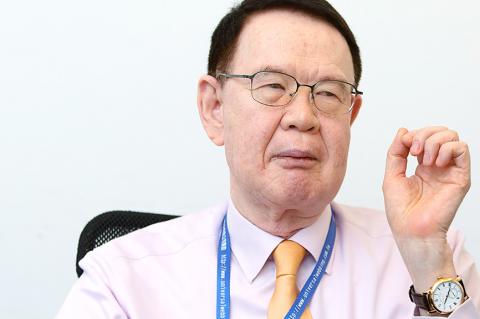
Photo: Bloomberg
Heightened trade tensions between the US and China have disrupted global supply lines, forcing companies to pivot production out of the Asian nation and into other countries such as Taiwan, Vietnam and Bangladesh.
However, with US President Donald Trump hardening his stance on Vietnam, calling it the biggest trade abuser and slapping higher import duties on steel, firms are realizing that no nation is tariff-proof enough to serve as a global supply hub.
Eclat is looking to set up multiple, smaller regional hubs that can be nimble in servicing clients.
The textile maker would not consider adding plants or expanding in Vietnam over the next three years, Hung said.
The company would instead invest in new facilities in Southeast Asian nations such as Indonesia or Cambodia.
It expects to invest US$80 million in setting up 120 production lines in the region, with the board deciding specific locations later this year, Hung said.
Eclat is ahead of its peers in terms of diversification, giving it a “competitive advantage in the supply chain” and boding well for its long-term future, Daiwa-Cathay Capital Markets Co (大和國泰證券) analyst Helen Chien (簡君穎) said.
The company escaped the hit of higher US tariffs because it shut its Chinese facility in 2016 due to a shortage of local workers.
“The era of ‘Made in China’ was over five years back,” because the young Chinese workers — products of the one-child policy — no longer like working in a factory, Hung said.
“We will be cautious about investing in China and won’t invest in labor-intensive businesses,” he added.
A dispersed supply chain would lower any tariff risks for Eclat and might even help lower costs in the long term, said Cathay Securities Co (國泰證券) analyst Rae Hsing (邢雅蕾), who has a neutral rating on the textile firm.
Eclat’s strategy seems to be working, with the firm reporting a 44 percent rise in profit for last year compared with a year earlier. Eclat shares yesterday advanced 3.46 percent to NT$403.5 and have gained 15.95 percent this year.
Hung sees flexibility as key. For example, tariff-related uncertainty has made it difficult for clients to plan their supply-chain requirements, causing them to be more conservative in placing orders. Eclat has adapted by moving faster on delivering orders. That willingness to be flexible would help the company take any further surprises in stride.
“If this is worrisome, then we need to worry about investing in India or Mexico as well,” he said. “Then, there is no end of worrying.”

GROWING OWINGS: While Luxembourg and China swapped the top three spots, the US continued to be the largest exposure for Taiwan for the 41st consecutive quarter The US remained the largest debtor nation to Taiwan’s banking sector for the 41st consecutive quarter at the end of September, after local banks’ exposure to the US market rose more than 2 percent from three months earlier, the central bank said. Exposure to the US increased to US$198.896 billion, up US$4.026 billion, or 2.07 percent, from US$194.87 billion in the previous quarter, data released by the central bank showed on Friday. Of the increase, about US$1.4 billion came from banks’ investments in securitized products and interbank loans in the US, while another US$2.6 billion stemmed from trust assets, including mutual funds,
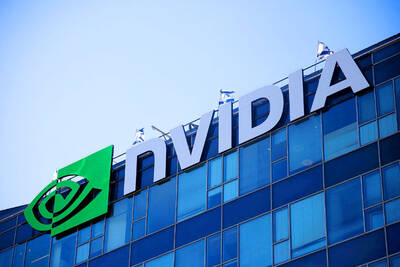
AI TALENT: No financial details were released about the deal, in which top Groq executives, including its CEO, would join Nvidia to help advance the technology Nvidia Corp has agreed to a licensing deal with artificial intelligence (AI) start-up Groq, furthering its investments in companies connected to the AI boom and gaining the right to add a new type of technology to its products. The world’s largest publicly traded company has paid for the right to use Groq’s technology and is to integrate its chip design into future products. Some of the start-up’s executives are leaving to join Nvidia to help with that effort, the companies said. Groq would continue as an independent company with a new chief executive, it said on Wednesday in a post on its Web
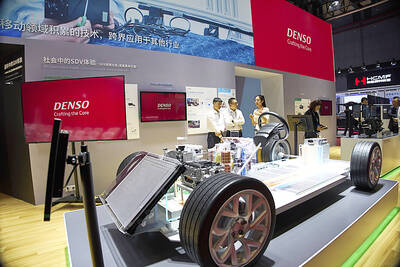
JOINT EFFORTS: MediaTek would partner with Denso to develop custom chips to support the car-part specialist company’s driver-assist systems in an expanding market MediaTek Inc (聯發科), the world’s largest mobile phone chip designer, yesterday said it is working closely with Japan’s Denso Corp to build a custom automotive system-on-chip (SoC) solution tailored for advanced driver-assistance systems and cockpit systems, adding another customer to its new application-specific IC (ASIC) business. This effort merges Denso’s automotive-grade safety expertise and deep vehicle integration with MediaTek’s technologies cultivated through the development of Media- Tek’s Dimensity AX, leveraging efficient, high-performance SoCs and artificial intelligence (AI) capabilities to offer a scalable, production-ready platform for next-generation driver assistance, the company said in a statement yesterday. “Through this collaboration, we are bringing two
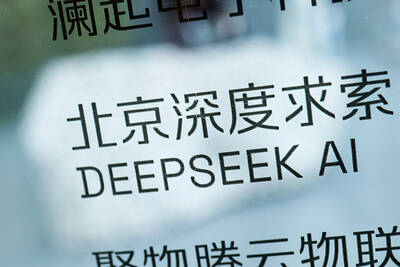
Even as the US is embarked on a bitter rivalry with China over the deployment of artificial intelligence (AI), Chinese technology is quietly making inroads into the US market. Despite considerable geopolitical tensions, Chinese open-source AI models are winning over a growing number of programmers and companies in the US. These are different from the closed generative AI models that have become household names — ChatGPT-maker OpenAI or Google’s Gemini — whose inner workings are fiercely protected. In contrast, “open” models offered by many Chinese rivals, from Alibaba (阿里巴巴) to DeepSeek (深度求索), allow programmers to customize parts of the software to suit their


 RSS
RSS