


Volkswagen AG (VW), trying to win over German car-bashing US President Donald Trump at the White House, on Tuesday dangled ideas to expand US auto production and said it might tap Ford Motor Co to help build its vehicles in the US.
Chief executive officer Herbert Diess said VW has considered adding a second plant in the US, even though the company is not fully utilizing its existing factory in Tennessee.
He dropped the hint about VW’s burgeoning collaboration with Ford after emerging from White House meetings with peers BMW AG and Daimler AG that were aimed at talking the Trump administration out of raising auto tariffs.

Photo: Bloomberg
“We need additional capacity here in the United States,” Diess told reporters, adding that the company could use a factory making both VW and Audi-branded vehicles. “We might use Ford capacity here in the US to build cars for us.”
The White House is looking to whittle down a US$30 billion automotive-trade deficit with Germany by increasing production in the US, the biggest chunk of an overall US$65 billion trade deficit with the EU.
Trump is also smarting from General Motors Co’s (GM) decision last week to close four US plants and cut thousands of jobs, after he has repeatedly demanded that car companies build more vehicles in the US.
Ford chairman Bill Ford stopped short of confirming Diess’ comments, saying talks with VW are going well, but “haven’t gotten that granular.”
Diess was trying to show VW’s contributions to the US economy, because of the nature of the German auto leaders’ visit to the White House, Ford said.
“He was sort of on the spot,” Ford said. “I probably would have done the same thing if I was in his situation.”
Diess was joined at the meeting by his counterpart at Daimler, Dieter Zetsche, and BMW chief financial officer Nicolas Peter.
The automakers have found themselves in harm’s way, with Trump wielding higher tariffs as a cudgel to rebalance trade with both China and the EU.
BMW and Daimler are the biggest car exporters from the US to China, while VW’s two most profitable brands, Porsche and Audi, would get hammered if Trump follows through with a potential 25 percent levy on imports from the EU.
“That’s basically why we are here, to avoid the additional tariffs, and I think we’re in a good way,” Diess said.
Before the White House visit, VW executives had floated the possibility that it could build an electric-vehicle (EV) plant in the US, but that would be a big risk, given the low market share that both the company and EVs have in the country.
“You would need some indication that demand is going to skyrocket,” Kevin Tynan, an analyst at Bloomberg Intelligence, said by telephone. “So maybe they believe that, but I’m not sure you can be completely confident in that forecast just yet. It’s a big commitment for a reasonable amount of demand uncertainty.”
Ford and VW have been in talks about the German automaker potentially investing in Argo AI, the US automaker’s self-driving technology partner, to jointly develop autonomous cars, people familiar with the discussions have said.
The two automakers also are considering tie-ups to produce EVs and share manufacturing in regions around the world, the people have said.
In June, VW and Ford said that they were considering a strategic alliance focused on a range of commercial vehicles.
The EU and US are nearing an agreement to coordinate on producing and securing critical minerals, part of a push to break reliance on Chinese supplies. The potential deal would create incentives, such as minimum prices, that could advantage non-Chinese suppliers, according to a draft of an “action plan” seen by Bloomberg. The EU and US would also cooperate on standards, investments and joint projects, as well as coordinate on any supply disruptions by countries like China. The two sides are additionally seeking other “like-minded partners” to join a multicountry accord to help create these new critical mineral supply chains, which feed into

For weeks now, the global tech industry has been waiting for a major artificial intelligence (AI) launch from DeepSeek (深度求索), seen as a benchmark for China’s progress in the fast-moving field. More than a year has passed since the start-up put Chinese AI on the map in early last year with a low-cost chatbot that performed at a similar level to US rivals. However, despite reports and rumors about its imminent release, DeepSeek’s next-generation “V4” model is nowhere in sight. Speculation is also swirling over the geopolitical implications of which computer chips were chosen to train and power the new
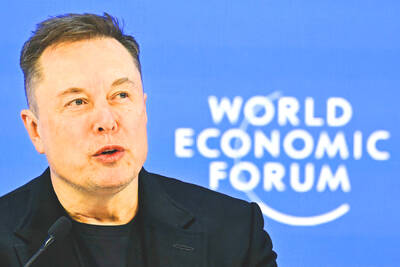
Elon Musk’s lieutenants have reached out to chip industry suppliers, including Applied Materials Inc, Tokyo Electron Ltd and Lam Research Corp, for his envisioned Terafab, early steps in an audacious and likely arduous attempt to break into the production of cutting-edge chips. Staff working for the joint venture between Tesla Inc and Space Exploration Technologies Corp (SpaceX) have sought price quotes and delivery times for an array of chipmaking gear, people familiar with the matter said. In past weeks, they’ve contacted makers of photomasks, substrates, etchers, depositors, cleaning devices, testers and other tools, according to the people, who asked not to
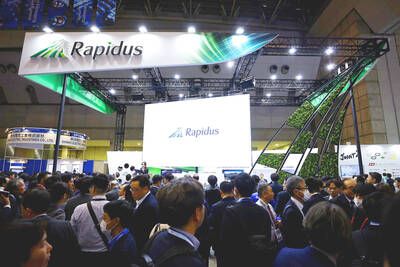
Japan approved ¥631.5 billion (US$3.97 billion) in additional subsidies to hasten Rapidus Corp’s entry into the high-stakes artificial intelligence (AI) chipmaking arena, ramping up support for a project widely regarded as a long shot. The capital is intended to bankroll Rapidus’ work for information technology firm Fujitsu Ltd, one of the initial customers that Tokyo hopes would get the signature endeavor off the ground. The new money raises the fees and investments that the government is injecting into the start-up to ¥2.6 trillion by the end of the current fiscal year to March next year, the Japanese Ministry of Economy, Trade and


 RSS
RSS