


An Indian government panel has recommended that Johnson & Johnson (J&J) pay compensation of at least US$28,500 to each Indian patient who suffered from artificial hip implants the US healthcare firm recalled eight years ago.
The Articular Surface Replacement (ASR) implants were recalled in 2010, after data suggested that they failed at a higher-than-expected rate.
In 2013, the firm agreed to pay nearly US$2.5 billion to settle thousands of lawsuits from those in the US who said they were injured by the implants.
In India, J&J paid US$2 million to patients for repeat surgeries and about US$250,000 in related diagnostic costs under its ASR reimbursement program, but the panel criticized the firm for offering no compensation.
“The fact remains that no compensation ever has been made by the firm in India to any patient,” the panel said in a 118-page report released late on Tuesday.
The panel was set up by the Indian Ministry of Health and Family Welfare, which has said it is reviewing the report.
J&J said its unit did not have access to data on patients who received implants because of patient confidentiality regulations, but it had given “top priority” to supporting ASR patients.
“The company has always put the health and safety of ASR patients first in everything we do,” it said in a statement.
About 93,000 people worldwide received ASR implants, the panel said, about 4,700 of them in India.
Metal hip implant systems such as ASR were designed to be more durable than a traditional metal-on-plastic ball-and-socket design, but many Indian patients experienced adverse reactions from the implant, the panel said.
It also criticized J&J for being “evasive” in sharing information on ASR’s design with it. Only in 2015, five years after the ASR recall, did the company run newspaper notices in India about the move.
This “shows the negligent behavior of the firm to reach out to the affected patients,” it said, calling for periodic ads to raise patient awareness about the implants.
J&J denied the panel’s assessment, saying its unit had not been evasive and had “fully cooperated with the expert committee in their investigation.”
The panel findings, first reported by Indian media last week, have sparked a public relations crisis for the US-based company, which has also faced criticism from patient rights activists.
J&J “has the responsibility to track patients, make them aware of the adverse effects and compensate them,” said Oommen Kurian, a health researcher at the New Delhi-based Observer Research Foundation.
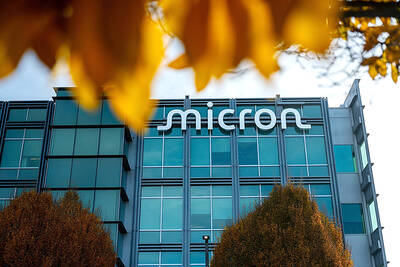
Micron Memory Taiwan Co (台灣美光), a subsidiary of US memorychip maker Micron Technology Inc, has been granted a NT$4.7 billion (US$149.5 million) subsidy under the Ministry of Economic Affairs A+ Corporate Innovation and R&D Enhancement program, the ministry said yesterday. The US memorychip maker’s program aims to back the development of high-performance and high-bandwidth memory chips with a total budget of NT$11.75 billion, the ministry said. Aside from the government funding, Micron is to inject the remaining investment of NT$7.06 billion as the company applied to participate the government’s Global Innovation Partnership Program to deepen technology cooperation, a ministry official told the
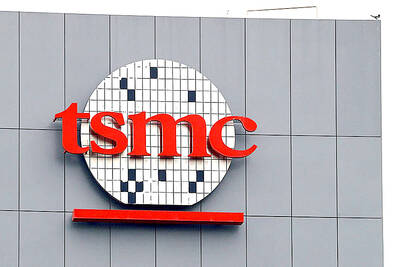
Taiwan Semiconductor Manufacturing Co (TSMC, 台積電), the world’s leading advanced chipmaker, officially began volume production of its 2-nanometer chips in the fourth quarter of this year, according to a recent update on the company’s Web site. The low-key announcement confirms that TSMC, the go-to chipmaker for artificial intelligence (AI) hardware providers Nvidia Corp and iPhone maker Apple Inc, met its original roadmap for the next-generation technology. Production is currently centered at Fab 22 in Kaohsiung, utilizing the company’s first-generation nanosheet transistor technology. The new architecture achieves “full-node strides in performance and power consumption,” TSMC said. The company described the 2nm process as
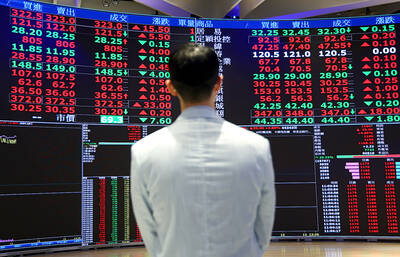
Shares in Taiwan closed at a new high yesterday, the first trading day of the new year, as contract chipmaker Taiwan Semiconductor Manufacturing Co (TSMC, 台積電) continued to break records amid an artificial intelligence (AI) boom, dealers said. The TAIEX closed up 386.21 points, or 1.33 percent, at 29,349.81, with turnover totaling NT$648.844 billion (US$20.65 billion). “Judging from a stronger Taiwan dollar against the US dollar, I think foreign institutional investors returned from the holidays and brought funds into the local market,” Concord Securities Co (康和證券) analyst Kerry Huang (黃志祺) said. “Foreign investors just rebuilt their positions with TSMC as their top target,
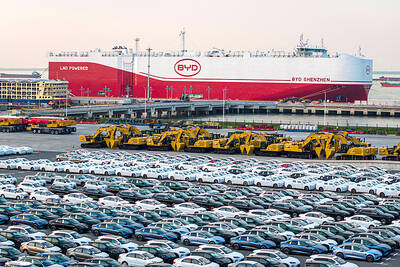
POTENTIAL demand: Tesla’s chance of reclaiming its leadership in EVs seems uncertain, but breakthrough in full self-driving could help boost sales, an analyst said Chinese auto giant BYD Co (比亞迪) is poised to surpass Tesla Inc as the world’s biggest electric vehicle (EV) company in annual sales. The two groups are expected to soon publish their final figures for this year, and based on sales data so far this year, there is almost no chance the US company led by CEO Elon Musk would retain its leadership position. As of the end of last month, BYD, which also produces hybrid vehicles, had sold 2.07 million EVs. Tesla, for its part, had sold 1.22 million by the end of September. Tesla’s September figures included a one-time boost in


 RSS
RSS