


Local shares on Friday closed moderately higher as late buying helped the broader market recoup earlier losses, but the main board was in consolidation mode throughout the session after solid gains over the previous few days, dealers said.
The last-ditch buying focused on the three largest cap stocks in the local equity market — Taiwan Semiconductor Manufacturing Co (TSMC, 台積電), iPhone assembler Hon Hai Precision Industry Co (鴻海精密) and Formosa Petrochemical Corp (台塑石化) — pushing the broader market into positive territory, they said.
Sentiment has turned cautious, capping the recent upturn, as many investors wait for the upcoming earnings season, with smartphone camera lens supplier Largan Precision Co (大立光) having scheduled an investor conference for Thursday, they added.
The TAIEX on Friday closed up 31.17 points, or 0.29 percent, at the day’s high of 10,879.80, off an early low of 10,815.68, on turnover of NT$140.86 billion (US$4.77 billion). That was an increase of 2.2 percent from a close of 10,642.86 on Dec. 29 last year.
The market opened up 8.29 points, but soon dipped into negative territory in the early morning session as local investors ignored a new record high on the Dow Jones Industrial Average, which breached the 25,000-point mark for the first time ever, dealers said.
The weighted index moved in a narrow range before buying re-emerged in late trading to lift the three top cap stocks, as well as the financial sector, which vaulted the broader market back into the black by the end of the session, they said.
“After a strong showing in the previous three sessions after the New Year holiday, it was no surprise that the main board entered consolidation mode for the moment,” KGI Securities Co (凱基證券) analyst Phil Chu said.
The weighted index gained 205.77 points, or 1.93 percent, in the first three sessions of this year.
“Looking at the movement, I think there was technical resistance ahead of the intraday high of 10,882 points on Nov. 22 [last year],” Chu said. “But, after the current consolidation, it is expected that the technical hurdles will be overcome as long as the uptrend remains in place.”
Largely thanks to late-session interest in TSMC, Hon Hai and Formosa Petrochemical, the local main board managed to end above the previous closing level, Chu said.
TSMC, the world’s largest contract chipmaker, gained 0.21 percent to close at NT$240 after hitting an early low of NT$238, with 22.41 million shares changing hands.
Hon Hai, which has been hit by worries over shipments of Apple Inc’s premium iPhone X, rose 0.43 percent to close at NT$93, off an early low of NT$91.60, while Formosa Petrochemical added 0.84 percent to end at NT$120, off an early low of NT$119.
In the financial sector, which gained 0.74 percent also on late buying, shares in Cathay Financial Holding Co (國泰金控) rose 0.54 percent to close at NT$55.70, off an early low of NT$55, and CTBC Financial Holding Co (中信金控) added 1.21 percent to end at NT$20.90 after hitting a low of NT$20.65.
“Cautious sentiment is expected to dominate the main board’s movements before Largan releases its fourth-quarter earnings and gives guidance for the first quarter next week, which will paint a clearer picture of how the iPhone X has been received on the global market,” Chu said.
“Largan’s results could move the broader market, but even if the weighted index faces downward pressure, strong technical support is expected at about 10,700 points,” he added.
Underperforming the broader market, Largan fell 0.85 percent to close at NT$4,100, while Catcher Technology Co (可成科技), a metal casing supplier to Apple, ended unchanged at NT$335.
Elsewhere in Asia on Friday, markets picked up the baton from another set of records on Wall Street.
A forecast-smashing reading on Thursday on private take-ups boosted optimism, which had already been bolstered by US tax cuts, healthy corporate profits and strong manufacturing figures from around the world.
AxiTrader chief market strategist Greg McKenna said in a note that data from the manufacturing and services sectors “suggests economic strength across the globe remains robust.”
An index of world factory activity was at its highest level in seven years, he added.
In Tokyo, the Nikkei 225 on Friday ended up 0.9 percent at a 26-year high of 23,714.53 following its more than 3 percent jump on Thursday. That compared with a close of 22,764.94 a week earlier, an increase of 4.2 percent.
Hong Kong’s Hang Seng on Friday gained 0.3 percent to 30,814.64, a ninth-straight gain and a gain of 3 percent from a close of 29,919.15 on Dec. 29 last year.
Shanghai on Friday closed 0.2 percent higher at 3,391.75, rising 2.6 percent from 3,307.17 a week earlier.
Seoul rose 1.3 percent, with dealers buoyed by news that North Korea had accepted the South’s offer of talks next week, further easing geopolitical tensions in the region.
Sydney added 0.7 percent, but Singapore eased 0.2 percent.
While oil prices inched down in Asia, they remain elevated after recent rises to about three-year highs thanks to Middle East tensions, while the US sees stockpiles fall as it is hit by a severe cold snap.
The latest gains have given impetus to petroleum-linked firms, sending them rallying over the past week.
In Hong Kong, China Petroleum & Chemical Corp (中國石油化工) was up more than 1 percent, while China National Offshore Oil Corp (中國海洋石油總公司 and PetroChina Co Ltd (中國石油天然氣) were also higher.
Woodside Petroleum Ltd in Sydney was up along with Santos Ltd, although Tokyo-listed Inpex Corp eased.
“There’s been a one-way, very steep and uninterrupted rally off the last minor low [in the middle of last month] near US$56 [per barrel], so it won’t be surprising to see a pause here,” CMC Markets Sydney-based analyst Ric Spooner told Bloomberg News.

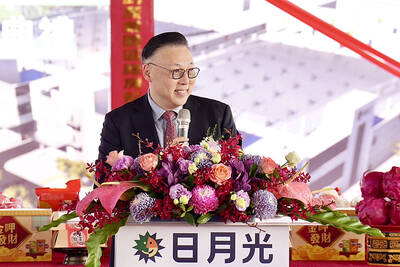
ENERGY ISSUES: The TSIA urged the government to increase natural gas and helium reserves to reduce the impact of the Middle East war on semiconductor supply stability Chip testing and packaging service provider ASE Technology Holding Co (日月光投控) yesterday said it planned to invest more than NT$100 billion (US$3.15 billion) in building a new advanced chip testing facility in Kaohsiung to keep up with customer demand driven by the artificial intelligence (AI) boom. That would be included in the company’s capital expenditure budget next year, ASE said. There is also room to raise this year’s capital spending budget from a record-high US$7 billion estimated three months ago, it added. ASE would have six factories under construction this year, another record-breaking number, ASE chief operating officer Tien Wu

The EU and US are nearing an agreement to coordinate on producing and securing critical minerals, part of a push to break reliance on Chinese supplies. The potential deal would create incentives, such as minimum prices, that could advantage non-Chinese suppliers, according to a draft of an “action plan” seen by Bloomberg. The EU and US would also cooperate on standards, investments and joint projects, as well as coordinate on any supply disruptions by countries like China. The two sides are additionally seeking other “like-minded partners” to join a multicountry accord to help create these new critical mineral supply chains, which feed into

For weeks now, the global tech industry has been waiting for a major artificial intelligence (AI) launch from DeepSeek (深度求索), seen as a benchmark for China’s progress in the fast-moving field. More than a year has passed since the start-up put Chinese AI on the map in early last year with a low-cost chatbot that performed at a similar level to US rivals. However, despite reports and rumors about its imminent release, DeepSeek’s next-generation “V4” model is nowhere in sight. Speculation is also swirling over the geopolitical implications of which computer chips were chosen to train and power the new
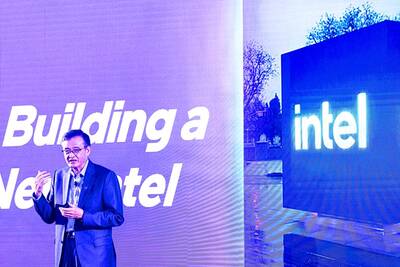
Intel Corp is joining Elon Musk’s long-shot effort to develop semiconductors for Tesla Inc, Space Exploration Technologies Corp and xAI, marking a surprising twist in the chipmaker’s comeback bid. Intel would help the Terafab project “refactor” the technology in a chip factory, the company said on Tuesday in a post on X, Musk’s social media platform. That is a stage in the development process that typically helps make chips more powerful or reliable. The chipmaker’s shares jumped 4.2 percent to US$52.91 in New York trading on Tuesday. The Terafab project is a grand plan by Musk to eventually manufacture his own chips for


 RSS
RSS