


Acer Inc’s (宏碁) strategy on developing its virtual reality (VR) business is not only to target commercial clients, but is also to focus on building content that has the potential to be profitable, Acer chairman and chief executive Jason Chen (陳俊聖) said.
“After we entered the VR industry, we realized that content is key for the business. We need to determine what kind of content can make a profit, otherwise we would just waste a lot of time making contents that does not sell,” Chen told a media gathering at Acer’s headquarters in New Taipei City’s Sijhih District (汐止).
Chen said that was why Acer has collaborated with IMAX Corp to set up the IMAX VR Content Fund — which the board of the Taiwanese company in November 2016 approved a US$10 million investment to jointly create VR content.
IMAX and Warner Bros Home Entertainment’s deal on developing an interactive VR experience based on Warner Bros Pictures’ Justice League, which was partly financed by the IMAX VR Content Fund, was a successful example of content that generates profits, Chen said.
Acer first entered the VR industry in June 2016 by establishing a joint venture, StarVR Corp (宏星技術), with Starbreeze AB to develop VR hardware and software.
Acer in October increased its stake in StarVR from 50 percent to 66.7 percent with a capital injection of US$5 million, as part of its strategy to bolster its VR business.
StarVR started to ship head-mounted VR devices to IMAX in September 2016 for use in its IMAX VR centers in Los Angeles and New York.
The devices are also to be made available at Starbreeze’s VR centers in Stockholm, Sweden, and Dubai, United Arab Emirates, Acer said.
In addition to the VR centers, StarVR in June last year formed an alliance with automotive visualization solutions provider ZeroLight to deliver an ultra-high-definition automotive VR experience.
It has also started installing its VR solutions at Hong Kong-based fitness center operator, Pure Fitness, in its branches in Hong Kong and Singapore, Chen said.
Acer on Dec. 22 announced that Japan’s SEGA Entertainment had inked an agreement with StarVR to install StarVR’s technology in its SEGA Game Centers in Japan.
StarVR and SEGA Entertainment are to launch VR headsets and VR arcade solutions at three SEGA Game Centers by March and at another seven locations by the end of the year, Acer said.
The first installation was at the SEGA Game Center Shinjuku Kabukicho branch in Tokyo on Dec. 22, Acer said.
The business model of Acer’s various VR businesses varies depending on each project, Chen said, adding that Acer not only sells VR devices, but also PCs, ticketing systems, systems infrastructure and integration solutions.

GROWING OWINGS: While Luxembourg and China swapped the top three spots, the US continued to be the largest exposure for Taiwan for the 41st consecutive quarter The US remained the largest debtor nation to Taiwan’s banking sector for the 41st consecutive quarter at the end of September, after local banks’ exposure to the US market rose more than 2 percent from three months earlier, the central bank said. Exposure to the US increased to US$198.896 billion, up US$4.026 billion, or 2.07 percent, from US$194.87 billion in the previous quarter, data released by the central bank showed on Friday. Of the increase, about US$1.4 billion came from banks’ investments in securitized products and interbank loans in the US, while another US$2.6 billion stemmed from trust assets, including mutual funds,
AI TALENT: No financial details were released about the deal, in which top Groq executives, including its CEO, would join Nvidia to help advance the technology Nvidia Corp has agreed to a licensing deal with artificial intelligence (AI) start-up Groq, furthering its investments in companies connected to the AI boom and gaining the right to add a new type of technology to its products. The world’s largest publicly traded company has paid for the right to use Groq’s technology and is to integrate its chip design into future products. Some of the start-up’s executives are leaving to join Nvidia to help with that effort, the companies said. Groq would continue as an independent company with a new chief executive, it said on Wednesday in a post on its Web

Even as the US is embarked on a bitter rivalry with China over the deployment of artificial intelligence (AI), Chinese technology is quietly making inroads into the US market. Despite considerable geopolitical tensions, Chinese open-source AI models are winning over a growing number of programmers and companies in the US. These are different from the closed generative AI models that have become household names — ChatGPT-maker OpenAI or Google’s Gemini — whose inner workings are fiercely protected. In contrast, “open” models offered by many Chinese rivals, from Alibaba (阿里巴巴) to DeepSeek (深度求索), allow programmers to customize parts of the software to suit their
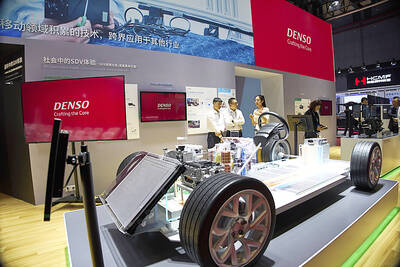
JOINT EFFORTS: MediaTek would partner with Denso to develop custom chips to support the car-part specialist company’s driver-assist systems in an expanding market MediaTek Inc (聯發科), the world’s largest mobile phone chip designer, yesterday said it is working closely with Japan’s Denso Corp to build a custom automotive system-on-chip (SoC) solution tailored for advanced driver-assistance systems and cockpit systems, adding another customer to its new application-specific IC (ASIC) business. This effort merges Denso’s automotive-grade safety expertise and deep vehicle integration with MediaTek’s technologies cultivated through the development of Media- Tek’s Dimensity AX, leveraging efficient, high-performance SoCs and artificial intelligence (AI) capabilities to offer a scalable, production-ready platform for next-generation driver assistance, the company said in a statement yesterday. “Through this collaboration, we are bringing two


 RSS
RSS