


The earnings performance of Genius Electronic Optical Co (玉晶光), a supplier of smartphone camera lenses for Apple Inc’s iPhones, is expected to stabilize in the near term due to the company’s continued efforts to improve efficiency and yield rates, chairman Jones Chen (陳天慶) said yesterday.
“It is estimated that our operation will not dramatically fluctuate like in the past,” Chen told a teleconference.
Genius reported net income of NT$312.92 million (US$10.42 million) for last quarter, the company’s fifth consecutive profitable quarter.
In the first three quarters of this year, cumulative net income reached NT$468.98 million, or earnings per share of NT$4.7, company data showed.
The results represented a dramatic improvement over the same period last year, when Genius reported net losses of NT$471.55 million, or loss per share of NT$4.73.
Prior to this year, Genius had reported four straight years of net losses, company data showed.
The firm’s earnings performance over the past five quarters benefited from efforts to enhance management capability, employee training, the product portfolio and yield rates, Chen said.
The company reported revenue of NT$2.37 billion in the July-to-September quarter, with 61 percent of total revenue coming from lenses of 8 megapixels or more and 35 percent from lenses of less than 8 megapixels.
During the conference, several analysts expressed concern about the firm’s business outlook for this month and next quarter.
Chen declined to offer specifics, but said that the firm’s orders forecast with its major client remained unchanged.
Analyst concern came as Largan Precision Co (大立光), a larger rival of Genius, on Tuesday forecast that its revenue this month might be lower than last month’s, due to weaker shipping momentum to “some” clients.
It is widely believed that Largan supplies the back and front camera lenses for the iPhone, while Genius also landed orders to supply front camera lenses.
Chen said Genius has started to ship camera lenses made of six layers of plastic and is working hard to improve the yield rate to meet the client’s expectations.
Genius also began to develop camera lenses constructed with seven layers of plastic and glass, as requested by the client, but has not started shipping them, Chen said.
“Our production capacity for the camera lenses with the seven layers is ready,” Chen said, adding that “we can start manufacturing them as soon as the client sends in the order.”
Chen said its products are all developed by the company, stressing that it does not pay royalties for its peer’s patents.
“We continue to build our own patent library and are working very hard to avoid infringing on our peers’ patents when developing new products,” he said.

GROWING OWINGS: While Luxembourg and China swapped the top three spots, the US continued to be the largest exposure for Taiwan for the 41st consecutive quarter The US remained the largest debtor nation to Taiwan’s banking sector for the 41st consecutive quarter at the end of September, after local banks’ exposure to the US market rose more than 2 percent from three months earlier, the central bank said. Exposure to the US increased to US$198.896 billion, up US$4.026 billion, or 2.07 percent, from US$194.87 billion in the previous quarter, data released by the central bank showed on Friday. Of the increase, about US$1.4 billion came from banks’ investments in securitized products and interbank loans in the US, while another US$2.6 billion stemmed from trust assets, including mutual funds,
AI TALENT: No financial details were released about the deal, in which top Groq executives, including its CEO, would join Nvidia to help advance the technology Nvidia Corp has agreed to a licensing deal with artificial intelligence (AI) start-up Groq, furthering its investments in companies connected to the AI boom and gaining the right to add a new type of technology to its products. The world’s largest publicly traded company has paid for the right to use Groq’s technology and is to integrate its chip design into future products. Some of the start-up’s executives are leaving to join Nvidia to help with that effort, the companies said. Groq would continue as an independent company with a new chief executive, it said on Wednesday in a post on its Web

Even as the US is embarked on a bitter rivalry with China over the deployment of artificial intelligence (AI), Chinese technology is quietly making inroads into the US market. Despite considerable geopolitical tensions, Chinese open-source AI models are winning over a growing number of programmers and companies in the US. These are different from the closed generative AI models that have become household names — ChatGPT-maker OpenAI or Google’s Gemini — whose inner workings are fiercely protected. In contrast, “open” models offered by many Chinese rivals, from Alibaba (阿里巴巴) to DeepSeek (深度求索), allow programmers to customize parts of the software to suit their
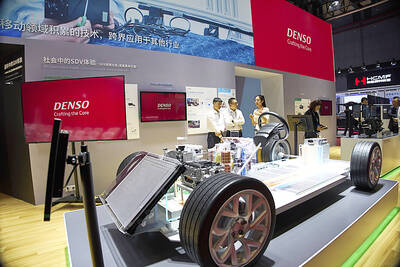
JOINT EFFORTS: MediaTek would partner with Denso to develop custom chips to support the car-part specialist company’s driver-assist systems in an expanding market MediaTek Inc (聯發科), the world’s largest mobile phone chip designer, yesterday said it is working closely with Japan’s Denso Corp to build a custom automotive system-on-chip (SoC) solution tailored for advanced driver-assistance systems and cockpit systems, adding another customer to its new application-specific IC (ASIC) business. This effort merges Denso’s automotive-grade safety expertise and deep vehicle integration with MediaTek’s technologies cultivated through the development of Media- Tek’s Dimensity AX, leveraging efficient, high-performance SoCs and artificial intelligence (AI) capabilities to offer a scalable, production-ready platform for next-generation driver assistance, the company said in a statement yesterday. “Through this collaboration, we are bringing two


 RSS
RSS