


Taiwan Semiconductor Manufacturing Co (TSMC, 台積電), the world’s largest contract chipmaker, on Saturday said it would distribute about NT$456 million (US$15.11 million) in bonuses to its employees by the end of this month.
At the company’s annual sports day in Hsinchu, where TSMC is headquartered, chairman Morris Chang (張忠謀) announced that the company’s 38,000 employees who were formally employed by the company by May 31 would each receive a NT$12,000 bonus.
TSMC has traditionally announced a cash gift to employees on its annual sports day to supplement year-end and quarterly bonuses and to show gratitude to its employees for their contributions. Last year, TSMC announced on the same occasion that it would dole out more than NT$400 million in bonuses to about 36,000 employees.
At Saturday’s sports meet, which followed the company’s celebration of its 30th anniversary last month, the 86-year-old Chang said he was excited to see so many energetic TSMC employees at the event, giving him faith that the company and its employees would continue to create miracles.
Chang was presiding over his last TSMC sports day as chairman. He announced on Oct. 2 that he would retire in June next year, after serving the company for 30 years.
Chang said that the past 30 years, which he spent founding and running TSMC, were the most fortunate, exciting and happiest years of his life.
He also spoke about how the company had invested heavily in its third decade in chips used in mobile devices, raked in handsome profits and is now pouring large sums into artificial intelligence (AI).
TSMC plans to continue to invest heavily in AI because the technology is expected to be used widely and make a large contribution to the company’s bottom line, Chang said, who foresees AI first having an effect on healthcare applications, such as preventing strokes.
Commenting on TSMC’s plan to build an advanced 3-nanometer fab in Tainan, Chang said the government has assured the company that there would be no problem in supplying water and electricity to the new plant.
However, because construction of the new facility is not to begin until 2020, Chang said he hopes that the government would give more guarantees to TSMC and further strengthen the company’s faith in the nation’s ability to supply water and power to the Tainan plant.
As for TSMC’s growth, Chang said the company expects to see its revenue rise 5 to 10 percent per year over the next three years.

HORMUZ ISSUE: The US president said he expected crude prices to drop at the end of the war, which he called a ‘minor excursion’ that could continue ‘for a little while’ The United Arab Emirates (UAE) and Kuwait started reducing oil production, as the near-closure of the crucial Strait of Hormuz ripples through energy markets and affects global supply. Abu Dhabi National Oil Co (ADNOC) is “managing offshore production levels to address storage requirements,” the company said in a statement, without giving details. Kuwait Petroleum Corp said it was lowering production at its oil fields and refineries after “Iranian threats against safe passage of ships through the Strait of Hormuz.” The war in the Middle East has all but closed Hormuz, the narrow waterway linking the Persian Gulf to the open seas,

Nanya Technology Corp (南亞科技) yesterday said the DRAM supply crunch could extend through 2028, as the artificial intelligence (AI) boom has led the world’s major memory makers to dramatically reduce production of standard DRAM and allocate a significant portion of their capacity for high-bandwidth memory (HBM) chips. The most severe supply constraints would stretch to the first half of next year due to “very limited” increases in new DRAM capacity worldwide, Nanya Technology president Lee Pei-ing (李培瑛) told a news briefing. The company plans to increase monthly 12-inch wafer capacity to 20,000 in the first half of 2028 after a
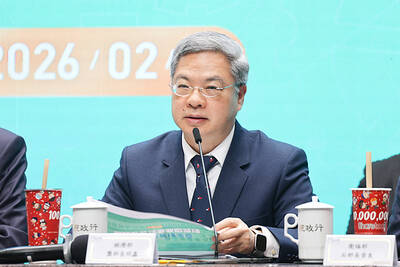
Taiwan has enough crude oil reserves for more than 100 days and sufficient natural gas reserves for more than 11 days, both above the regulatory safety requirement, Minister of Economic Affairs Kung Ming-hsin (龔明鑫) said yesterday, adding that the government would prioritize domestic price stability as conflicts in the Middle East continue. Overall, energy supply for this month is secure, and the government is continuing efforts to ensure sufficient supply for next month, Kung told reporters after meeting with representatives from business groups at the ministry in Taipei. The ministry has been holding daily cross-ministry meetings at the Executive Yuan to ensure
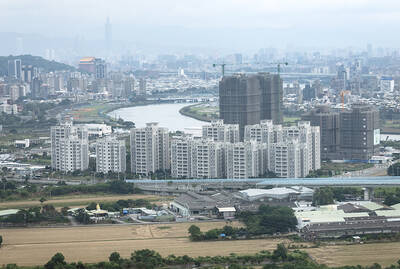
Property transactions in the nation’s six special municipalities plunged last month, as a lengthy Lunar New Year holiday combined with ongoing credit tightening dampened housing market activity, data compiled by local land administration offices released on Monday showed. The six cities recorded a total of 10,480 property transfers last month, down 42.5 percent from January and marking the second-lowest monthly level on record, the data showed. “The sharp drop largely reflected seasonal factors and tighter credit conditions,” Evertrust Rehouse Co (永慶房屋) deputy research manager Chen Chin-ping (陳金萍) said. The nine-day Lunar New Year holiday fell in February this year, reducing


 RSS
RSS