


Shares in Taiwan on Friday closed lower after investors locked in gains amid concerns that a move by the European Central Bank (ECB) to cut their purchases of bonds in half will hurt foreign fund flows, dealers said.
Selling in the stock market focused on many large-cap electronics stocks, although Taiwan Semiconductor Manufacturing Co (TSMC, 台積電) finished in positive territory, but the financial sector was resilient, keeping the broader market from falling further, they said.
The TAIEX on Friday closed down 25.65 points, or 0.24 percent, at 10,709.11, after moving between 10,701.08 and 10,803.60 on turnover of NT$146.37 billion (US$4.83 billion). That was a decrease of 0.18 percent from a close of 10,728.88 on Oct. 20.
The market on Friday opened up 0.21 percent and moved higher to breach the 10,800-point mark midway through the morning as investors responded to a 0.31 percent increase in the Dow Jones Industrial Average and a 0.13 percent rise in the S&P 500 overnight on strong corporate earnings, dealers said.
The market’s strong early showing was led by TSMC, but once the weighted index breached 10,800 points, selling set in as investors rushed to pocket gains built in tech heavyweights, pushing the index into negative territory, they said.
“After the ECB’s decision, the euro weakened, prompting currency traders here to cut their holdings in the Taiwan dollar,” Ta Ching Securities Co (大慶證券) analyst Andy Hsu (許博傑) said.
“So there are worries that the weakness of the New Taiwan dollar will continue and lead foreign funds to flow out of the nation, the last thing the stock market wants to see,” Hsu said.
Echoing Hsu, Hua Nan Securities Co (華南永昌證券) analyst Henry Miao (苗台生) said foreign fund outflows might also be triggered if US President Donald Trump names a hawk to head the US Federal Reserve, which could push up the US dollar and speed up the pace of foreign outflows from the region.
It was no surprise that investors looked to sell after the weighted index exceeded 10,800 points, Hsu said.
“They were afraid that more selling will follow ahead of the stiff technical resistance ahead of that level,” Hsu said.
The bellwether electronics sector came under particular pressure and closed down 0.36 percent, although TSMC closed higher.
The supplier of the A11 processor for Apple Inc’s latest iPhone models, TSMC rose 1.27 percent to end at NT$239 after hitting an early high of NT$240, with 17.75 million shares changing hands.
Among other Apple suppliers, iPhone assembler Hon Hai Precision Industry Co (鴻海精密), second to TSMC in terms of market capitalization, lost 0.45 percent to close at NT$110, off an early high of NT$112.
Smartphone camera lens maker Largan Precision Co (大立光) lost 0.18 percent to close at NT$5,555, off a high of NT$5,695.
Flat-panel maker AU Optronics Corp (友達) fell 1.59 percent to close at NT$12.35 and rival Innolux Corp (群創) lost 1.46 percent to end at NT$13.50 amid concerns over falling product prices.
Bucking the downturn on the broader market, the financial sector closed up 0.43 percent, with Cathay Financial Holding Co (國泰金控) up 1.22 percent to end at NT$49.80 and Fubon Financial Holding Co (富邦金控) moving 0.84 percent higher to close at NT$47.80.
“Today’s expanded turnover showed selling was heavy. The market has become weaker technically,” Hsu said.
“If the market falls further on Monday and the weighted index fails to stay above 10,664 points, the intraday high seen on Sept. 19, a downtrend is likely to continue down the road,” Hsu added.
Other Asian markets on Friday largely rose on the back of a stronger US dollar and investor optimism over Trump’s long-anticipated tax cuts.
Bourses across the region, including the major indices in Tokyo and Hong Kong, tracked an upward swing on Wall Street after a slew of solid US corporate earnings reports and progress on Trump’s tax reform plan.
Tokyo on Friday rose 1.2 percent to close at 22,008.45, rising 2.6 percent from a close of 21,457.64 a week earlier.
The Nikkei 225 was bolstered by the yen’s weakness against the US dollar, a positive for Japanese exporters, as it makes their products more competitive abroad and inflates their repatriated profits.
“Japanese stocks look bullish,” Hiroyasu Iida, head of the investment research center at Aizawa Securities in Tokyo, told Bloomberg News.
“Both in the US and Japan, companies will likely continue to have better earnings results. Good earnings results, the yen’s weakness and speculation over foreign investors’ purchases are fueling expectations over further gains in stocks,” Iida added.
Among the gainers, Toyota Motor Corp rose 0.6 percent, while Sony Corp went up 0.2 percent.
However, Subaru Corp fell 2.6 percent on local media reports that uncertified employees have been inspecting vehicles at a domestic factory before they were shipped to dealers.
The company declined to comment on the reports, saying an in-house probe was under way.
Hong Kong’s Hang Seng on Friday gained 0.8 percent to close at 28,438.85, as the stock exchange’s red-carpeted trading floor closed, having ceded its historic role to electronic and Internet dealing. That was a decrease of 0.2 percent from 28,487.24 on Oct. 20.
Seoul’s KOSPI on Friday ended up 0.6 percent at 2,496.63, rising 0.3 percent from 2,489.54 a week earlier.
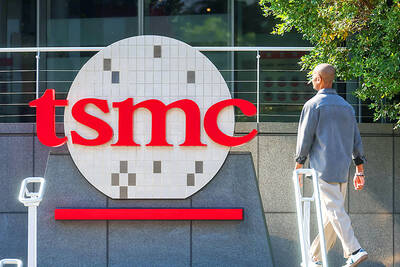
Shares of contract chipmaker Taiwan Semiconductor Manufacturing Co (TSMC, 台積電) came under pressure yesterday after a report that Apple Inc is looking to shift some orders from the Taiwanese company to Intel Corp. TSMC shares fell NT$55, or 2.4 percent, to close at NT$2,235 on the local main board, Taiwan Stock Exchange data showed. Despite the losses, TSMC is expected to continue to benefit from sound fundamentals, as it maintains a lead over its peers in high-end process development, analysts said. “The selling was a knee-jerk reaction to an Intel-Apple report over the weekend,” Mega International Investment Services Corp (兆豐國際投顧) analyst Alex Huang
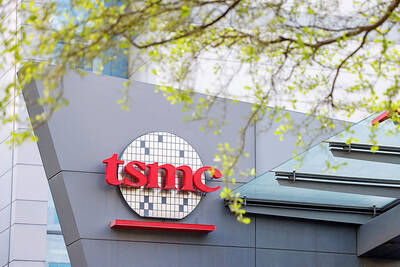
Taiwan Semiconductor Manufacturing Co (TSMC, 台積電) is expected to remain Apple Inc’s primary chip manufacturing partner despite reports that Apple could shift some orders to Intel Corp, industry experts said yesterday. The comments came after The Wall Street Journal reported on Friday that Apple and Intel had reached a preliminary agreement following more than a year of negotiations for Intel to manufacture some chips for Apple devices. Taiwan Institute of Economic Research (台灣經濟研究院) economist Arisa Liu (劉佩真) said TSMC’s advanced packaging technologies, including integrated fan-out and chip-on-wafer-on-substrate, remain critical to the performance of Apple’s A-series and M-series chips. She said Intel and Samsung
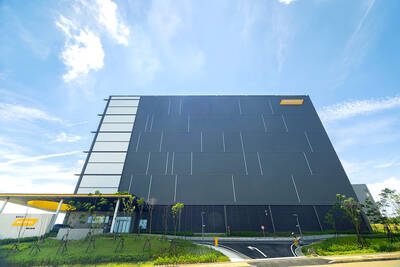
POWER BUILDUP: Powered by Nvidia’s B200 Blackwell chips, the data center would support MediaTek’s computing power demand and business growth, the company said Smartphone chip designer MediaTek Inc (聯發科) yesterday launched a new artificial intelligence (AI) data center with a maximum capacity of 45 megawatts to meet its rising demand for computing power required to develop new advanced chips for AI applications. The company has completed the first-phase computing power buildup at the data center in Miaoli County’s Tongluo Township (銅鑼), providing 15 megawatts of capacity to support its research and development (R&D) capabilities, despite an industrywide shortage of key components, MediaTek said. Supply constraints have plagued a wide range of key components, including memory chips, solid-state drives, power supply units and central
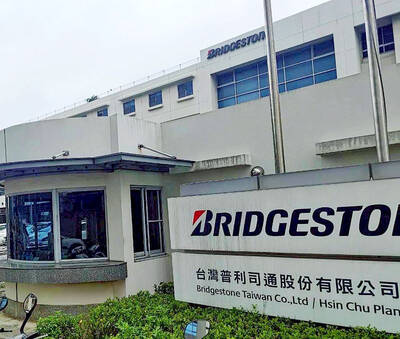
TRANSITION: With the closure, the company would reorganize its Taiwanese unit to a sales and service-focused model, Bridgestone said Bridgestone Corp yesterday announced it would cease manufacturing operations at its tire plant in Hsinchu County’s Hukou Township (湖口), affecting more than 500 workers. Bridgestone Taiwan Co (台灣普利司通) said in a statement that the decision was based on the Tokyo-based tire maker’s adjustments to its global operational strategy and long-term market development considerations. The Taiwanese unit would be reorganized as part of the closure, effective yesterday, and all related production activities would be concluded, the statement said. Under the plan, Bridgestone would continue to deepen its presence in the Taiwanese market, while transitioning to a sales and service-focused business model, it added. The Hsinchu


 RSS
RSS