

Acer Inc (宏碁) yesterday said it is to inject US$5 million into its virtual reality (VR) joint venture with Starbreeze AB, StarVR Corp (宏星技術), increasing its stake from 50 percent to 66.7 percent as part of efforts to grow its presence in the VR industry.
“VR is one of Acer’s key focus areas... The increase of Acer’s stake in StarVR underlines our commitment to the industry and we look forward to continuing to deliver best-in-class VR experiences through our partnership with Starbreeze,” Acer chairman and chief executive officer Jason Chen (陳俊聖) said in a statement.
According to information given to the Department of Commerce by StarVR, the number of board seats is to increase from four to five, of which Acer is to control three.
Starbreeze chief executive officer Bo Andersson Klint is to continue to serve as chairman of StarVR, while Acer information technology president Jerry Kao (高樹國) will remain president, an Acer official said by telephone.
Under the terms of the joint venture, Starbreeze owns and controls the intellectual property rights, while Acer manufactures the products, Acer said, adding that research and development and reference design work for the StarVR headset is carried out by both firms.
Acer and Sweden-based Starbreeze in June last year formed StarVR with a capitalization plan of up to US$25 million.
Under the original arrangement, both firms were to share the project equally through predetermined capital injections at set dates, Acer said.
As of yesterday, US$10 million has been invested in equal amounts from Acer and Starbreeze, Acer said, adding that its upcoming US$5 million injection will bring the paid-in capital of StarVR to US$15 million.
Under the new arrangement, Starbreeze is relieved from its remaining capital commitment of US$7.5 million and its stake in StarVR will be reduced to 33.3 percent, Acer said.
The two parties have not yet agreed on further capital injections, Acer said.
Compared with other VR solutions providers that focus on consumers markets — such as HTC Corp (宏達電) and Facebook Inc’s Oculus VR Inc — StarVR has chosen to target commercial clients, such as movie theaters and amusement parks.
The companies believe that commercial partners can more efficiently build a strong and large ecosystem for VR content, Chen told reporters.
StarVR’s headset is available at IMAX Corp’s IMAX VR centers in Los Angeles and New York, and will soon be available at Starbreeze’s VR centers in Stockholm and Dubai, United Arab Emirates, Acer said.
StarVR in June entered the auto industry by forming an alliance with automotive visualization solutions provider ZeroLight to deliver a ultra-high definition automotive VR experience, Acer said.

Bankers in Hong Kong skipped the summer break as an artificial intelligence (AI)-fueled rush for capital sent share sales to a record, defying a bruising selloff in the city’s stocks. Initial public offerings (IPOs), placements and block trades raised US$47.5 billion in July to last month, the biggest haul ever for the period, data compiled by Bloomberg showed. That pushed fundraising this year above US$92 billion and within reach of the US$112.5 billion record set in 2021. AI has been at the heart of Hong Kong’s deal revival, but this summer brought a new level of intensity. Chinese companies raised ever-larger sums
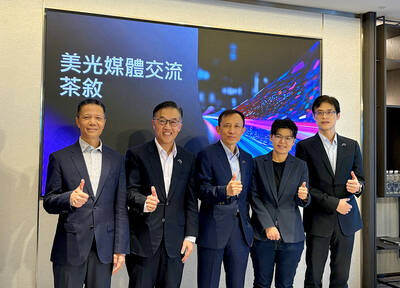
BOOMING BUSINESS: Memory supply constraints would be even more severe in 2027 and 2028, prompting customers to sign long-term supply agreements, Micron said Micron Memory Taiwan Co (台灣美光) yesterday said it is accelerating memorychip capacity expansion amid growing artificial intelligence (AI)-driven demand, with its accumulated investment in Taiwan reaching NT$1.6 trillion (US$50.2 billion) as of June. The company’s investment in Taiwan has surged over the past four years, with recent spending equaling the total invested over the past 25 years, Micron Taiwan chairman Donghui Lu (盧東暉) told a media briefing in Taipei. “The launch of ChatGPT and the outbreak of COVID triggered increasing demand for memory chips. Since then, demand has gathered pace rapidly, with only a brief pause in 2023 when a major downturn”
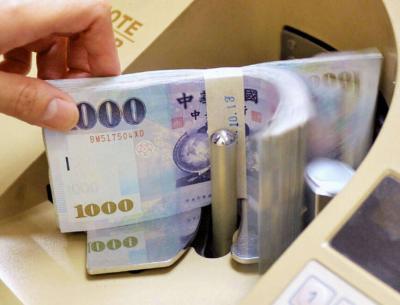
Taiwan ranked fifth worldwide in net financial assets per capita at the end of last year, averaging 164,470 euros (US$186,219), a report released this week by Germany-based Allianz Research said. Taiwan's ranking remained unchanged from the previous year, trailing only the US, Switzerland, Denmark and Singapore, Allianz’s Global Wealth Report said. In the report, Allianz assessed household assets and liabilities in nearly 60 countries, finding that global household wealth reached a record high last year, while the rise of artificial intelligence and market gains made asset ownership increasingly important in determining who benefits from wealth creation. Global financial assets reached a record 268.4

Apple Inc is set to sell about 6 million units of the iPhone Duo this year, Counterpoint Research said, offering the first estimate for how the company’s inaugural foldable device would fare. The figure, more typical of the niche foldable segment than Apple’s usual smartphone sales, is contingent on how well the company ramps up production of the new hardware, Counterpoint senior analyst Ivan Lam (林科宇) said. Priced at US$1,999 and set for a release this month, the iPhone Duo sits atop the Apple lineup and carries industry wide hopes for stoking greater interest and sales of foldables. Market researcher IDC Corp


 RSS
RSS