


O-Bank Co Ltd (王道商業銀行) yesterday outlined its plans to transform itself into a nimble and digitally focused boutique lender as it prepares for its initial public offering (IPO) next month.
The bank is scheduled to have its market debut on May 5 — the first bank listing in Taiwan in 13 years — with an eye to raising NT$225 million (US$7.4 million) in new funds, the bank said.
The company has positioned itself as an asset-light boutique bank that yields higher returns on equity compared with its larger domestic peers, O-Bank president C.Y. Yang (楊錦裕) said at an earnings conference in Taipei.
From 2014 to last year, the bank posted an average ROE of 11.6 percent, besting the industry average of 10.42 percent, Yang said.
During the same period, the company also achieved higher operating efficiencies, which are reflected in its lower non-performing loan ratio of 0.02 percent, compared with the industry average of 0.27 percent, he said
The bank — formerly known as the Industrial Bank of Taiwan (台灣工業銀行) before its transformation into a commercial bank — reported a net income of NT$1.86 billion for last year, up 17 percent from the previous year.
Headquartered in Taipei’s Neihu District (內湖), the bank has only five branches in Taiwan and one branch in Hong Kong, and is to carve out its own niche by leveraging digital channels, as opposed to larger banks, Yang said.
For corporate lending, the company will focus on special purpose loans in the field of mergers and acquisitions, as well as expanding into overseas markets through its Hong Kong branch, he said.
For the consumer market, the company is aiming to take on the younger demographic who favor mobile banking, offering convenient account setups, credit loan approvals and unlimited cash rewards on purchases, Yang said.
To attract younger consumers, savings accounts bearing a 0.3 percent interest rate may be set up for as little as NT$100, Yang added.
The company plans to launch a new investment advisory service next month, targeting young consumers who are often overlooked by major banks’ wealth management businesses, he said.
The new robot-powered advisory service, which will provide investment recommendations generated by software, not human financial advisers, will start with a three-month pilot program, he said.
O-Bank said it would cover investment losses from its robo-advisory services — but limited to NT$1,000 — and once the service is officially launched, consumers can participate with small amounts under its advisory management.
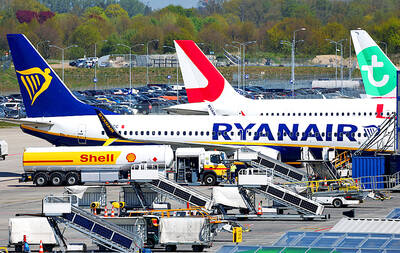
Ryanair, Transavia, Volotea and other low-cost airlines are feeling the financial pain from high jet fuel prices as a result of the Middle East war and are cutting flights. The closure of the Strait of Hormuz has taken a huge chunk of oil supplies off the market, sending the price of jet fuel soaring and triggering fears of shortages that could force airlines to cancel flights. Airlines are not waiting for a lack of supplies to react. “Travel alert: Airlines are cutting thousands of flights right now,” Travel Therapy host Karen Schaler said in an Instagram reel this past weekend.
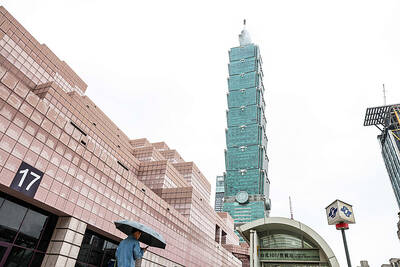
MANAGING RISKS: Taiwan has secured LNG sufficient to cover 95 percent of electricity demand for next month, UBS said, describing the government’s approach as proactive UBS Group AG has raised its forecast for Taiwan’s economic growth this year to 8 percent, up from 6.9 percent previously, and said expansion could reach as high as 8.6 percent if external energy shocks are avoided. The upgrade reflects a stronger-than-expected first-quarter performance and sustained momentum in artificial intelligence (AI)-driven exports, which UBS said are providing a firm foundation for growth despite geopolitical and energy risks. Taiwan’s GDP expanded 13.69 percent year-on-year in the first quarter, the fastest growth since the second quarter of 1987, the Directorate-General of Budget, Accounting and Statistics (DGBAS) reported on Thursday. On a seasonally

The Fair Trade Commission’s (FTC) ongoing review of Grab Holdings Ltd’s US$600 million acquisition of Foodpanda Taiwan’s operations, announced on March 23, has taken on fresh urgency as industry experts warn that the transaction could embed significant Chinese cybersecurity vulnerabilities into Taiwan’s digital infrastructure through Grab’s deep ties to autonomous-driving firm WeRide (文遠知行). Less than 16 months after the FTC blocked Uber Eats’ direct attempt to acquire Foodpanda Taiwan — citing potential combined market shares of 80 to 90 percent — the emergence of Grab as the buyer has prompted questions about whether the same competitive harm is simply being rerouted

The list of Asian stocks that benefit from business partnership with Nvidia Corp is getting longer, as the region further integrates into the artificial intelligence (AI) chip giant’s business ecosystem. Just in the past week, South Korea’s LG Electronics Inc, Taiwan’s Nanya Technology Corp (南亞科技), as well as China’s Huizhou Desay SV Automotive Co (德賽西威) and Pateo Connect Technology Shanghai Corp (博泰車聯) have become the latest to rally on news of tie-ups, supply-chain participation or product collaboration with the US chip designer. Asian suppliers account for about 90 percent of Nvidia’s production costs, up from about 65 percent last year, data compiled


 RSS
RSS