


China will allow more companies to list on its stock market to boost support for its economy, the nation’s top securities regulator said, dismissing concerns that more supplies of shares can depress the market.
The capital market’s recovery from a 2015 rout has been stronger than expected and is now ready for “appropriately” larger supplies of initial public offerings (IPOs), China Securities Regulatory Commission (CSRC) Chairman Liu Shiyu (劉士餘) said yesterday in Beijing, citing a “mainstream” view.
WELCOME PACE
The regulator’s faster approval of IPOs last year had been “welcomed” by the market, he said, adding that the effects from previous practices of slowing or suspending share sales amid market downturns have proven “not good.”
“The entry of new companies can increase market liquidity and can attract additional capital,” Liu told reporters. “As investment value increases, confidence of the entire society strengthens.”
While quickening IPOs as the market recovers from its US$5 trillion rout in the summer of 2015, the regulator this month also announced new curbs on additional fundraising by listed companies.
Stability, which was the highest expectation among market participants last year, remains a key objective this year although the CSRC would also aim to make new progress and “new breakthroughs” in reforms, Liu said, without elaborating.
GRADUAL INCREASE
The government plans to “gradually increase” foreign companies’ stakes in their local securities and futures joint ventures, CSRC vice chairman Fang Xinghai (方星海) said at the same briefing, without providing more details.
Regulators will also allow more overseas industrial companies into China’s commodities futures market to improve pricing, he said.
Chinese regulators, who clamped down on markets during the stock rout, are slowly warming to reforms as volatility subsides. Over the past three months, authorities opened the Shenzhen-Hong Kong exchange link and said they would push ahead with a trial for more exchange-traded fund options and pledged to increase the pace of initial public offerings.
More than 600 companies are seeking approval for first-time share sales, Fang said during a panel discussion last month at the World Economic Forum in Davos, Switzerland.
RESTRICTIONS
The CSRC approved 280 IPO applications last year, when 248 companies completed such sales, Liu said yesterday without providing year-earlier comparisons.
The number of shares issued in private placements cannot be more than 20 percent of a company’s total shares, the CSRC told reporters on Feb. 17.
Non-financial companies seeking a share sale should not have a large balance of longer-term financial investments such as assets for trading or funds lent to others, the CSRC said, though it did not provide more details.
‘FINANCIAL CROCODILES’
At the briefing, Liu also stepped up his criticism of “financial crocodiles” that “cruelly” infringe on the interest of small stock investors.
In a public speech in December last year, he slammed unidentified leveraged stock acquirers as “robbers,” shortly before the nation’s insurance regulator announced penalties on two insurers that had been among the most aggressive investors in the stock market.
“In the capital market, being a financial mogul is only half a step away from being a financial crocodile,” he said.
Any illegal behavior in the market would leave traces behind, which, “no matter they’re historical or current,” will be pursued by regulators, Liu said.
The China Insurance Regulatory Commission on Friday escalated its crackdown on “radical” investment behavior, banning Foresea Life Insurance Co (前海人壽保險) chairman Yao Zhenhua (姚振華) from the industry for 10 years, one day before announcing restrictions on stock investments of Evergrande Life Insurance Co (恒大人壽). Both companies were involved in a tussle of control for developer China Vanke Co (萬科).
The commission also lowered Evergrande Life’s ceiling on equity holdings to 20 percent of assets, from a 30 percent requirement and barred two executives from the insurance industry for as long as five years, the watchdog said in statements on Saturday.
Evergrande Life will “decisively” implement the regulator’s decision and stick to “long-term investment, value investment and prudent investment” principles, the company said in a statement on its Web site after the CIRC announcement.
Shares of contract chipmaker Taiwan Semiconductor Manufacturing Co (TSMC, 台積電) came under pressure yesterday after a report that Apple Inc is looking to shift some orders from the Taiwanese company to Intel Corp. TSMC shares fell NT$55, or 2.4 percent, to close at NT$2,235 on the local main board, Taiwan Stock Exchange data showed. Despite the losses, TSMC is expected to continue to benefit from sound fundamentals, as it maintains a lead over its peers in high-end process development, analysts said. “The selling was a knee-jerk reaction to an Intel-Apple report over the weekend,” Mega International Investment Services Corp (兆豐國際投顧) analyst Alex Huang
Taiwan Semiconductor Manufacturing Co (TSMC, 台積電) is expected to remain Apple Inc’s primary chip manufacturing partner despite reports that Apple could shift some orders to Intel Corp, industry experts said yesterday. The comments came after The Wall Street Journal reported on Friday that Apple and Intel had reached a preliminary agreement following more than a year of negotiations for Intel to manufacture some chips for Apple devices. Taiwan Institute of Economic Research (台灣經濟研究院) economist Arisa Liu (劉佩真) said TSMC’s advanced packaging technologies, including integrated fan-out and chip-on-wafer-on-substrate, remain critical to the performance of Apple’s A-series and M-series chips. She said Intel and Samsung
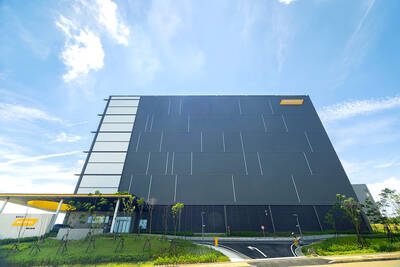
POWER BUILDUP: Powered by Nvidia’s B200 Blackwell chips, the data center would support MediaTek’s computing power demand and business growth, the company said Smartphone chip designer MediaTek Inc (聯發科) yesterday launched a new artificial intelligence (AI) data center with a maximum capacity of 45 megawatts to meet its rising demand for computing power required to develop new advanced chips for AI applications. The company has completed the first-phase computing power buildup at the data center in Miaoli County’s Tongluo Township (銅鑼), providing 15 megawatts of capacity to support its research and development (R&D) capabilities, despite an industrywide shortage of key components, MediaTek said. Supply constraints have plagued a wide range of key components, including memory chips, solid-state drives, power supply units and central
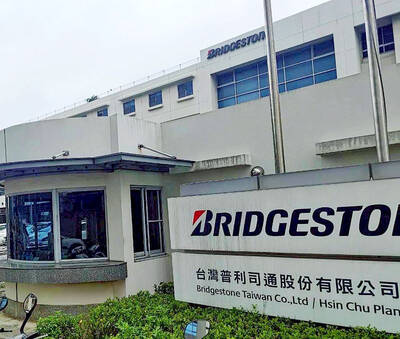
TRANSITION: With the closure, the company would reorganize its Taiwanese unit to a sales and service-focused model, Bridgestone said Bridgestone Corp yesterday announced it would cease manufacturing operations at its tire plant in Hsinchu County’s Hukou Township (湖口), affecting more than 500 workers. Bridgestone Taiwan Co (台灣普利司通) said in a statement that the decision was based on the Tokyo-based tire maker’s adjustments to its global operational strategy and long-term market development considerations. The Taiwanese unit would be reorganized as part of the closure, effective yesterday, and all related production activities would be concluded, the statement said. Under the plan, Bridgestone would continue to deepen its presence in the Taiwanese market, while transitioning to a sales and service-focused business model, it added. The Hsinchu


 RSS
RSS