


Caterpillar Inc has evacuated a handful of employees from Liberia. Canadian Overseas Petroleum Ltd has suspended a drilling project. British Airways has canceled flights to the region. ExxonMobil Corp and Chevron Corp are waiting to see whether health officials can contain the danger.
The Ebola outbreak, which has claimed nearly 1,000 lives, is disrupting business and inflicting economic damage in the three African countries at the center of the crisis: Guinea, Sierra Leone and Liberia. So far, analysts say the crisis does not threaten the African or global economies.
“We must make sure it is controlled and contained as quickly as possible… Once that is done, I don’t think it will have a lasting impact on the economy,” Nigerian Trade and Investment Minister Olusegun Aganga said.
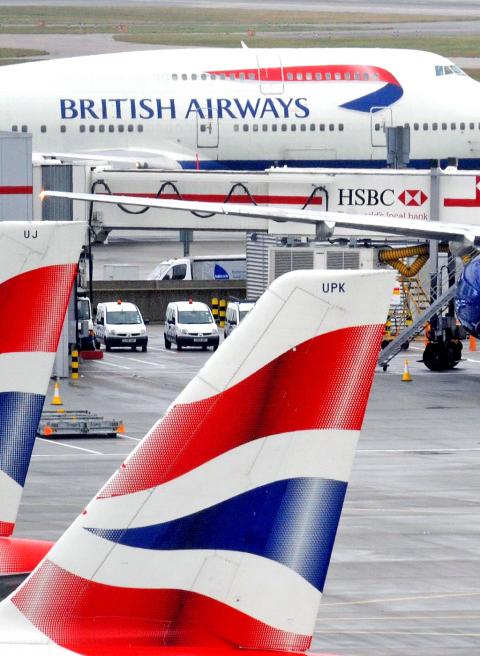
Photo: EPA
Nigeria has nine confirmed cases of Ebola.
The WHO on Friday declared the outbreak an international public health emergency. The WHO did not recommend any travel or trade bans. However, it cautioned anyone who had had close contact with Ebola patients to avoid international travel and urged exit screenings at international airports and border crossings.
“When you have a widespread outbreak of Ebola, you can end up with a panic,” said John Campbell, senior fellow for Africa studies at the Council on Foreign Relations think tank. “People won’t go to work. Expatriates will leave. Economic activity will slow. Fields won’t get planted.”
The World Bank estimates that the outbreak is set to shrink economic growth in Guinea, where the crisis emerged in March, from 4.5 percent to 3.5 percent this year.
Ama Egyaba Baidu-Forson, an economist at IHS Global Insight,who focuses on sub-Saharan Africa, is cutting her forecasts for growth this year in Liberia and Sierra Leone. She said that prices would rise as food and other staples become scarce and that the region’s already fragile governments would run up big budget deficits in fighting Ebola.
Baidu-Forson says the countries hit by Ebola ultimately could require financial help from the IMF.
In the meantime, multinational companies that do business in the resource-rich region are scrambling to respond to the crisis. Among them, heavy-equipment manufacturer Caterpillar, based in Peoria, Illinois, has “evacuated less than 10 people” from Liberia, company spokeswoman Barbara Cox said by e-mail.
In a statement, Caterpillar said: “The health and safety of our people is our top priority... We will continue to monitor the situation closely.”
British Airways has announced that it is suspending flights to and from Liberia and Sierra Leone through Aug. 31 “due to the deteriorating public health situation in both countries.”
Tawana Resources NL, an Australian iron-ore company, said it had suspended “all non-essential field activities within Liberia” and sent all non-essential African workers, expatriates and contractors home.
London-based mining company African Minerals Ltd has begun imposing health checks and travel restrictions on employees in the region.
Canadian Overseas Petroleum Ltd, based in Calgary, has stopped drilling in Liberia and some of its expatriate employees have left the country.
ExxonMobil said in a statement that its offices remain open and that: “We’re taking precautions to ensure the health and safety of our employees.”
The company has offices in Liberia, Nigeria and several other African nations.
Chevron, which has an office in the Liberian capital Monrovia and is in the process of exploring for oil off Liberia’s coast, said it is “closely monitoring the outbreak of the Ebola virus in West Africa.”
However, the company would not say whether it was withdrawing any employees or taking any other steps as a result of the outbreak.
So far, the economic damage has not affected Nigeria, West Africa’s biggest economy, though the disease has already spread to that country.
Its not stopped commerce, its not stopped buying,” said Danladi Verheijen, managing director of the investment firm Verod Capital. “The flights are still full going into Nigeria.”
Chairman of Nigerian engineering and manufacturing firm Dorman Long, Timi Austen-Peters, met in Washington on Friday with investors who were interested in Africa. Ebola, he says, did not come up in the discussion.
“We were having a good old-fashioned business meeting,” he said. “They were not in any way spooked.”

Taiwanese firms have increased investment in the Philippines in recent years as Manila’s ties with Washington deepen and global supply chains continue to shift away from China, an expert at the Chung-Hua Institution for Economic Research (CIER, 中華經濟研究院) said yesterday. The Philippines had not been among Taiwanese investors’ top choices in Southeast Asia, CIER Taiwan ASEAN Studies Center director Kristy Hsu (徐遵慈) said at a seminar in Taipei. However, Taiwan’s investment in the country has grown significantly since the COVID-19 pandemic, reaching US $257 million last year, a high in recent years, she said. Although Taiwan’s total investment in the Philippines still lags
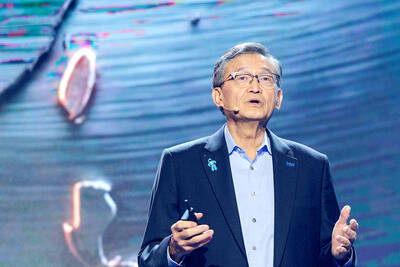
Intel Corp regards Taiwan Semiconductor Manufacturing Co (TSMC, 台積電) as a longstanding partner, as the US chipmaker would continue outsourcing production of advanced chips to TSMC, Intel chief executive officer Lip-Bu Tan (陳立武) said yesterday. “I don’t look at people as competitors. I look at the collaboration... Nvidia is also, you know, a good friend,” Tan told a news conference following his keynote speech at the Computex trade show in Taipei. “It’s a very trusted partnership for us... We are a big, top customer for them, and we’re going to continue doing that,” he said, referring to TSMC, the world’s largest foundry

Artificial intelligence (AI) agents would supplant smartphones as the center of people’s digital lives, fundamentally reshaping personal devices and driving a major computing upgrade cycle, Qualcomm Inc CEO Cristiano Amon said yesterday. In his keynote speech for this year’s Computex trade show in Taipei, Amon said that the rise of "agentic AI" — AI systems capable of reasoning, planning and carrying out tasks autonomously — would transform how people interact with technology across phones, PCs, vehicles and wearable devices. Describing the technology as the next major evolution in computing, Amon said that "2026 is the year of agents.” For decades, smartphones have sat

Hon Hai Precision Industry Co (鴻海精密) yesterday said it would work with US chipmaker Intel Corp to jointly develop and deploy next-generation artificial intelligence (AI) infrastructure and intelligent computing platforms in a move to capture booming demand for AI computing systems. Hon Hai, also known as Foxconn Technology Group (富士康), said in a statement that the partnership would combine its global manufacturing scale, system integration expertise and AI data center deployment capabilities with Intel’s strengths in processor architecture, silicon technologies and software ecosystem. The companies said they plan to work on equipment used in AI data centers, including server racks powered by


 RSS
RSS