


MediaTek Inc (聯發科), which counts Lenovo Group (聯想) and China Mobile Ltd (中國移動) as its customers, yesterday launched its MediaTek Labs program to speed up development of applications for wearable devices and the Internet of Things.
The new program is intended to help hardware and application developers create new products by running the Linkit operating system, powered by MediaTek’s Aster processor, and especially designed for tiny wearable and Internet of Things devices. Aster is the world’s smallest wearable chip measuring 5.4mm by 6.2mm.
“MediaTek is good at providing reference design. We believe MediaTek’s Aster chip and its software can help global wearable and Internet of Things developers and partners to develop new products faster,” company president Hsieh Ching-jiang (謝清江) said at the annual Computex trade show.
MediaTek yesterday opened its product showroom to the public.
JC Hsu (徐敬全), general manager of MediaTek’s new business development unit, said that the new platform is a semi-turnkey, which would allow developers to create their products easily.
Customers are using MediaTek’s new chip and system in developing a wide range of wearable devices, including smartwatches, GPS trackers, or medical and sports monitors, which can be connected to all kinds of smartphones, Hsu said.
MediaTek is scheduled to start shipments of its first Aster processors next quarter. The chipmaker said more than 10 customers are designing their wearable products using its Aster chips and that number was expected to grow several times.
Most wearable devices or Web-enabled products would be shipped to China, MediaTek chief financial officer David Ku (顧大為) said.
Ku said revenue contribution from the new wearable and Internet of Things chips will be minimal this year, but could post a single-digit percentage growth next quarter. MediaTek made NT$136.06 billion (US$4.52 billion) in revenue last year, up 37.1 percent annually.
Hsieh said yesterday that handset inventory in China appeared to be at normal levels and chip supply was tight.
He expected supply constraints to extend into the next quarter when seasonal demand picks up.

SECOND-RATE: Models distilled from US products do not perform the same as the original and undo measures that ensure the systems are neutral, the US’ cable said The US Department of State has ordered a global push to bring attention to what it said are widespread efforts by Chinese companies, including artificial intelligence (AI) start-up DeepSeek (深度求索), to steal intellectual property from US AI labs, according to a diplomatic cable. The cable, dated Friday and sent to diplomatic and consular posts around the world, instructs diplomatic staff to speak to their foreign counterparts about “concerns over adversaries’ extraction and distillation of US AI models.” Distillation is the process of training smaller AI models using output from larger, more expensive ones to lower the costs of training a powerful new

Singapore-based ride-hailing and delivery giant Grab Holdings’ planned acquisition of Foodpanda’s Taiwan operations has yet to enter the formal review stage, as regulators await supplementary documents, the Fair Trade Commission (FTC) said yesterday. Acting FTC Chairman Chen Chih-min (陳志民) told the legislature’s Economics Committee that although Grab submitted its application on March 27, the case has not been officially accepted because required materials remain incomplete. Once the filing is finalized, the FTC would launch a formal probe into the deal, focusing on issues such as cross-shareholding and potential restrictions on market competition, Chen told lawmakers. Grab last month announced that it would acquire
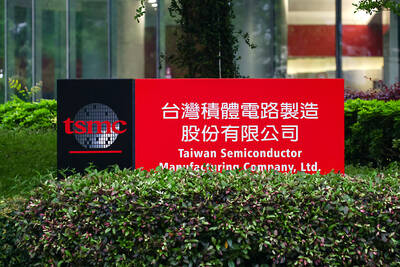
Shares of Taiwan Semiconductor Manufacturing Co (TSMC, 台積電) have repeatedly hit new highs, but an equity analyst said the stock’s valuation remains within a reasonable range and any pullback would likely be technical. The contract chipmaker’s historical price-to-earnings (P/E) ratio has ranged between 20 and 30, Cathay Futures Consultant Co (國泰證期) analyst Tsai Ming-han (蔡明翰) told Central News Agency. With market consensus projecting that TSMC would post earnings per share of about NT$100 (US$3.17) this year, supported by strong global demand for artificial intelligence (AI) applications, and the stock currently trading at a P/E ratio of below 25, Tsai said the valuation
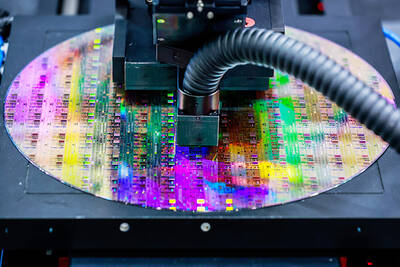
The artificial intelligence (AI) boom has triggered a seismic reshuffling of global equity markets, with Taiwan and South Korea muscling past European nations one by one. With its stock market now valued at nearly US$4.3 trillion, Taiwan surpassed the UK, Europe’s biggest market, earlier this month, data compiled by Bloomberg showed. South Korea is about US$140 billion away from doing the same. The tech-heavy Asian markets have shot past Germany and France in the past seven months. The shift is largely down to massive gains in shares of three companies that provide essential hardware for AI: Taiwan Semiconductor Manufacturing Co (TSMC, 台積電),


 RSS
RSS