


Samsung Electronics Co, the world’s largest maker of mobile devices using Google Inc’s Android software, is to release its first smartphone using the Tizen operating system about a year later than planned.
The Samsung Z will be available in Russia in the third quarter before expanding to other markets, the South Korean company said in a statement yesterday. The device will have a 4.8-inch screen and will be on show at the Tizen developer conference in San Francisco today.
Tizen, which is being developed with companies including Intel Corp and Vodafone Group PLC, is an open-source alternative to Android, the most popular smartphone operating system. Asia’s biggest technology company previously said its first phone using the platform would be released by the end of September last year, as it seeks to spark consumer demand amid slowing shipment growth and competition from cheaper Chinese producers.
“Samsung is trying to do anything to fill in the gaps in the third quarter, but I don’t think the Tizen phone will give a big boost to Samsung’s overall smartphone sales,” Lee Do-hoon, an analyst at CIMB Group Holdings Bhd in Seoul, said by telephone. “The release of the new phone is nothing more than symbolic as it’s at a very early stage.”
Samsung shares rose 0.8 percent to 1,455,000 won at the close of trade in Seoul. The stock has gained 6.1 percent this year after a 9.9 percent decline last year.
The new device enters a smartphone market where global growth is expected to slow to 6.2 percent in 2018 from 19 percent this year, research firm International Data Corp (IDC) said in February.
Samsung shipped 316 million smartphones last year, more than double the 153 million iPhones of second-ranked Apple Inc, according to data compiled by Bloomberg from IDC.
The Samsung Z in black and gold will feature a high-definition screen, a 2.3 gigahertz quad-core processor and a fingerprint sensor, the company said. The company unveiled two wristwatches using Tizen in February.
Samsung plans to offer a special promotional program through the Tizen application store when the device goes on sale as it seeks to attract more developers to build software.
The company’s mobile-phone business, which accounted for 76 percent of operating income in the first quarter, posted the lowest sales in five quarters as Chinese producers gain in emerging markets with cheaper, feature-packed devices.
Taiwan Semiconductor Manufacturing Co (TSMC, 台積電) has approved a capital budget of US$31.28 billion for production expansion to meet long-term development needs during the artificial intelligence (AI) boom. The company’s board meeting yesterday approved the capital appropriation plan for purposes such as the installation of advanced technology capacity and fab construction, the world’s largest contract chipmaker said in a statement. At an earnings conference last month, TSMC forecast that its capital expenditure for this year would be at the higher end of the US$52 billion to US$56 billion range it forecast in January in response to robust demand for 5G, AI and
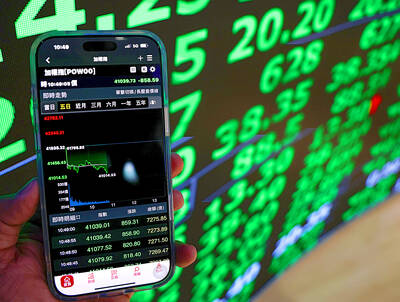
PORTFOLIO REBALANCING: The adjustments in three global equity indices reflect rising investor appetite for semiconductor and artificial intelligence-related stocks Taiwan’s weighting in major global equity indices compiled by MSCI Inc is to rise modestly following the latest quarterly review, underscoring the market’s expanding role in emerging-market portfolios, as global investors continue to favor the nation’s technology sector. Taiwan’s weighting in the MSCI Emerging Markets Index is to increase by 0.30 percentage points to 23.76 percent, after the changes take effect at the close of the May 29 session. Its weighting in the MSCI All-Country Asia ex-Japan Index is to rise 0.37 percentage points to 27.16 percent, while that in the MSCI All Country World Index is to edge up slightly to
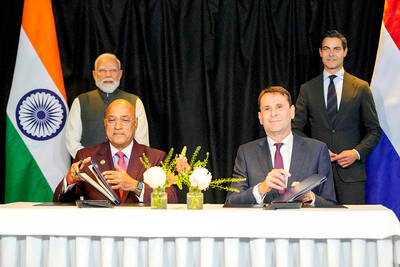
NEW MARKET: The partnership opens up India to the Dutch company, which already has a strong hold in the semiconductor market of South Korea, Taiwan and China ASML Holding NV entered into a partnership agreement with Tata Electronics Pvt Ltd aimed at ramping up India’s goal to develop domestic chip-manufacturing capabilities. The Dutch company’s technology would help power Tata Electronics’ planned 300 millimeter (mm) semiconductor foundry in Gujarat, according to a joint statement from the two companies on Saturday. The signing of a memorandum of understanding coincides with a visit by Indian Prime Minister Narendra Modi to the Netherlands, which is looking to deepen bilateral relations with New Delhi. ASML, whose top customers include Taiwan Semiconductor Manufacturing Co (台積電) and Samsung Electronics Co, makes lithography machines that can print
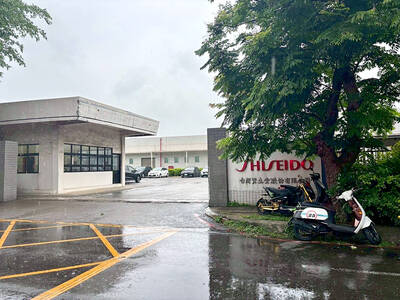
The Hsinchu County Government’s Labor Affairs Department yesterday said that it has received a plan from cosmetics brand Taiwan Shiseido Co (台灣資生堂) detailing mass layoffs at its plant in Hukou Township (湖口). While the labor authorities did not disclose the number of employees to be laid off, Japanese news media earlier in the day reported that the closure of the company’s factory in Hukou would result in 170 employees losing their jobs. Shiseido followed the law by reporting its layoff plan, the department said, adding that authorities would closely monitor negotiations between the management and affected employees and step in if any


 RSS
RSS