


The British housing market has “deep, deep” structural problems, which pose the biggest current risk to the economy, Bank of England Governor Mark Carney said in an interview.
“The issue around the housing market in the UK ... is there are not sufficient [numbers of] houses [being] built,” he told Sky television.
In extracts of the interview released by Sky ahead of its full broadcast yesterday, Carney noted that the number of large mortgages being approved is on the rise and said more houses needed to built in Britain.
“We’re not going to build a single house at the Bank of England,” he said. “We can’t influence that.”
“What we can influence ... is whether the banks are strong enough. Do they have enough capital against risk in the housing market?” he said.
Carney said the bank could also check lending procedures “so people can get mortgages if they can afford them, but they won’t if they can’t.”
“By reinforcing both of those, we can reduce the risk that comes from a housing market that has deep, deep structural problems,” he said.
Carney said there was evidence that large mortgages, where housebuyers are given loans up to four times their salaries, are on the rise again.
“We don’t want to build up another big debt overhang that is going to hurt individuals and is very much going to slow the economy in the medium term,” he said.
“We’d be concerned if there was a rapid increase in high loan-to-value mortgages across the banks. We’ve seen that creeping up and it’s something we’re watching closely,” he added.
Last week, the bank played down the chances of an imminent rate rise despite fears of a growing house-price bubble.
“The biggest risk to financial stability, and therefore to the durability of the expansion, centers on the housing market and that’s why we’re focused on that,” he said.
Earlier this month, the Organisation for Economic Co-operation and Development called on the bank to impose measures to help slow rising house prices.
Shares of contract chipmaker Taiwan Semiconductor Manufacturing Co (TSMC, 台積電) came under pressure yesterday after a report that Apple Inc is looking to shift some orders from the Taiwanese company to Intel Corp. TSMC shares fell NT$55, or 2.4 percent, to close at NT$2,235 on the local main board, Taiwan Stock Exchange data showed. Despite the losses, TSMC is expected to continue to benefit from sound fundamentals, as it maintains a lead over its peers in high-end process development, analysts said. “The selling was a knee-jerk reaction to an Intel-Apple report over the weekend,” Mega International Investment Services Corp (兆豐國際投顧) analyst Alex Huang
TRANSITION: With the closure, the company would reorganize its Taiwanese unit to a sales and service-focused model, Bridgestone said Bridgestone Corp yesterday announced it would cease manufacturing operations at its tire plant in Hsinchu County’s Hukou Township (湖口), affecting more than 500 workers. Bridgestone Taiwan Co (台灣普利司通) said in a statement that the decision was based on the Tokyo-based tire maker’s adjustments to its global operational strategy and long-term market development considerations. The Taiwanese unit would be reorganized as part of the closure, effective yesterday, and all related production activities would be concluded, the statement said. Under the plan, Bridgestone would continue to deepen its presence in the Taiwanese market, while transitioning to a sales and service-focused business model, it added. The Hsinchu

Taiwan Semiconductor Manufacturing Co (TSMC, 台積電) has approved a capital budget of US$31.28 billion for production expansion to meet long-term development needs during the artificial intelligence (AI) boom. The company’s board meeting yesterday approved the capital appropriation plan for purposes such as the installation of advanced technology capacity and fab construction, the world’s largest contract chipmaker said in a statement. At an earnings conference last month, TSMC forecast that its capital expenditure for this year would be at the higher end of the US$52 billion to US$56 billion range it forecast in January in response to robust demand for 5G, AI and
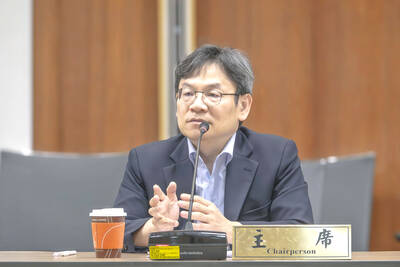
Taiwan Semiconductor Manufacturing Co’s (TSMC, 台積電) investment project in Arizona has progressed better than expected, but it still faces challenges such as water and labor shortages, National Development Council (NDC) Minister Yeh Chun-hsien (葉俊顯) said yesterday. Speaking with reporters after visiting TSMC’s Arizona hub and attending the SelectUSA Investment Summit in Maryland last week, Yeh said TSMC’s Arizona site turned a profit of NT$16.14 billion (US$514 million) last year in its first full year of mass production. “TSMC told me it was surprised by the smooth trial run of the first fab, which has left the company optimistic about the project’s outlook,”


 RSS
RSS