


Facebook Inc chief executive officer Mark Zuckerberg says he has called US President Barack Obama to express frustration over what Zuckerberg says is long-lasting damage caused by the US government’s surveillance programs.
Posting on Facebook on Thursday, Zuckerberg wrote that he has been “confused and frustrated by the repeated reports of the behavior of the US government. When our engineers work tirelessly to improve security, we imagine we’re protecting you against criminals, not our own government.”
Though Zuckerberg did not name the US National Security Agency (NSA), the post comes a day after the news Web site Intercept reported that the agency has impersonated a Facebook server to infect surveillance targets’ computers and get files from at least one hard drive. The report is based on documents leaked by former NSA contractor Edward Snowden.
The NSA called the report “inaccurate.”
“NSA uses its technical capabilities only to support lawful and appropriate foreign intelligence operations, all of which must be carried out in strict accordance with its authorities,” the agency said in a statement.
White House spokeswoman Caitlin Hayden confirmed that the president on Wednesday night spoke with Zuckerberg regarding “recent reports in the press about alleged activities by the US intelligence community.” She gave no further comment.
Technology companies including Facebook, Google Inc and Microsoft Corp have been increasingly vocal about frustrations over the US government’s spying programs.
Last month, top executives from the companies, along with others from Yahoo Inc, Twitter Inc, AOL Inc and LinkedIn Corp, called for changes that would include a government agreement not to collect bulk data from Internet communications.
The ongoing strife over surveillance could threaten what has been a cordial relationship between Silicon Valley and Obama. The region has voted overwhelmingly for Obama in the past two presidential elections. Nearly 70 percent of California’s Santa Clara County, which is home to Facebook, Google, Yahoo and a slew of other tech giants, sided with the president in the 2012 elections.
In Thursday’s post, Zuckerberg called on the government to be more transparent, but added that, unfortunately, “it seems like it will take a very long time for true full reform.”
In January, Obama ordered a series of changes to mass surveillance programs that included ending the government’s control of telephone data from hundreds of millions of US citizens and ordered intelligence agencies to get a court’s permission before accessing such records.
Tech companies took the president’s speech as a step in the right direction, but said that more is needed to protect people’s privacy — along with the economic interests of US companies that generate most of their revenue overseas.
US Internet companies are worried that people, especially those living overseas, will not trust them with personal information if they believe such data is being collected by the US government.
“The US government should be the champion for the Internet, not a threat. They need to be much more transparent about what they’re doing, or otherwise people will believe the worst,” Zuckerberg wrote.
Obama held a Facebook “town hall” meeting at the company’s headquarters in April 2011 and earlier that year had dinner with a group of tech leaders that included Zuckerberg, Google’s then-CEO Eric Schmidt and others.

Taiwanese firms have increased investment in the Philippines in recent years as Manila’s ties with Washington deepen and global supply chains continue to shift away from China, an expert at the Chung-Hua Institution for Economic Research (CIER, 中華經濟研究院) said yesterday. The Philippines had not been among Taiwanese investors’ top choices in Southeast Asia, CIER Taiwan ASEAN Studies Center director Kristy Hsu (徐遵慈) said at a seminar in Taipei. However, Taiwan’s investment in the country has grown significantly since the COVID-19 pandemic, reaching US $257 million last year, a high in recent years, she said. Although Taiwan’s total investment in the Philippines still lags
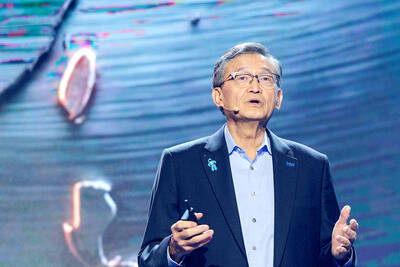
Intel Corp regards Taiwan Semiconductor Manufacturing Co (TSMC, 台積電) as a longstanding partner, as the US chipmaker would continue outsourcing production of advanced chips to TSMC, Intel chief executive officer Lip-Bu Tan (陳立武) said yesterday. “I don’t look at people as competitors. I look at the collaboration... Nvidia is also, you know, a good friend,” Tan told a news conference following his keynote speech at the Computex trade show in Taipei. “It’s a very trusted partnership for us... We are a big, top customer for them, and we’re going to continue doing that,” he said, referring to TSMC, the world’s largest foundry

Hon Hai Precision Industry Co (鴻海精密) yesterday said it would work with US chipmaker Intel Corp to jointly develop and deploy next-generation artificial intelligence (AI) infrastructure and intelligent computing platforms in a move to capture booming demand for AI computing systems. Hon Hai, also known as Foxconn Technology Group (富士康), said in a statement that the partnership would combine its global manufacturing scale, system integration expertise and AI data center deployment capabilities with Intel’s strengths in processor architecture, silicon technologies and software ecosystem. The companies said they plan to work on equipment used in AI data centers, including server racks powered by
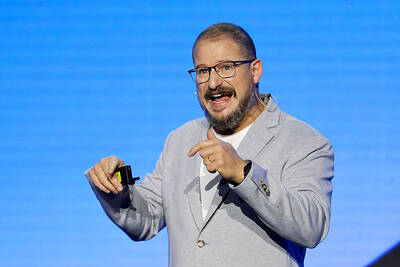
Artificial intelligence (AI) agents would supplant smartphones as the center of people’s digital lives, fundamentally reshaping personal devices and driving a major computing upgrade cycle, Qualcomm Inc CEO Cristiano Amon said yesterday. In his keynote speech for this year’s Computex trade show in Taipei, Amon said that the rise of "agentic AI" — AI systems capable of reasoning, planning and carrying out tasks autonomously — would transform how people interact with technology across phones, PCs, vehicles and wearable devices. Describing the technology as the next major evolution in computing, Amon said that "2026 is the year of agents.” For decades, smartphones have sat


 RSS
RSS