


Taiwanese smartphone maker HTC Corp (宏達電) yesterday launched a new flagship product — the latest HTC One — in an attempt to regain market share in an intensely competitive market dominated by Apple Inc and Samsung Electronics Co.
The new high-end smartphone model is seen as the company’s biggest bet to restore its growth momentum after reporting consecutive quarterly revenue declines since the second quarter of last year.
The HTC One, which uses Google’s Android operating system, is equipped with a 4.7-inch full-HD display, and an “ultra-pixel” auto-focus rear camera that has a resolution of just 4 megapixels, but is able to shoot high-quality photos or films like a 13-megapixel camera, the company said.

Photo: Bloomberg
The HTC One is able to transmit data using 4G long-term evolution (LTE) high-speed wireless communication networks.
“Although smartphones are one of the main ways we stay in touch with people and information we care about, conventional designs have failed to keep pace with how people are actually using them,” HTC chief executive Peter Chou (周永明) said in a statement.
“A new, exciting approach to the smartphone is needed, and with the new HTC One, we have re-imagined the mobile experience from the ground up to reflect this new reality,” Chou said.
However, investor response was lukewarm, with HTC’s stock dropping 1.6 percent yesterday to NT$277.50, underperforming the TAIEX, which gained 0.86 percent.
“In our view, in terms of video and audio experience, HTC One is the best Android smartphone for the time being,” Birdy Lu (呂家霖), an analyst with Daiwa Capital Markets, said in an e-mailed note.
Lu said the HTC One was an “impressive” product, particularly its display and camera quality, especially in a low light environment.
However, the launch was ill-timed, as Samsung is likely to roll out its new flagship smartphone model, the Galaxy S4, as soon as next month to compete with the HTC One, Lu said.
Daiwa Capital Markets maintained its neutral rating on HTC and forecast that the stock price would stay resilient and trade in a narrow range of between NT$260 and NT$300 before the arrival of the Samsung Galaxy S4.
Jeff Pu (蒲得宇), an equity research analyst at Taipei-based Fubon Securities (富邦證券), forecast HTC would ship 1.5 million units of the HTC One per month starting from April.
“Despite our near-term optimism, we believe HTC is still a product cycle-driven company, and therefore a solid product roadmap in the second half of the year is critical amid a highly competitive landscape,” Pu said in a note yesterday.
Fu said HTC could launch some new LTE models in the middle of the third quarter to take advantage of the rapidly expanding LTE coverage in developed countries. He expects HTC to achieve quarterly growth of 35 percent and 20 percent respectively in the next two quarters.
Fubon raised its target price for HTC to NT$345 from NT$310, and expected the stock to outperform ahead of this new product cycle.
HTC said its new flagship smartphone model would soon be available in more than 80 countries, and that it would collaborate with more than 185 operators to sell the phone next month.
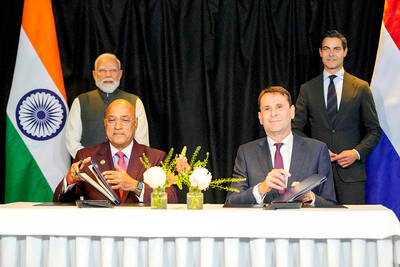
NEW MARKET: The partnership opens up India to the Dutch company, which already has a strong hold in the semiconductor market of South Korea, Taiwan and China ASML Holding NV entered into a partnership agreement with Tata Electronics Pvt Ltd aimed at ramping up India’s goal to develop domestic chip-manufacturing capabilities. The Dutch company’s technology would help power Tata Electronics’ planned 300 millimeter (mm) semiconductor foundry in Gujarat, according to a joint statement from the two companies on Saturday. The signing of a memorandum of understanding coincides with a visit by Indian Prime Minister Narendra Modi to the Netherlands, which is looking to deepen bilateral relations with New Delhi. ASML, whose top customers include Taiwan Semiconductor Manufacturing Co (台積電) and Samsung Electronics Co, makes lithography machines that can print
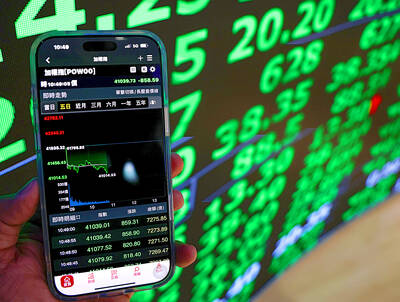
PORTFOLIO REBALANCING: The adjustments in three global equity indices reflect rising investor appetite for semiconductor and artificial intelligence-related stocks Taiwan’s weighting in major global equity indices compiled by MSCI Inc is to rise modestly following the latest quarterly review, underscoring the market’s expanding role in emerging-market portfolios, as global investors continue to favor the nation’s technology sector. Taiwan’s weighting in the MSCI Emerging Markets Index is to increase by 0.30 percentage points to 23.76 percent, after the changes take effect at the close of the May 29 session. Its weighting in the MSCI All-Country Asia ex-Japan Index is to rise 0.37 percentage points to 27.16 percent, while that in the MSCI All Country World Index is to edge up slightly to
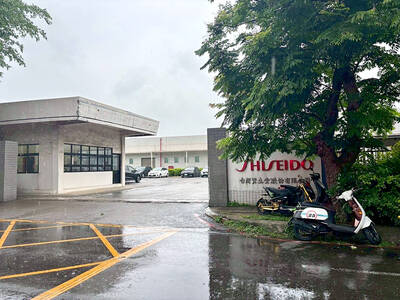
The Hsinchu County Government’s Labor Affairs Department yesterday said that it has received a plan from cosmetics brand Taiwan Shiseido Co (台灣資生堂) detailing mass layoffs at its plant in Hukou Township (湖口). While the labor authorities did not disclose the number of employees to be laid off, Japanese news media earlier in the day reported that the closure of the company’s factory in Hukou would result in 170 employees losing their jobs. Shiseido followed the law by reporting its layoff plan, the department said, adding that authorities would closely monitor negotiations between the management and affected employees and step in if any
Hon Hai Precision Industry Co (鴻海精密) on Tuesday confirmed a cyberattack targeting some of its North American facilities, but said the affected factories were gradually returning to normal. The company, known globally as Foxconn Technology Group (富士康科技集團), said that its cybersecurity team “activated the response mechanism and implemented operational measures to ensure the continuity of production and delivery.” “The affected factories are resuming normal production,” the company said in a statement. Hon Hai had previously described it as a “technical issue,” when news of the cyberattack first surfaced. The confirmation followed media reports of a large-scale information technology system incident that broke out at


 RSS
RSS