


British Chancellor of the Exchequer George Osborne said yesterday that all Britons should be prepared to make sacrifices to help shrink the nation’s debts, as he prepared to defend his faltering austerity plan in the coming days.
Osborne is due to present his Autumn statement on Wednesday — the half-yearly budget update in which he may face the tough choice of either announcing more cuts or delaying his debt target.
He is expected to defend his stringent economic policies as the only credible way of solving the government’s biggest political problem — its failure to deliver a strong recovery.
Writing in the Sun on Sunday newspaper, Osborne said all sectors of society needed to accept cuts or higher taxes.
“Everyone must make a contribution to dealing with our debts, from the richest in our society to those living a life on benefits,” he said.
“We are hunting down those who evade tax wherever they try to hide. But we understand that fairness isn’t just about taxing the rich. It’s also about ending the something-for-nothing benefits culture,” he said.
British media reported yesterday that Osborne was poised to announce plans to cap the pension benefits of high earners alongside reining in the welfare budget.
The Treasury declined to comment on the reports.
Other measures likely to be announced include moves to boost Britain’s fledgling shale gas industry, newspapers said.
Slow growth over the past two years means it will take at least two years longer than originally planned for Osborne to meet one of his debt-reduction goals, removing Britain’s underlying budget deficit.
However, in his article, the chancellor expressed a firm commitment to his economic policies.
“Britain is on the right track and turning back now would be a disaster,” he said, citing low interest rates and the creation of 1 million private-sector jobs as examples of the success of the government’s strategy.
The failure of the government to nurse the economy back to strong growth after the financial crisis has fueled attacks from the Labour party, which polls show would regain power if an election were held.

Taiwanese firms have increased investment in the Philippines in recent years as Manila’s ties with Washington deepen and global supply chains continue to shift away from China, an expert at the Chung-Hua Institution for Economic Research (CIER, 中華經濟研究院) said yesterday. The Philippines had not been among Taiwanese investors’ top choices in Southeast Asia, CIER Taiwan ASEAN Studies Center director Kristy Hsu (徐遵慈) said at a seminar in Taipei. However, Taiwan’s investment in the country has grown significantly since the COVID-19 pandemic, reaching US $257 million last year, a high in recent years, she said. Although Taiwan’s total investment in the Philippines still lags
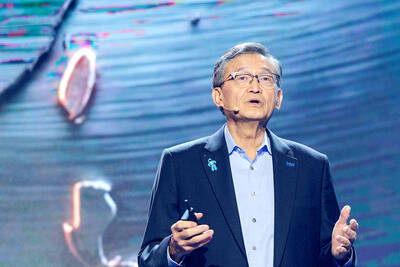
Intel Corp regards Taiwan Semiconductor Manufacturing Co (TSMC, 台積電) as a longstanding partner, as the US chipmaker would continue outsourcing production of advanced chips to TSMC, Intel chief executive officer Lip-Bu Tan (陳立武) said yesterday. “I don’t look at people as competitors. I look at the collaboration... Nvidia is also, you know, a good friend,” Tan told a news conference following his keynote speech at the Computex trade show in Taipei. “It’s a very trusted partnership for us... We are a big, top customer for them, and we’re going to continue doing that,” he said, referring to TSMC, the world’s largest foundry

Hon Hai Precision Industry Co (鴻海精密) yesterday said it would work with US chipmaker Intel Corp to jointly develop and deploy next-generation artificial intelligence (AI) infrastructure and intelligent computing platforms in a move to capture booming demand for AI computing systems. Hon Hai, also known as Foxconn Technology Group (富士康), said in a statement that the partnership would combine its global manufacturing scale, system integration expertise and AI data center deployment capabilities with Intel’s strengths in processor architecture, silicon technologies and software ecosystem. The companies said they plan to work on equipment used in AI data centers, including server racks powered by

Artificial intelligence (AI) agents would supplant smartphones as the center of people’s digital lives, fundamentally reshaping personal devices and driving a major computing upgrade cycle, Qualcomm Inc CEO Cristiano Amon said yesterday. In his keynote speech for this year’s Computex trade show in Taipei, Amon said that the rise of "agentic AI" — AI systems capable of reasoning, planning and carrying out tasks autonomously — would transform how people interact with technology across phones, PCs, vehicles and wearable devices. Describing the technology as the next major evolution in computing, Amon said that "2026 is the year of agents.” For decades, smartphones have sat


 RSS
RSS