


Apple today will spotlight next-generation software for its coveted gadgets as it kicks off its annual gathering of developers whose applications are vital to its success.
The Internet buzzed with rumors about what the notoriously secretive maker of iPads, iPhones, iPods and Macintosh computers will unveil at a keynote event marking the start of the five-day Worldwide Developers Conference (WWDC).
Analysts did not expect Apple to unveil any new devices, believing it will opt instead to focus on improvements to operating software and opportunities for developers to make even better “apps.”
“What keeps people allegiant to and excited about their iPhones and iPads are all the new apps that are available,” Forrester analyst Charles Golvin said.
“Appealing to the developers and continuing to enrich the set of tools and capabilities they have to build great new apps or enhance existing apps is absolutely critical,” he added.
The WWDC comes less than two weeks before Google’s annual developers conference, which will be held in the same downtown San Francisco conference center.
“It is a back and forth between Apple and Google in a battle for hearts and minds of developers; to be their priority,” Golvin said.
“What Apple wants is for them to only develop for iOS,” he continued. “That is not realistic, but they can try to make sure all the exciting new things come to iPad and iPhone first and maybe get to the Android, and Google wants the opposite.”
Google-backed Android software for mobile devices is the world’s leading smartphone platform and seen as the only formidable adversary for Apple.
Banners for iOS 6, the next generation operating system for Apple mobile gadgets, were on display in the conference venue during the weekend.
Analysts suspected iOS upgrades to include improving and maybe even extending Siri virtual assistant capabilities that were a hit after being introduced in the iPhone 4S.
Apple is expected to introduce its own mapping program to replace Google Maps software that had been pre-installed on iPhones.
In apparent anticipation of the move, Google last week unveiled a revamped maps program that allows mobile users to use the service without an Internet connection.
The service, which will be available soon on Android devices, allows users to select an area and save a local map which can be viewed when a user does not have a data connection.
Google Maps could still be downloaded and used on iPhones.
Apple would in theory be able to tie its mapping service to the Siri voice-directed personal assistant, which could supplant Google in searching for businesses.
“If Apple does a great job [on its maps program] then we will see some substitution and it may impact Google search on the iPhone,” said Opus Research analyst Greg Sterling.
Apple will also give developers the latest news about the new Mountain Lion operating system for Macintosh computers. Apple is expected to show off revamped MacBook laptop computers powered by Intel Ivy Bridge chips.
“My opinion is that we will definitely hear an update on Mountain Lion and we almost certainly will hear about iOS 6 with whizzy new mapping technology that is going to replace Google Maps,” Golvin said.
“And the Macbook line hasn’t been refreshed for a while,” he continued. “The big question is are we going to hear anything about Apple TV.”
Apple chief executive Tim Cook said recently that the company was putting a lot of energy into its Apple TV boxes for streaming Internet content to television screens.
Apple long played the product off as “a hobby,” but is believed to be trying to duplicate its success in tablet and smartphone markets in living rooms.
“If they are going to push Apple TV from a hobby to something with full-force Apple marketing, I think they will do that in a separate event dedicated entirely to that,” Golvin said.
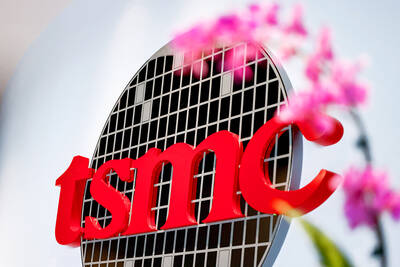
Taiwan Semiconductor Manufacturing Co (TSMC, 台積電) has approved a capital budget of US$31.28 billion for production expansion to meet long-term development needs during the artificial intelligence (AI) boom. The company’s board meeting yesterday approved the capital appropriation plan for purposes such as the installation of advanced technology capacity and fab construction, the world’s largest contract chipmaker said in a statement. At an earnings conference last month, TSMC forecast that its capital expenditure for this year would be at the higher end of the US$52 billion to US$56 billion range it forecast in January in response to robust demand for 5G, AI and
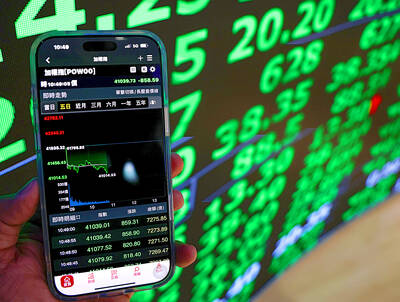
PORTFOLIO REBALANCING: The adjustments in three global equity indices reflect rising investor appetite for semiconductor and artificial intelligence-related stocks Taiwan’s weighting in major global equity indices compiled by MSCI Inc is to rise modestly following the latest quarterly review, underscoring the market’s expanding role in emerging-market portfolios, as global investors continue to favor the nation’s technology sector. Taiwan’s weighting in the MSCI Emerging Markets Index is to increase by 0.30 percentage points to 23.76 percent, after the changes take effect at the close of the May 29 session. Its weighting in the MSCI All-Country Asia ex-Japan Index is to rise 0.37 percentage points to 27.16 percent, while that in the MSCI All Country World Index is to edge up slightly to
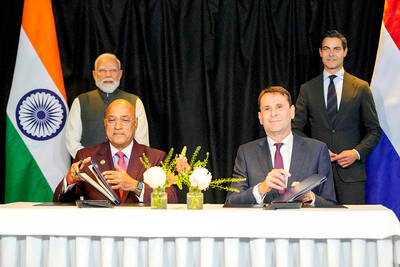
NEW MARKET: The partnership opens up India to the Dutch company, which already has a strong hold in the semiconductor market of South Korea, Taiwan and China ASML Holding NV entered into a partnership agreement with Tata Electronics Pvt Ltd aimed at ramping up India’s goal to develop domestic chip-manufacturing capabilities. The Dutch company’s technology would help power Tata Electronics’ planned 300 millimeter (mm) semiconductor foundry in Gujarat, according to a joint statement from the two companies on Saturday. The signing of a memorandum of understanding coincides with a visit by Indian Prime Minister Narendra Modi to the Netherlands, which is looking to deepen bilateral relations with New Delhi. ASML, whose top customers include Taiwan Semiconductor Manufacturing Co (台積電) and Samsung Electronics Co, makes lithography machines that can print
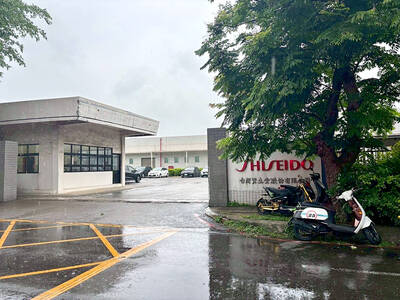
The Hsinchu County Government’s Labor Affairs Department yesterday said that it has received a plan from cosmetics brand Taiwan Shiseido Co (台灣資生堂) detailing mass layoffs at its plant in Hukou Township (湖口). While the labor authorities did not disclose the number of employees to be laid off, Japanese news media earlier in the day reported that the closure of the company’s factory in Hukou would result in 170 employees losing their jobs. Shiseido followed the law by reporting its layoff plan, the department said, adding that authorities would closely monitor negotiations between the management and affected employees and step in if any


 RSS
RSS