


European stocks declined for a second week after an inconclusive election in Greece left political parties struggling to form a government, increasing speculation that the nation might fail to implement austerity measures.
The STOXX Europe 600 Index retreated 0.4 percent to 251.97 this past week. The measure slid to the lowest level in almost four months on Wednesday, before rebounding 0.9 percent over the next two days. The gauge has retreated 7.5 percent since this year’s high on March 16 as concern has grown that the eurozone might fracture and Chinese economic growth missed forecasts.
“Investors are starting to ask what happens after a country leaves the euro area, which was supposed to have been a rock-solid bloc,” said Henrik Drusebjerg, a senior strategist at Nordea Bank AB in Copenhagen, where he helps oversee US$230 billion. “The risk is that it will take massive resources to keep interest rates under control in Italy and Spain if Greece leaves the monetary union.”
National benchmark indices fell in nine of the 18 Western European markets this week. The UK’s FTSE 100 declined 1.4 percent. France’s CAC 40 lost 1 percent as Francois Hollande was elected French president. Germany’s DAX advanced 0.3 percent. Greece’s ASE Index plunged 11 percent to the lowest level since 1992.
Voters in Greece flocked to anti-austerity parties in last Sunday’s election. New Democracy won 19 percent of the total vote and 108 seats in the 300-seat parliament. Pasok, the socialist party that partnered with New Democracy in securing a second rescue package for the country, trailed in third place, while Syriza, a coalition of left-wing parties that has vowed to cancel the bailout terms, came second.
Greece’s political impasse raised the possibility another election might have to be held as early as next month. The standoff has reignited European concern over Greece’s ability to hold to the terms of its two bailouts -negotiated since May 2010 and sparked concerns about the country leaving the euro.
China’s industrial production rose the least since 2009 last month, retail sales and new lending gained less than estimated, and exports also tailed forecasts.
Europe’s economy will fail to grow this year with risks to the outlook “tilted to the downside” after nations from Spain to Italy slipped into recession, the European Commission said on Friday. GDP in the 17-nation eurozone would drop 0.3 percent, the commission estimated, reiterating a February forecast.
“Some investors believe things are falling apart, though others still think stocks are cheap — but most likely stocks will have a hard time until we’re well into the summer,” said Hans Peterson, the chief investment officer at SEB Private Banking in Stockholm. “When we get into the summer, we’ll see some very attractive entry points for investors to get back into shares.”
In France, Francois Hollande defeated French President Nicolas Sarkozy to become the first Socialist in 17 years to control Europe’s second-biggest economy. He pledged to push for less austerity and more growth in the region.
German Chancellor Angela Merkel said she would welcome Hollande with “open arms,” while rejecting government stimulus as the way to spur economic growth in Europe.
Shares of contract chipmaker Taiwan Semiconductor Manufacturing Co (TSMC, 台積電) came under pressure yesterday after a report that Apple Inc is looking to shift some orders from the Taiwanese company to Intel Corp. TSMC shares fell NT$55, or 2.4 percent, to close at NT$2,235 on the local main board, Taiwan Stock Exchange data showed. Despite the losses, TSMC is expected to continue to benefit from sound fundamentals, as it maintains a lead over its peers in high-end process development, analysts said. “The selling was a knee-jerk reaction to an Intel-Apple report over the weekend,” Mega International Investment Services Corp (兆豐國際投顧) analyst Alex Huang
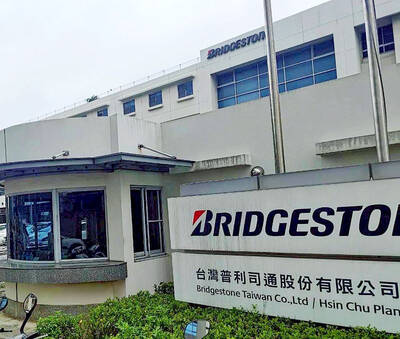
TRANSITION: With the closure, the company would reorganize its Taiwanese unit to a sales and service-focused model, Bridgestone said Bridgestone Corp yesterday announced it would cease manufacturing operations at its tire plant in Hsinchu County’s Hukou Township (湖口), affecting more than 500 workers. Bridgestone Taiwan Co (台灣普利司通) said in a statement that the decision was based on the Tokyo-based tire maker’s adjustments to its global operational strategy and long-term market development considerations. The Taiwanese unit would be reorganized as part of the closure, effective yesterday, and all related production activities would be concluded, the statement said. Under the plan, Bridgestone would continue to deepen its presence in the Taiwanese market, while transitioning to a sales and service-focused business model, it added. The Hsinchu
Taiwan Semiconductor Manufacturing Co (TSMC, 台積電) has approved a capital budget of US$31.28 billion for production expansion to meet long-term development needs during the artificial intelligence (AI) boom. The company’s board meeting yesterday approved the capital appropriation plan for purposes such as the installation of advanced technology capacity and fab construction, the world’s largest contract chipmaker said in a statement. At an earnings conference last month, TSMC forecast that its capital expenditure for this year would be at the higher end of the US$52 billion to US$56 billion range it forecast in January in response to robust demand for 5G, AI and

Taiwan Semiconductor Manufacturing Co’s (TSMC, 台積電) investment project in Arizona has progressed better than expected, but it still faces challenges such as water and labor shortages, National Development Council (NDC) Minister Yeh Chun-hsien (葉俊顯) said yesterday. Speaking with reporters after visiting TSMC’s Arizona hub and attending the SelectUSA Investment Summit in Maryland last week, Yeh said TSMC’s Arizona site turned a profit of NT$16.14 billion (US$514 million) last year in its first full year of mass production. “TSMC told me it was surprised by the smooth trial run of the first fab, which has left the company optimistic about the project’s outlook,”


 RSS
RSS