


Local telecom carrier Vibo Telecom Inc (威寶電信) is in talks with two potential buyers to sell its stake in WiMAX operations, backed by Intel Corp, to refocus on turning around its 3G business, a company executive said yesterday.
Vibo owns a 34 percent share of Vmax Telecom Co (威邁思), while Intel and local equipment maker Tecom Co (東訊) hold an 18 percent and 48 percent share respectively.
Vibo’s plan to dump its Vmax share apparently matches Intel’s WiMAX phaseout after downsizing its local WiMAX office and a plan to sell part of its stake in US WiMAX operator Clearwire Corp early this month.
“We are determined to sell [the Vmax stake] … To [better utilize] limited resources, we have to concentrate on our core business,” Vibo chief executive George Chou (周鐘麒) told reporters yesterday. “Our 3G coverage is not sufficient yet.”
It would be Vibo’s top priority to boost the company’s network coverage, Chou said, as the 3G telecom service provider did not operate a 2G network, which major telecom operators have used to serve as a makeshift 3G network in remote areas, or used as a 3G substitute when traffic spiked in urban areas.
Vibo is hoping to fully upgrade its base stations to 3.75G by the end of this year on an initial budget of NT$3 billion, Chou said last week.
“Two companies, including a telecom operator, have shown an interest,” Chou said.
It was a strategic investment by Vibo to purchase Vmax shares, Chou said last week.
Far EasTone Telecommunications Co (遠傳電信), the nation’s third-largest telecom operator and WiMAX operator, and Japan’s biggest WiMAX operator, UQ Communications Inc, have expressed interest to overtake Vibo as a major shareholder in Vmax, the Chinese-language Economic Daily News reported earlier this month.
The deal would help Far Eas-Tone expand its WiMAX coverage to the northern part of the nation. Far EasTone won a license to deploy a WiMAX network in -southern Taiwan, while Vmax won a license to provide 4G services in the north.
Vibo currently has 1.9 million users, making it one of the nation’s smallest wireless telecom operators.
The company’s plan to exit the WiMAX business would be part of its broader restructuring effort, headed by Chou, who was tapped as the company’s new CEO late in March.
The restructuring efforts also include an expansion of its customer base to 2 million users by the end of the year and to revamp the existing distribution channel, Chou said.
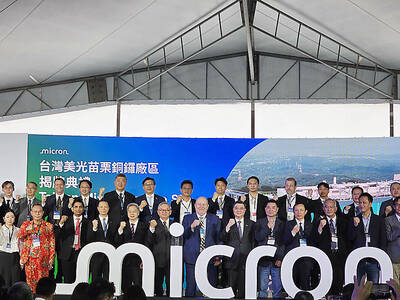
UNPRECEDENTED PACE: Micron Technology has announced plans to expand manufacturing capabilities with the acquisition of a new chip plant in Miaoli Micron Technology Inc unveiled a newly acquired chip plant in Miaoli County yesterday, as the company expands capacity to meet growing demand for advanced DRAM chips, including high-bandwidth memory chips amid the artificial intelligence boom. The plant in Miaoli County’s Tongluo Township (銅鑼), which Micron acquired from Powerchip Semiconductor Manufacturing Corp (力積電) for US$1.8 billion, is expected to make a sizeable capacity contribution to the company from fiscal 2028, the company said in a statement. It would be an extended production site of Micron’s large-scale manufacturing hub in Taichung, the company said. As the global semiconductor industry is racing to reach US$1 trillion

Singapore-based ride-hailing and delivery giant Grab Holdings Ltd has applied for regulatory approval to acquire the Taiwan operations of Germany-based Delivery Hero SE's Foodpanda in a deal valued at about US$600 million. Grab submitted the filing to the Fair Trade Commission on Friday last week, with the transaction subject to regulatory review and approval, the company said in a statement yesterday. Its independent governance structure would help foster a healthy and competitive market in Taiwan if the deal is approved, Grab said. Grab, which is listed on the NASDAQ, said in the filing that US-based Uber Technologies Inc holds about 13 percent of
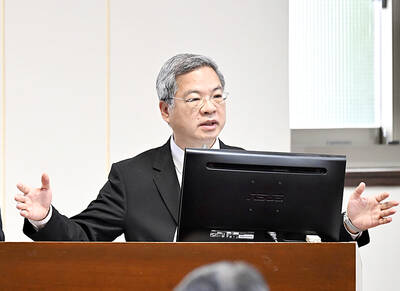
ABOVE LEGAL REQUIREMENT: The Ministry of Economic Affairs is prepared if LNG supply is disrupted, with more than the legal requirement of 11 days of inventory Taiwan has largely secured liquefied natural gas (LNG) supplies through May and arranged about half of June’s supply, Minister of Economic Affairs Kung Ming-hsin (龔明鑫) said yesterday. Since the Middle East conflict began on Feb. 28, Taiwan’s LNG inventories have remained more than 12 days, exceeding the legal requirement of 11 days, indicating no major supply concerns for domestic gas and electricity, Kung said at a meeting of the legislature’s Economics Committee in Taipei. The ministry aims to increase the figure to 14 days by the end of next year, he said. While one or two LNG or crude oil shipments for May

Taiwan’s food delivery market could undergo a major shift if Singapore-based Grab Holdings Ltd completes its planned acquisition of Delivery Hero SE’s Foodpanda business in Taiwan, industry experts said. Grab on Monday last week announced it would acquire Foodpanda’s Taiwan operations for US$600 million. The deal is expected to be finalized in the second half of this year, with Grab aiming to complete user migration to its platform by the first half of next year. A duopoly between Uber Eats and Foodpanda dominates Taiwan’s delivery market, a structure that has remained intact since the Fair Trade Commission (FTC) blocked Uber Technologies Inc’s


 RSS
RSS