

The Cabinet’s decision to give a pay raise to civil servants will help spur the nation’s private consumption and thereby have a positive impact on Taiwan’s economy, analysts said yesterday.
Premier Wu Den-yih (吳敦義) announced yesterday that Taiwan’s civil servants, military personnel and teachers would receive a 3 percent salary increase starting in July.
“The pay raise for civil servants could drive up their ability to consume, further increasing the overall momentum of private consumption,” Cheng Cheng-mount (鄭貞茂), chief economist at Citigroup in Taipei, said by telephone yesterday.
The nation’s Directorate--General of Budget, Accounting and Statistics (DGBAS) forecast Taiwan’s GDP growth would increase by 0.05 percentage points this year on rising domestic consumption after the pay raise.
Wang Lee-rong (王儷容), director of the center for economic forecasting at the Chung-Hua Institution for Economic Research (CIER, 中華經濟研究院), also said the raise would benefit the nation’s economy.
“Although the raise could drive up Taiwan’s inflation, it helps build stronger private consumption momentum, which benefits the economy more,” Wang told the Taipei Times yesterday.
Taiwan’s consumer price index (CPI) could increase by 0.02 -percentage points this year -because of the pay raise, DGBAS data showed.
More importantly, the pay raise would provide incentives for talented workers to stay in Taiwan and it would help solve a problematic brain drain in recent years as the private sector might follow suit in hiking wages, Wang said.
“Many excellent workers have run off to other countries in recent years, because pay rates here have stagnated and remain unsatisfying. This has had an adverse impact on the nation’s development and economy,” Wang said.
As the pay raise could increase the government’s budget expenses by NT$18.7 billion (US$647 million) this year, Minister of Finance Lee Sush-der (李述德) said the -ministry would use tax income and earnings from government-owned corporations to pay for it.
“Strong first-quarter tax revenues made us optimistic about earning enough income for the pay raise,” Lee told a media briefing yesterday.
Tax revenues in the first quarter reached NT$309.9 billion, representing a 4.9 percent increase from a year earlier, and it allowed the government to exceed its budget goal by 4.1 percentage points, the ministry’s statement said.
Cheng also said he was not worried about the additional budget expenses as the strong private consumption momentum following the pay raise would likely drive up the ministry’s tax revenues.
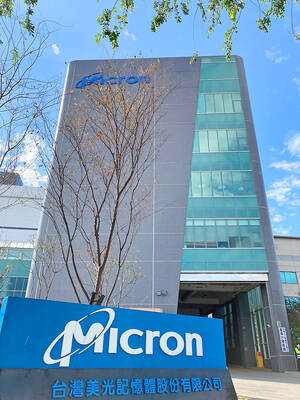
STOCK, CASH: Quarterly profit-sharing bonuses would supplement payments under the Incentive Pay Plan, offering ‘transparency’ and ‘predictability,’ an executive said Micron Memory Taiwan Co (台灣美光) yesterday unveiled a new profit-sharing program and structural wage hikes as part of its efforts to build a predictable and transparent compensation framework in response to feedback from unions. The memorychip maker, a subsidiary of US-based Micron Technology Inc, announced the major compensation structural overhaul during an online news conference following a milestone agreement with the union representing more than 10,000 workers at its Taichung facility. Under the new framework, quarterly profit-sharing bonuses would supplement payments under the Incentive Pay Plan (IPP), the company said. The IPP formula has also been substantially enhanced, it said. “Profit-sharing mechanisms are common
Micron Memory Taiwan and a union representing workers at its Taichung operations today said they had signed a labor-management agreement covering multiple issues, prompting both sides to withdraw from mediation scheduled for tomorrow. The joint statement did not disclose the terms of the agreement, saying the company and the union would separately communicate details to affected employees in the coming days. Idaho-based Micron, the world's third-largest memory chipmaker, employs about 15,000 people in Taiwan, a key manufacturing base where it produces DRAM and high-bandwidth memory chips used in artificial intelligence (AI) servers. Any disruption to Micron's Taiwan operations could affect already strained global
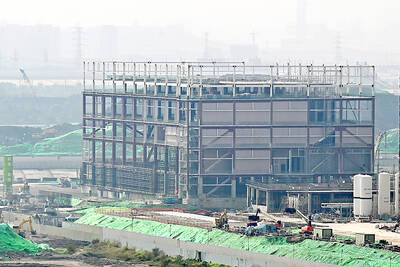
Taiwan Semiconductor Manufacturing Co (TSMC, 台積電) is suspending some construction work after an accident at one of its building sites in southern Taiwan led to the deaths of four workers. The incident took place on Tuesday during steel structure construction at TSMC’s Fab 22 in Kaohsiung, the company said. Workers fell from a height while performing steel structure hoisting and installation, a report from the Central News Agency said. A cause might be aged bolts, it said, citing a preliminary assessment by the Southern Taiwan Science Park Bureau. The bureau said that work would only resume after Shang Hao Machinery Co (上昊機械),

China proposed adding advanced artificial intelligence (AI) technologies to its export-control list, potentially restricting overseas transfers of AI models and chip designs in an effort to keep closer control over homegrown advancements in a strategically important sector. The draft proposal covers 23 AI technologies, including large language models, agents, chip designs and computing clusters. Restricted technologies would include model weights and source code for products exceeding certain performance thresholds. Chinese AI startups have this summer made significant progress in closing the gap on US industry leaders. Models such as Moonshot (月之暗面) AI’s Kimi K3 and DeepSeek’s (深度求索) latest editions offer better pricing,


 RSS
RSS