


Hon Hai Precision Industry Co (鴻海精密), the world’s largest contract maker of electronics, said it is developing notebooks using ARM Holdings Plc’s technology for sale by Chinese phone operators.
“We’ve heard requests from the telcos” for laptops that sell for less than US$200, Young Liu (劉揚偉), special assistant to Hon Hai’s chief executive officer, said yesterday, without naming the clients.
The laptops would use a Hon Hai version of the Linux operating system and may go on sale next year, he said.
ARM, whose chips are used in Apple Inc’s iPhone and Palm Inc’s Pre handset, is challenging Intel Corp in the market for low-cost notebook computers.
Hon Hai is developing as many as five laptops with screens smaller than 10 inches that will use ARM technology, putting pressure on Intel to offer cheaper options, Liu said.
“It’s largely for the China market — they want something cheaper,” Liu said. “If it’s above $200, 10 inches to the Chinese is too small; if it’s 10 inches, $200 is too expensive.”
“Operators will be more keen to bundle ARM on netbooks because Intel is heavier and requires more resources,” Daniel Chang (張博淇), an analyst at Macquarie Group Ltd in Taipei who rates Hon Hai “outperform,” said by telephone. “Intel is under a lot of pressure.”
ARM develops cores, the heart of a processor, which are then used in semiconductors from chip designers including Qualcomm Inc and Texas Instruments Inc.
“Competition is good. It breeds innovation and ultimately customers benefit,” said Nick Jacobs, a Singapore-based spokesman for Intel.
Intel had 86.9 percent of the laptop processor market in the second quarter, researcher IDC wrote in an Aug. 6 press release.
The chipmaker’s Atom chip, used in low-cost notebooks called netbooks, posted a 34 percent increase in unit sales during the quarter, from the previous three-month period, IDC said.
Hon Hai climbed 3.6 percent to close at NT$128 in Taipei trading before Liu spoke, the highest since Aug. 27 last year.
The stock has more than doubled this year, compared with a 59 percent advance by the benchmark TAIEX index.
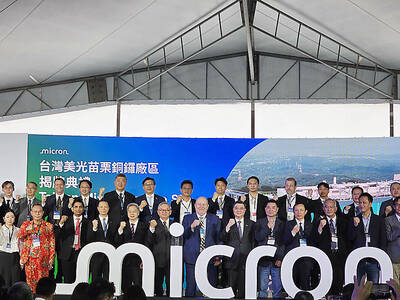
UNPRECEDENTED PACE: Micron Technology has announced plans to expand manufacturing capabilities with the acquisition of a new chip plant in Miaoli Micron Technology Inc unveiled a newly acquired chip plant in Miaoli County yesterday, as the company expands capacity to meet growing demand for advanced DRAM chips, including high-bandwidth memory chips amid the artificial intelligence boom. The plant in Miaoli County’s Tongluo Township (銅鑼), which Micron acquired from Powerchip Semiconductor Manufacturing Corp (力積電) for US$1.8 billion, is expected to make a sizeable capacity contribution to the company from fiscal 2028, the company said in a statement. It would be an extended production site of Micron’s large-scale manufacturing hub in Taichung, the company said. As the global semiconductor industry is racing to reach US$1 trillion

Singapore-based ride-hailing and delivery giant Grab Holdings Ltd has applied for regulatory approval to acquire the Taiwan operations of Germany-based Delivery Hero SE's Foodpanda in a deal valued at about US$600 million. Grab submitted the filing to the Fair Trade Commission on Friday last week, with the transaction subject to regulatory review and approval, the company said in a statement yesterday. Its independent governance structure would help foster a healthy and competitive market in Taiwan if the deal is approved, Grab said. Grab, which is listed on the NASDAQ, said in the filing that US-based Uber Technologies Inc holds about 13 percent of
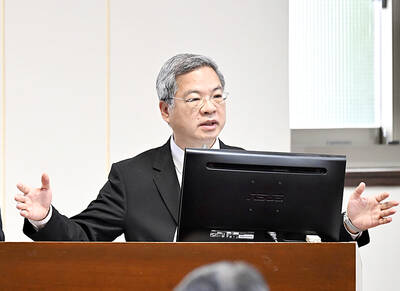
ABOVE LEGAL REQUIREMENT: The Ministry of Economic Affairs is prepared if LNG supply is disrupted, with more than the legal requirement of 11 days of inventory Taiwan has largely secured liquefied natural gas (LNG) supplies through May and arranged about half of June’s supply, Minister of Economic Affairs Kung Ming-hsin (龔明鑫) said yesterday. Since the Middle East conflict began on Feb. 28, Taiwan’s LNG inventories have remained more than 12 days, exceeding the legal requirement of 11 days, indicating no major supply concerns for domestic gas and electricity, Kung said at a meeting of the legislature’s Economics Committee in Taipei. The ministry aims to increase the figure to 14 days by the end of next year, he said. While one or two LNG or crude oil shipments for May

Taiwan’s food delivery market could undergo a major shift if Singapore-based Grab Holdings Ltd completes its planned acquisition of Delivery Hero SE’s Foodpanda business in Taiwan, industry experts said. Grab on Monday last week announced it would acquire Foodpanda’s Taiwan operations for US$600 million. The deal is expected to be finalized in the second half of this year, with Grab aiming to complete user migration to its platform by the first half of next year. A duopoly between Uber Eats and Foodpanda dominates Taiwan’s delivery market, a structure that has remained intact since the Fair Trade Commission (FTC) blocked Uber Technologies Inc’s


 RSS
RSS