


Top government officials reiterated yesterday the government’s determination to secure an economic cooperation framework agreement (ECFA) with China after reports of a delay in the effort sent TAIEX tumbling on Monday.
Premier Liu Chao-shiuan (劉兆玄) told the business community there was no delay in the preparation for inking the pact that is expected to help Taiwanese businesspeople obtain more favorable tax terms when conducting trade with China, among other benefits.
“Please have confidence in the government,” Liu told a breakfast meeting with the Chinese National Association of Industry and Commerce (CNAIC, 工商協進會). “Our attitude toward the ECFA remains unchanged and officials are in control of the progress,” he said.
On Monday, the TAIEX fell 239.04 points, or 3.53 percent, to 6,530.82 after Mainland Affairs Council Chairwoman Lai Shin-yuan’s (賴幸媛) weekend comments in the US that the pact would not be on the agenda of the next round of cross-strait talks later this year.
Lai’s comments dampened anticipation that the agreement would be signed by the end of the year, ahead of the inauguration of the ASEAN-China free trade area next year.
Meanwhile, in an interview with the Chinese-language Commercial Times on Monday, President Ma Ying-jeou (馬英九) said the ECFA would probably be signed next year.
Presidential Office Spokesman Wang Yu-chi (王郁琦) said yesterday that Ma had not tried to put the brakes on the signing of the ECFA this year.
Ma said in May that signing an ECFA was an urgent issue, and he expected the pact to be signed by the end of this year.
Wang said that Ma had not set a timetable for signing the ECFA deal and his comments came after a general assessment of the schedule of cross-strait talks.
“The signing of an ECFA required more discussions and negotiations ... We did not put the brakes on the issue and there’s no political maneuvers involved,” Wang said.
It would be difficult to sign the ECFA during the fourth round of cross-strait talks this year because formal negotiations have not begun yet, he said.
However, Minister of Economic Affairs Yiin Chii-ming (尹啟銘) said yesterday the ministry was well ahead of schedule in studying the issues that will be involved in the negotiations.
Yiin said the ministry asked the Chung-Hua Institution for Economic Research (CIER, 中經院) to study the proposed pact and its impact. The study, which was completed last month, will be released later this month, he said.
CIER was also scheduled to study a potential framework agreement together with China’s Association of Economy and Trade Across the Taiwan Straits in September, Yiin said, adding that representatives were expected to begin negotiations on the issue in October.
Yiin also said he would discuss the issue with Chinese Minister of Commerce Chen Deming (陳德銘) next week on the sidelines of an APEC trade ministers meeting in Singapore.
Theodore Huang (黃茂雄), who hosted the breakfast meeting, said the government’s assurance substantially eased his concerns.
He said he hoped the government would speed up the ECFA talks, although he understood the importance of prudence in the negotiations.
“The sooner the government inks the ECFA, the better Taiwanese firms can maintain their competitive edge, given the increasing importance of China in the global economy,” Huang said.
Minister of Finance Lee Sush-der (李述德) and Financial Supervisory Commission Chairman Sean Chen (陳冲) also attended the breakfast meeting. Their presentation and assurances that an ECFA would be signed help boost the TAIEX to 6,639.41 yesterday, an increase of 108.59 points, or 1.66 percent.
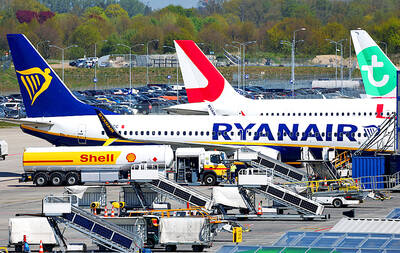
Ryanair, Transavia, Volotea and other low-cost airlines are feeling the financial pain from high jet fuel prices as a result of the Middle East war and are cutting flights. The closure of the Strait of Hormuz has taken a huge chunk of oil supplies off the market, sending the price of jet fuel soaring and triggering fears of shortages that could force airlines to cancel flights. Airlines are not waiting for a lack of supplies to react. “Travel alert: Airlines are cutting thousands of flights right now,” Travel Therapy host Karen Schaler said in an Instagram reel this past weekend.
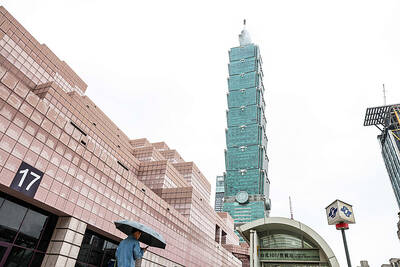
MANAGING RISKS: Taiwan has secured LNG sufficient to cover 95 percent of electricity demand for next month, UBS said, describing the government’s approach as proactive UBS Group AG has raised its forecast for Taiwan’s economic growth this year to 8 percent, up from 6.9 percent previously, and said expansion could reach as high as 8.6 percent if external energy shocks are avoided. The upgrade reflects a stronger-than-expected first-quarter performance and sustained momentum in artificial intelligence (AI)-driven exports, which UBS said are providing a firm foundation for growth despite geopolitical and energy risks. Taiwan’s GDP expanded 13.69 percent year-on-year in the first quarter, the fastest growth since the second quarter of 1987, the Directorate-General of Budget, Accounting and Statistics (DGBAS) reported on Thursday. On a seasonally
The Fair Trade Commission’s (FTC) ongoing review of Grab Holdings Ltd’s US$600 million acquisition of Foodpanda Taiwan’s operations, announced on March 23, has taken on fresh urgency as industry experts warn that the transaction could embed significant Chinese cybersecurity vulnerabilities into Taiwan’s digital infrastructure through Grab’s deep ties to autonomous-driving firm WeRide (文遠知行). Less than 16 months after the FTC blocked Uber Eats’ direct attempt to acquire Foodpanda Taiwan — citing potential combined market shares of 80 to 90 percent — the emergence of Grab as the buyer has prompted questions about whether the same competitive harm is simply being rerouted
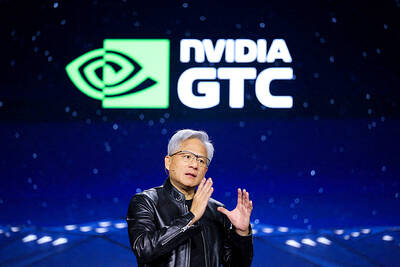
The list of Asian stocks that benefit from business partnership with Nvidia Corp is getting longer, as the region further integrates into the artificial intelligence (AI) chip giant’s business ecosystem. Just in the past week, South Korea’s LG Electronics Inc, Taiwan’s Nanya Technology Corp (南亞科技), as well as China’s Huizhou Desay SV Automotive Co (德賽西威) and Pateo Connect Technology Shanghai Corp (博泰車聯) have become the latest to rally on news of tie-ups, supply-chain participation or product collaboration with the US chip designer. Asian suppliers account for about 90 percent of Nvidia’s production costs, up from about 65 percent last year, data compiled


 RSS
RSS