


LG.Philips LCD Co, the world's second-largest maker of liquid-crystal displays, reported its biggest profit in more than three years after a shortage drove up prices of computer screens.
Its third-quarter net income was 524 billion won (US$570 million), compared with a 321 billion won loss a year earlier, Seoul-based LG.Philips said yesterday. That's the biggest profit since the second quarter of 2004. Sales, including revenue from overseas affiliates, rose 43 percent to 3.95 trillion won.
LG.Philips joins Taiwan's AU Optronics Corp (友達光電) and Chi Mei Optoelectronics Corp (奇美電子) in reporting surging sales after they took market share from plasma and glass-tube display makers.
James Kim, an analyst at Lehman Brothers Holdings Inc, estimated that global demand for LCD panels in the third quarter rose about 12 percent from the previous three months.
Earnings at LCD makers may extend gains next year as demand grows faster than supply, according to Credit Suisse Group estimates.
"Prices will continue to be stable until the middle of November, and the outlook for the LCD industry should be positive until next year," said Benjamin Ban, an analyst at Daishin Securities Co in Seoul who has a "buy" rating on LG.Philips. He spoke before the earnings were announced.
For the full year, Kim forecast that sales of LCD televisions would rise 86 percent to 78 million sets, while plasma TVs would increase 22 percent and glass tube TVs would fall 18 percent.
LG.Philips guided that fourth-quarter margin for earnings before interest, taxes, depreciation and amortization would be in the ``mid-thirties'' percent. That compares with a 32 percent margin estimated by the analysts surveyed.
It forecast that average prices in the fourth quarter would fall by a "low-single digit" percentage from the third quarter.

Taiwan’s foreign exchange reserves fell below the US$600 billion mark at the end of last month, with the central bank reporting a total of US$596.89 billion — a decline of US$8.6 billion from February — ending a three-month streak of increases. The central bank attributed the drop to a combination of factors such as outflows by foreign institutional investors, currency fluctuations and its own market interventions. “The large-scale outflows disrupted the balance of supply and demand in the foreign exchange market, prompting the central bank to intervene repeatedly by selling US dollars to stabilize the local currency,” Department of Foreign

ENERGY ISSUES: The TSIA urged the government to increase natural gas and helium reserves to reduce the impact of the Middle East war on semiconductor supply stability Chip testing and packaging service provider ASE Technology Holding Co (日月光投控) yesterday said it planned to invest more than NT$100 billion (US$3.15 billion) in building a new advanced chip testing facility in Kaohsiung to keep up with customer demand driven by the artificial intelligence (AI) boom. That would be included in the company’s capital expenditure budget next year, ASE said. There is also room to raise this year’s capital spending budget from a record-high US$7 billion estimated three months ago, it added. ASE would have six factories under construction this year, another record-breaking number, ASE chief operating officer Tien Wu
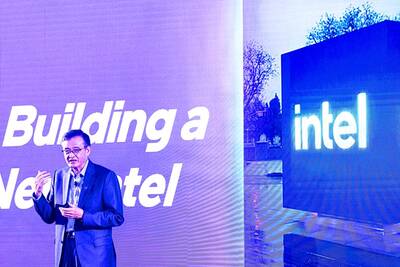
Intel Corp is joining Elon Musk’s long-shot effort to develop semiconductors for Tesla Inc, Space Exploration Technologies Corp and xAI, marking a surprising twist in the chipmaker’s comeback bid. Intel would help the Terafab project “refactor” the technology in a chip factory, the company said on Tuesday in a post on X, Musk’s social media platform. That is a stage in the development process that typically helps make chips more powerful or reliable. The chipmaker’s shares jumped 4.2 percent to US$52.91 in New York trading on Tuesday. The Terafab project is a grand plan by Musk to eventually manufacture his own chips for

For weeks now, the global tech industry has been waiting for a major artificial intelligence (AI) launch from DeepSeek (深度求索), seen as a benchmark for China’s progress in the fast-moving field. More than a year has passed since the start-up put Chinese AI on the map in early last year with a low-cost chatbot that performed at a similar level to US rivals. However, despite reports and rumors about its imminent release, DeepSeek’s next-generation “V4” model is nowhere in sight. Speculation is also swirling over the geopolitical implications of which computer chips were chosen to train and power the new


 RSS
RSS