


High Tech Computer Corp (
"The visit of Softbank to High Tech Computer this week will benefit the latter as High Tech Computer has stepped up efforts in making inroads into the Japanese market this year," Ann Liang (梁嘉鈴), principal analyst at research firm Gartner Inc's Taiwan branch, told the Taipei Times.
The Japanese telecommunication ecosystem differs from other nations as major operators such as NTT DoCoMo Inc, KDDI Corp and Vodafone KK, have a say on specifications of mobile phones to be sold to users, she said.
"It is a smart move for High Tech Computer to explore Japan's market by working with these domestic telecom players," she added.
The analyst's remark came after the Chinese-language daily the Commercial Times reported on Tuesday that top officials from Softbank paid a visit to High Tech Computer on Monday to discuss possible smartphone procurements from the Taiwanese maker to supply to Vodafone KK, a business unit Softbank recently acquired.
The paper said that High Tech Computer is also mulling the possibility of setting up a branch to manage growing business in Japan.
"We see positive implications [from Softbank's visit]... With NTT DoCoMo's shipment starting, and fresh interest from Softbank/Vodafone KK, Japan will be another important market for High Tech Computer, in addition to Europe, the US and Asia," Vincent Chen (陳豊丰), an analyst with foreign securities brokerage CLSA Ltd said in a research note released yesterday.
In March, Softbank acquired Vodafone KK, Japan's third-largest mobile phone operator, for ¥1.75 trillion (US$15.9 billion), making it one of the biggest-ever acquisitions in Japanese history.
The third-generation (3G) subscriber base of Vodafone KK -- previously the ailing Japanese unit of the world's biggest handset company Vodafone -- has only 2 million to 2.5 million users in Japan.
The figure is much smaller than NTT DoCoMo's approximately 19 million, a client High Tech Computer signed up last year and will start supplying 3.5 G handsets to this month, Chen said in the note.
Nonetheless, any High Tech Computer-Softbank partnership would serve as a boost to the Taiwanese company's forecast shipments of 10 million smartphones this year, he added.
In a filing to the Taiwan Stock Exchange on Tuesday, High Tech Computer denied any partnership with Softbank, saying that it was merely media speculation.
The company's shares were down 0.44 percent yesterday to close at NT$1,125 (US$35.63) on the Taiwan Stock Exchange.
This is not the first time Softbank has been linked to potential Taiwanese partners, as the company is also looking to form a joint venture here to tap into the booming Internet TV market, founder Masayoshi Son told reporters during a visit to Taipei in November.
The company is in talks with TV stations, digital content providers, record labels, broadcasting firms and production houses over possible partnerships to push its Internet TV platform called TV Bank.
Set to launch in spring, the platform will enable viewers to search for and watch content such as foreign films over broadband connections, which Son believed will be a new cash cow.
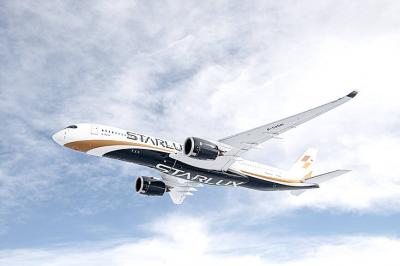
Starlux Airlines Co (星宇航空) today unveiled a long-haul network expansion plan at a shareholders’ meeting in Taipei, including direct flights to Barcelona, Spain, and Zurich, Switzerland, as well as a service connecting Taipei, Sydney and New Zealand. Starlux is to become the first Taiwanese carrier to offer non-stop services to the two European cities, while the inaugural oceanic route is expected to expand transit opportunities within the Australia-New Zealand market, Starlux said. Flight services to Chicago, Dallas, Washington and New York are under evaluation, the airline added. Prior to the shareholders’ meeting, the airline earlier this year announced that it would be
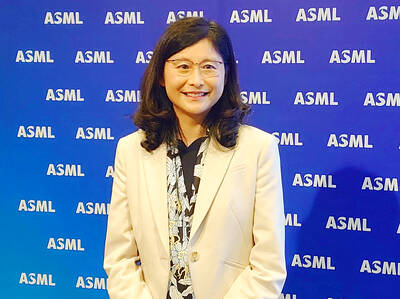
Netherlands-based semiconductor equipment supplier ASML Holding NV yesterday said that it is planning to hire an additional 1,000 people in Taiwan this year in response to growing demand from clients. ASML had previously planned to recruit 600 people this year, but that the plan has been adjusted upward, ASML vice president and ASML Taiwan general manager Grace Wang (汪佳慧) told reporters. ASML has a workforce of more than 4,500 in Taiwan, accounting for about 10 percent of its global total, Wang said. This year’s recruitment campaign would focus on adding people in the customer support, manufacturing and supply chain domains to assist ASML
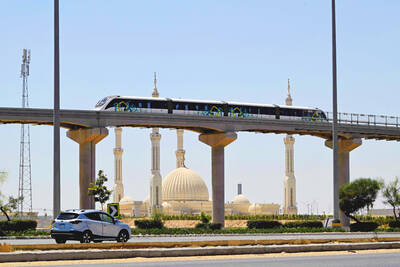
Cairo’s new monorail slices across the city skyline, running above the familiar chaos of blaring horns and aging buses’ exhaust fumes that mark rush hour below. The US$4.5 billion monorail, opened this month, is among Egypt’s most prominent new transport projects, part of a debt-funded infrastructure drive criticized for sapping state finances while bringing limited benefits to most of the country’s 109 million people. “It feels like you’re in a different country,” said Ramy Sayed, a restaurant manager, aboard a driverless Innovia 300 train. “No noise, no traffic, we’re not used to this.” The eastern line runs 56km from the bustling middle-class
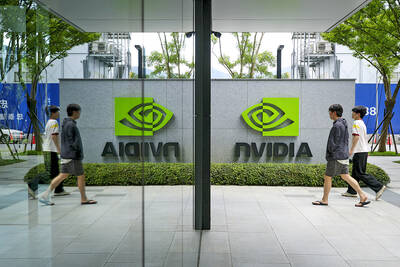
UNDER MICROSCOPE: Taiwan detained three people who allegedly conspired to buy servers in Taiwan and export them using fraudulent documentation, prosecutors said Nvidia Corp chief executive officer Jensen Huang (黃仁勳) on Saturday urged Super Micro Computer Inc to tighten up on compliance after Taiwan detained three people this week for allegedly making fraudulent declarations about artificial intelligence (AI) servers made by its US partner. The development marked the nation’s first crackdown on semiconductor smuggling, which grew after the US slapped restrictions on exports of high-end chips such as Nvidia AI accelerators to China. Nvidia is “rigorous” in explaining regulations to all of its partners, Huang told reporters after arriving in Taipei. “Ultimately Super Micro has to run their own company,” he said in response to


 RSS
RSS