


Li Ka-shing's (李嘉誠) influence eclipses even his billions, according to Forbes magazine, which ranked him fifth among the world's 10 most powerful billionaires behind Bill Gates, Warren Buffett, Silvio Berlusconi and Rupert Murdoch.
The 74-year-old Li, Asia's wealthiest businessman, was cited for the global reach of his Hong Kong-based ports and phones group Hutchison Whampoa Ltd (
The magazine, which ranked Li 28th in its annual list of the world's billionaires, with a personal fortune of US$7.8 billion, said it inaugurated the ``most powerful'' list because "more than money determines how much influence a billionaire wields."
Its criteria included political connections, the size and scope of businesses and philanthropy, it said. Li was ranked highest of only two Asians in the top 10.
"Hutchison gives him a global edge," said Franklin Lam, head of property research for UBS Warburg Asia Ltd. "Very few Asians have a global anything."
The group is the world's biggest port operator and the biggest Asian investor in European telecommunications, where Li is betting US$16.7 billion on new cellphone technology.
In China, his birthplace, Li has forged ties that have enabled him to become one of the most-populous country's biggest investors. "His influence is not visible, but he's one of those who do business with China," Lam said. "He's gotten his way."
Li, born in southern China, has donated more than US$500 million for education and health care in Asia, Forbes said. That includes university and welfare facilities in China, according to the Web site of the Li Ka-shing Foundation.
Laura Cheung, a Hutchison spokeswoman, said Li's commercial investments in China amount to HK$60 billion (US$7.6 billion).
The Hong Kong tycoon's ties with China have sometimes been criticized. James Courter, chief executive of IDT Corp., said this week US government officials are concerned about "communist" influence on Global Crossing Ltd, a bankrupt communications network operator that Hutchison and Singapore Technologies Telemedia Pte agreed to buy.
Hutchison, which controls ports at both ends of the Panama Canal, also drew fire in 1999 from then-US Senate Majority leader Trent Lott, who alleged the company had links to the Chinese military. Hutchison dismissed the allegations.
The only other Asian billionaire in the ``most powerful'' list was Azim Premji, chairman of Wipro Ltd., India's largest technology concern, who ranked 10th. In the main list, he placed 45th with a fortune estimated by Forbes at US$5.9 billion.
Coming in at 427 was Li's son, Richard Li (李澤楷), with an estimated US$1 billion. The younger Li is the chief executive and controlling shareholder of Pacific Century Cyberworks Ltd (PCCW, 電訊盈科), Hong Kong's biggest phone company.
Victor Li (李澤鉅), the elder son of Li Ka-shing, was among 14 from Hong Kong nominated to be standing members at the 10th Chinese People's Political Consultative Conference, the Oriental Daily said.
Victor Li is deputy chairman and managing director of Cheung Kong (Holdings) Ltd (


Taiwanese firms have increased investment in the Philippines in recent years as Manila’s ties with Washington deepen and global supply chains continue to shift away from China, an expert at the Chung-Hua Institution for Economic Research (CIER, 中華經濟研究院) said yesterday. The Philippines had not been among Taiwanese investors’ top choices in Southeast Asia, CIER Taiwan ASEAN Studies Center director Kristy Hsu (徐遵慈) said at a seminar in Taipei. However, Taiwan’s investment in the country has grown significantly since the COVID-19 pandemic, reaching US $257 million last year, a high in recent years, she said. Although Taiwan’s total investment in the Philippines still lags
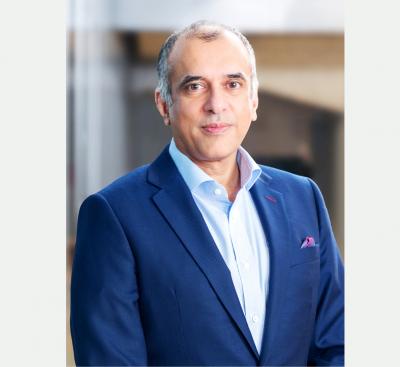
HSBC Holdings PLC is deepening its commitment to Taiwan as the economy emerges as one of the bank’s fastest-growing markets globally, driven by an artificial intelligence (AI) investment boom, expanding cross-border trade, and rising wealth creation. “The advantage that Taiwan has is a growth story linked to the semiconductor and broader AI industries, strong underlying corporate performance, and wealth creation,” said Surendra Rosha, HSBC’s co-chief executive for Asia and the Middle East, in an exclusive interview with the Taipei Times on June 2, during this year’s HSBC Taiwan Conference. That combination has helped HSBC cement its position as the most profitable international

Intel Corp regards Taiwan Semiconductor Manufacturing Co (TSMC, 台積電) as a longstanding partner, as the US chipmaker would continue outsourcing production of advanced chips to TSMC, Intel chief executive officer Lip-Bu Tan (陳立武) said yesterday. “I don’t look at people as competitors. I look at the collaboration... Nvidia is also, you know, a good friend,” Tan told a news conference following his keynote speech at the Computex trade show in Taipei. “It’s a very trusted partnership for us... We are a big, top customer for them, and we’re going to continue doing that,” he said, referring to TSMC, the world’s largest foundry
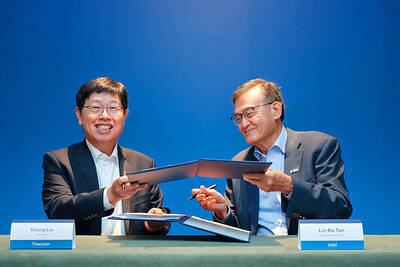
Hon Hai Precision Industry Co (鴻海精密) yesterday said it would work with US chipmaker Intel Corp to jointly develop and deploy next-generation artificial intelligence (AI) infrastructure and intelligent computing platforms in a move to capture booming demand for AI computing systems. Hon Hai, also known as Foxconn Technology Group (富士康), said in a statement that the partnership would combine its global manufacturing scale, system integration expertise and AI data center deployment capabilities with Intel’s strengths in processor architecture, silicon technologies and software ecosystem. The companies said they plan to work on equipment used in AI data centers, including server racks powered by


 RSS
RSS