


With sales tanking and General Motors (GM) and Chrysler struggling for their very survival, the Detroit auto show promises to be a subdued and tense affair as automakers launch new models to compete for an ever-dwindling number of customers.
Some 58 new models — including 44 worldwide debuts — will be introduced in the coming days as the manufacturers vie for the attention of nearly 7,000 journalists from more than 60 countries at press previews.
Daimler was the first to launch its latest high-ticket vehicle, the new Mercedes E-class luxury sedan, at an invitation-only cocktail reception on Saturday night.
“Despite the enormous pressures that our entire industry is under these days, we are facing the year 2009 with measured confidence,” Daimler chief executive officer Dieter Zetsche said.
“The best way to master a crisis is driving the change instead of being driven by it,” Zetsche said, adding that “there will be a bright future for innovative car companies ... and I most certainly include Daimler among them.”
Prominent among the new offerings are a host of ready-for-market hybrids and experimental electric vehicles that were to start zipping around a tree-lined track set up in the basement of the Detroit convention center yesterday.
The testing track surrounds two ponds with waterfalls and will showcase zero-emission electric prototypes by GM, Ford, Toyota, Honda, Mitsubishi and Tesla.
Ford will also be introducing two new hybrids that it said got better fuel economy than Toyota’s popular Prius.
Refusing to be upstaged, Toyota will launch an improved version of its Prius and a new dedicated hybrid for its luxury Lexus brand and said on Saturday that it would launch a two-seater electric car by 2012.
China’s BYD Auto will be showing the first mass-produced plug-in hybrid that went on sale last month in China and is slated to hit Europe next year.
Honda will also enter the fray by unveiling its reintroduced dedicated hybrid, the Insight hatchback.
But in a sign of the troubled times, the Japanese automaker canceled a press conference for the Insight, which was to make its worldwide debut without fanfare in the Honda booth when the show opened yesterday.
And a number of automakers decided to skip the show altogether this year, including Nissan, Suzuki, Porsche, Ferrari and Land Rover.
“Beyond the products and the lights and the glitz, everyone is in a holding pattern,” said Karl Brauer, editor-in-chief of the automotive Web site Edmunds.com. “Uncertainty is the underlying tension.”
A financial crisis, credit crunch and deepening recession pushed US sales down 18 percent last year, in the steepest decline in 29 years and to the lowest level since 1992.
This year is expected to be even worse, with US auto sales forecast to fall by another 1 million or 2 million vehicles to around 11 million to 12 million vehicles.
Sales have not been below 12 million since the recession of 1982, when the US had 74 million fewer people than today.
While nearly every automaker posted significant losses and has announced major production cuts last year, Detroit’s Big Three were the hardest hit and saw their combined US market share fall below 50 percent for the first time.
Their US market share topped 60 percent as recently as 2004 and was 71.2 percent just 10 years ago, Ward’s Auto said.
Despite years of painful restructuring that had the trio on the road to recovery, the US government was forced to extend billions in loans to cash-strapped GM and Chrysler last month after sales dropped off precipitously in September.
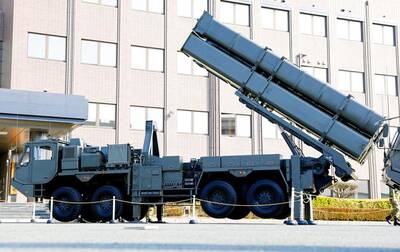
Japan has deployed long-range missiles in a southwestern region near China, the Japanese defense minister said yesterday, at a time when ties with Beijing are at their lowest in recent years. The missiles were installed in Kumamoto in the southern region of Kyushu, as Japan is attempting to shore up its military capacity as China steps up naval activity in the East China Sea. “Standoff defense capabilities enable us to counter the threat of enemy forces attempting to invade our country ... while ensuring the safety of our personnel,” Japanese Minister of Defense Shinjiro Koizumi said. “This is an extremely important initiative for
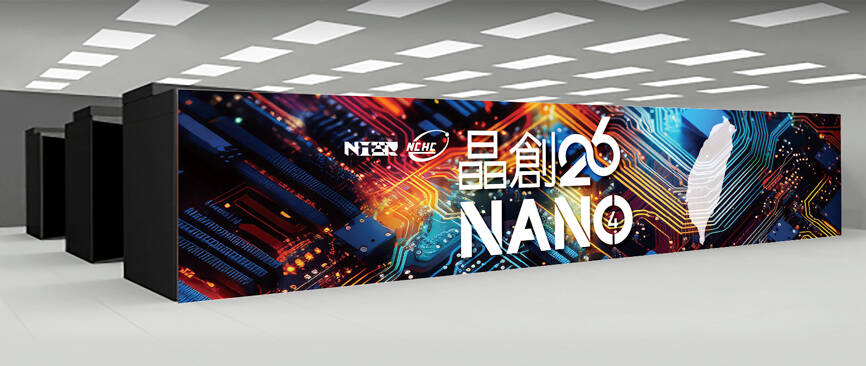
The nation’s fastest supercomputer, Nano 4 (晶創26), is scheduled to be launched in the third quarter, and would be used to train large language models in finance and national defense sectors, the National Center for High-Performance Computing (NCHC) said. The supercomputer, which would operate at about 86.05 petaflops, is being tested at a new cloud computing center in the Southern Taiwan Science Park in Tainan. The exterior of the server cabinet features chip circuitry patterns overlaid with a map of Taiwan, highlighting the nation’s central position in the semiconductor industry. The center also houses Taiwania 2, Taiwania 3, Forerunner 1 and
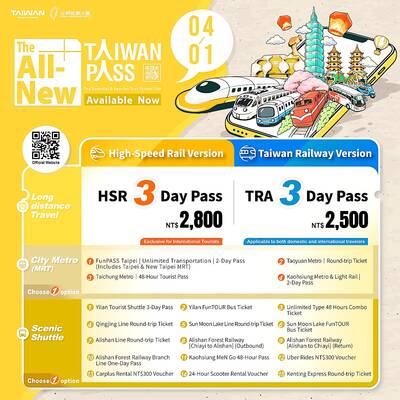
MORE POPULAR: Taiwan Pass sales increased by 59 percent during the first quarter compared with the same period last year, the Tourism Administration said The Tourism Administration yesterday said that it has streamlined the Taiwan Pass, with two versions available for purchase beginning today. The tourism agency has made the pass available to international tourists since 2024, allowing them to access the high-speed rail, Taiwan Railway Corp services, four MRT systems and four Taiwan Tourist Shuttles. Previously, five types of Taiwan Pass were available, but some tourists have said that the offerings were too complicated. The agency said only two types of Taiwan Pass would be available, starting from a three-day pass with the high-speed rail and a three-day pass with Taiwan Railway Corp. The former costs NT$2,800
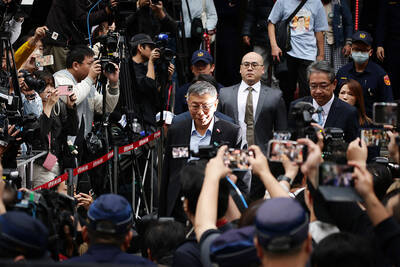
FIRST TRIAL: Ko’s lawyers sought reduced bail and other concessions, as did other defendants, but the bail judge denied their requests, citing the severity of the sentences Former Taipei mayor Ko Wen-je (柯文哲) was yesterday sentenced to 17 years in prison and had his civil rights suspended for six years over corruption, embezzlement and other charges. Taipei prosecutors in December last year asked the Taipei District Court for a combined 28-year, six-month sentence for the four cases against Ko, who founded the Taiwan People’s Party (TPP). The cases were linked to the Core Pacific City (京華城購物中心) redevelopment project and the mismanagement of political donations. Other defendants convicted on separate charges included Chinese Nationalist Party (KMT) Taipei City Councilor Angela Ying (應曉薇), who was handed a 15-year, six-month sentence; Core Pacific


 RSS
RSS