


After years of crisis, the big three US automakers face another brutal year, with demand expected to dip again due to an economic downturn threatening to snuff out last year's timid recovery.
The world's major automakers will exhibit upcoming models and the concept cars of the future from yesterday as media previews kick off for the Detroit motor show. But the extravaganza comes amid gloomy predictions for the market.
"It's pretty clear that demand in the US will decline during 2008," said Bruce Clark, an analyst at Moody's financial research group.
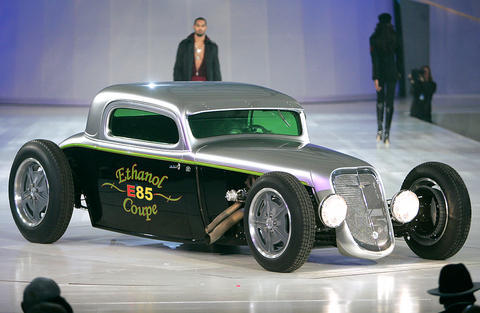
PHOTO: AP
"At this point we are anticipating total retail shipments of about 15.7 million units. But actual shipment levels could be even lower depending on the overall state of the US economy," he said.
The three US manufacturers used to hold 95 percent of the market, but this has been chiseled to just over half as Asian firms seized 47 percent with Japan leading the charge, according to the firm Autodata.
Japanese giant Toyota for the first time passed Ford in the US auto sales rankings last year, taking second place behind General Motors (GM). Ford was pushed back into third place, with Chrysler in fourth.
European makers pose less of a general threat with around seven percent of the US market, but hold an edge in sales of deluxe vehicles.
Restructuring by GM from 2005 and soon afterwards by Ford and Chrysler helped them begin closing the gap with the Japanese in terms of quality and productivity.
Each of them struck a pay deal with the major autoworkers union UAW -- a key achievement which Clark said transformed the industry, helping them cut production costs to operate more competitively in the mid to long-term.
The deal cleared the way for the three companies to cut nearly 100,000 jobs.
GM said last week it had met its aims for last year by stabilizing its position in the market, while Ford reported having considerably reduced its net losses after record losses of US$12.6 billion in 2006.
But challenges remain: GM reported net losses of US$39 billion in the third quarter of last year and is fighting to put more fuel-efficient models in its show rooms.
Ford is reshuffling its product line to balance expensive models with larger numbers of popular cheap ones.
"The manufacturers are in very different places," JD Power analyst Tom Libby said. "Ford is obviously struggling and needing to stabilize things. They have a couple of major introductions coming."
Chrysler is in the biggest fix, analysts said, despite a boost to restructuring by the investment group Cerberus which bought it last year.
"Chrysler is in big trouble," said John Wolkonowicz of Global Insight. "Chrysler needs to merge with somebody quickly."
Oil prices and the general economic downturn in the US could hit sales of even the most efficient models.
Investment bank Goldman Sachs lowered its forecast for vehicle sales this year to 15 million, down from 16.3 million last year. Credit rating agency Standard and Poor's predicted North American sales could hit a 10-year low this year.
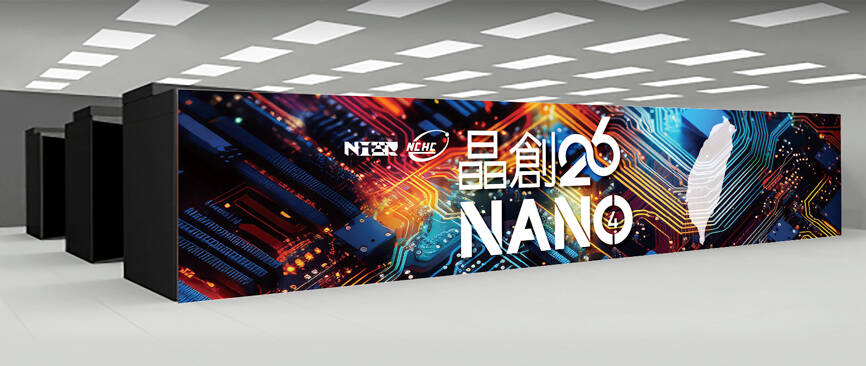
The nation’s fastest supercomputer, Nano 4 (晶創26), is scheduled to be launched in the third quarter, and would be used to train large language models in finance and national defense sectors, the National Center for High-Performance Computing (NCHC) said. The supercomputer, which would operate at about 86.05 petaflops, is being tested at a new cloud computing center in the Southern Taiwan Science Park in Tainan. The exterior of the server cabinet features chip circuitry patterns overlaid with a map of Taiwan, highlighting the nation’s central position in the semiconductor industry. The center also houses Taiwania 2, Taiwania 3, Forerunner 1 and
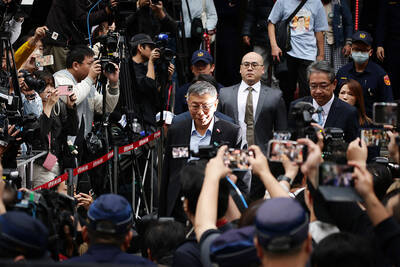
FIRST TRIAL: Ko’s lawyers sought reduced bail and other concessions, as did other defendants, but the bail judge denied their requests, citing the severity of the sentences Former Taipei mayor Ko Wen-je (柯文哲) was yesterday sentenced to 17 years in prison and had his civil rights suspended for six years over corruption, embezzlement and other charges. Taipei prosecutors in December last year asked the Taipei District Court for a combined 28-year, six-month sentence for the four cases against Ko, who founded the Taiwan People’s Party (TPP). The cases were linked to the Core Pacific City (京華城購物中心) redevelopment project and the mismanagement of political donations. Other defendants convicted on separate charges included Chinese Nationalist Party (KMT) Taipei City Councilor Angela Ying (應曉薇), who was handed a 15-year, six-month sentence; Core Pacific
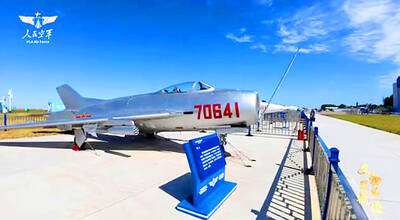
J-6 REMODEL: The converted drones are part of Beijing’s expanding mix of airpower weapons, including bombers with stand-off missiles and UAV swarms, the report said China has stationed obsolete supersonic fighters converted to attack drones at six air bases close to the Taiwan Strait, a report published this month by the Arlington, Virginia-based Mitchell Institute for Aerospace Studies said. Satellite imagery of the airfields from the institute’s “China Airpower Tracker” shows what appear to be lines of stubby, swept-winged aircraft matching the shape of J-6 fighters that first flew with the Chinese People’s Liberation Army (PLA) Air Force in the 1960s. Since their conversion to drones, the aircraft have been identified at five bases in China’s Fujian Province and one in Guangdong Province, the report said. J.
China used fake LinkedIn profiles to harvest sensitive data from NATO and EU institutions by soliciting information from staff, a European security source said on Friday. The operation, allegedly orchestrated by the Chinese Ministry of State Security, targeted dozens of employees at the military alliance or EU organizations through fictitious accounts, the source said, confirming reports in French and Belgian media. Posing as recruiters on the online professional networking platform, Chinese spies would initially request paid reports before later soliciting non-public or even classified information. One particularly active fake profile used the name “Kevin Zhang,” claiming to be the head


 RSS
RSS