


Internet startup Livedoor Co was hit with the largest fine ever in corporate Japanese history for violating securities laws yesterday, the latest blow in a scandal that has led to seven convictions for former executives and accountants.
The Tokyo District Court fined Livedoor ¥280 million (US$2.4 million) and its subsidiary Livedoor Marketing ¥40 million (US$338,000), a court official said on customary condition of anonymity.
Earlier yesterday, two accountants were convicted in the same court for fabricating earnings in the latest verdicts in a series of criminal trials involving Livedoor, once one of Japan's flashiest dotcoms.
The tough fines and prison terms being doled out to those at the center of the scandal are sending a strong message about the growing effort to crack down on companies testing what are still gray areas in this nation for regulations on stock trading.
In the past, executives charged with tampering with earnings reports, even at companies far bigger than Livedoor, had generally avoided prison terms and got suspended sentences.
In announcing the fine, the court said that the crime at Livedoor was "systematic" in its attempts to mislead individual investors, and that it had failed to live to up to its responsibility as a listed company, Kyodo News said.
The fine against Livedoor was a record high, surpassing the previous record, a ¥200 million fine imposed in 2005 on major railroad Seibu Railway for falsifying financial statements, Japanese media reports said.
In a separate session earlier yesterday for the two accountants, Taishin Hisano was sentenced to 10 months in prison and his supervisor, Motoshi Kobayashi, received one year in prison suspended for four years, meaning that he avoided time, a court official said.
Kyodo News reported that it was the first time in Japan that a certified accountant had received a prison term in a court case involving securities laws violations. Hisano appealed later yesterday, a court official said.
Their convictions bring the number of people judged guilty in the case to seven, beginning with former chief executive Takafumi Horie, who was sentenced to two-and-a-half years last Friday.
The Livedoor scandal broke in January last year, when prosecutors arrested Horie and other top executives, setting off a selloff in the Tokyo stock market dubbed "Livedoor shock."
Horie had been a celebrity for his gutsy takeover attempts and flamboyant lifestyle and had drawn a large number of individual investors to buy shares in the Internet company.
The Livedoor case has prompted calls for clearer laws about stock trading as well as heavier penalties for falsifying earnings reports. Horie is widely perceived as having tested the legal loopholes and limits of Japanese securities laws.
Livedoor was delisted from a Tokyo exchange for startups, but has been trying to rebuild its business under new management.
Like Horie, both accountants had pleaded not guilty -- a rarity in Japan where many charged with white-collar crime plead guilty, often to win lighter sentences.
On Thursday, four former Livedoor executives were found guilty of securities laws violations.
While three of the former officials got suspended sentences, Ryoji Miyauchi, Livedoor's former chief financial officer, was sentenced to 20 months in prison. Those four pleaded guilty to most of the charges.
The executives are accused of setting up a number of funds that prosecutors alleged were "dummy" entities to do stock swaps and other stock trading to pad their books.
Presiding judge Toshiyuki Kosaka said Miyauchi was the chief architect of some of the schemes as No. 2 at Livedoor, but said Horie shared much of the blame because he was the chief executive.

The nation’s fastest supercomputer, Nano 4 (晶創26), is scheduled to be launched in the third quarter, and would be used to train large language models in finance and national defense sectors, the National Center for High-Performance Computing (NCHC) said. The supercomputer, which would operate at about 86.05 petaflops, is being tested at a new cloud computing center in the Southern Taiwan Science Park in Tainan. The exterior of the server cabinet features chip circuitry patterns overlaid with a map of Taiwan, highlighting the nation’s central position in the semiconductor industry. The center also houses Taiwania 2, Taiwania 3, Forerunner 1 and
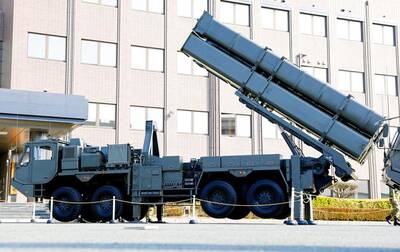
Japan has deployed long-range missiles in a southwestern region near China, the Japanese defense minister said yesterday, at a time when ties with Beijing are at their lowest in recent years. The missiles were installed in Kumamoto in the southern region of Kyushu, as Japan is attempting to shore up its military capacity as China steps up naval activity in the East China Sea. “Standoff defense capabilities enable us to counter the threat of enemy forces attempting to invade our country ... while ensuring the safety of our personnel,” Japanese Minister of Defense Shinjiro Koizumi said. “This is an extremely important initiative for

MORE POPULAR: Taiwan Pass sales increased by 59 percent during the first quarter compared with the same period last year, the Tourism Administration said The Tourism Administration yesterday said that it has streamlined the Taiwan Pass, with two versions available for purchase beginning today. The tourism agency has made the pass available to international tourists since 2024, allowing them to access the high-speed rail, Taiwan Railway Corp services, four MRT systems and four Taiwan Tourist Shuttles. Previously, five types of Taiwan Pass were available, but some tourists have said that the offerings were too complicated. The agency said only two types of Taiwan Pass would be available, starting from a three-day pass with the high-speed rail and a three-day pass with Taiwan Railway Corp. The former costs NT$2,800

FIRST TRIAL: Ko’s lawyers sought reduced bail and other concessions, as did other defendants, but the bail judge denied their requests, citing the severity of the sentences Former Taipei mayor Ko Wen-je (柯文哲) was yesterday sentenced to 17 years in prison and had his civil rights suspended for six years over corruption, embezzlement and other charges. Taipei prosecutors in December last year asked the Taipei District Court for a combined 28-year, six-month sentence for the four cases against Ko, who founded the Taiwan People’s Party (TPP). The cases were linked to the Core Pacific City (京華城購物中心) redevelopment project and the mismanagement of political donations. Other defendants convicted on separate charges included Chinese Nationalist Party (KMT) Taipei City Councilor Angela Ying (應曉薇), who was handed a 15-year, six-month sentence; Core Pacific


 RSS
RSS