


Already reeling from the effects of conflict in the Middle East, Asia is now facing the prospect of strong El Nino conditions that could spike energy demand, sap hydropower and damage crops.
El Nino is a naturally occurring climate phenomenon that brings worldwide changes in winds, air pressure and rainfall patterns.
Last week, the UN’s weather and climate agency said El Nino conditions could develop as soon as this month to July.
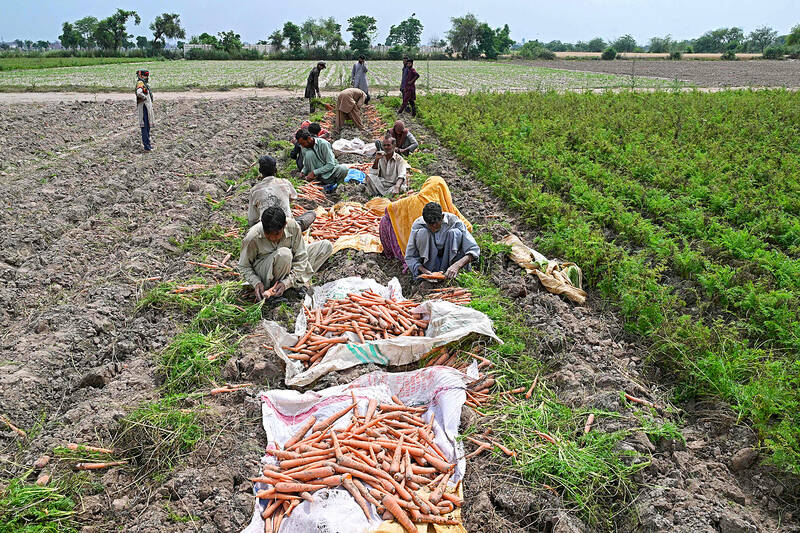
Photo: AFP
Meanwhile, the World Meteorological Organization said early signs indicated the event could be particularly strong, with some dubbing the impending event a “super El Nino,” although the term is not used by scientists.
That is not good news for Asia, parts of which are usually heavily affected by the heatwaves, drought and heavy rains that El Nino can bring. The phenomenon essentially shifts traditional weather patterns around, for example moving rain that normally falls over Indonesia out to sea, leaving the country vulnerable to drought and wildfires.
El Nino occurs around every two to seven years and is forecast based on sea temperatures.
“The subsurface anomaly that we’re seeing so far is pretty strong,” said Peter van Rensch, a climate scientist at Australia’s Monash University.
“It does look a little bit like what we saw in the 1997/98 event, and that was probably the strongest El Nino,” he said.
There are still plenty of uncertainties, and van Rensch cautioned it was possible an El Nino might not develop at all.
CATASTROPHIC IMPACTS
However, the 1997 El Nino brought catastrophic impacts, including extreme drought and devastating wildfires in Indonesia that burned through millions of hectares and created regional air pollution.
Authorities there have already identified peatlands at risk, and warned the country could see its lowest rainfall in 30 years. The warnings come with Asia buckling under the strain of an energy supply crunch, and fears over shortages of fertilizer and other industrial and agricultural components that pass through the Strait of Hormuz.
Hotter weather would strain energy grids already experiencing fuel shortages, as populations seek to cool homes and workplaces, said Haneea Isaad, energy finance specialist at the Institute for Energy Economics and Financial Analysis.
“For countries that are highly dependent on the Strait of Hormuz for oil and gas deliveries and other trade, strained supply will lead to further fuel rationing, demand-side management and a reduction in economic activities ... impacting overall GDP growth,” she said.
The droughts that El Nino can bring to parts of the region also pose a threat to countries that are highly dependent on hydropower, said Dinita Setyawati, senior energy analyst for Asia at the Ember think tank.
“Most ASEAN countries use a lot of hydropower,” she said, highlighting Mekong countries, Nepal and parts of Malaysia as particularly vulnerable because of their dependence on the sector.
The risks were laid bare in 2022, when a heatwave in China saw hydropower generation in Sichuan fall by more than 50 percent, creating shortages that impacted households and industry alike.
AGRICULTURE RISKS
Hotter, drier conditions would also create fresh risks for agriculture, already under pressure as the ongoing conflict raises the costs of fertilizer and fuel needed for farming equipment.
“If crop prices do not rise enough to offset these higher input and shipping costs, producer margins will be squeezed, raising the likelihood of lower fertilizer application and weaker yields,” said BMI, a unit of the Fitch Solutions research company. “This would intensify food price inflation and worsen food insecurity, especially in import-dependent and climate-vulnerable markets.”
For some parts of Asia, an El Nino can bring bouts of intense rain and provoke flooding, which could impact sectors like southern China’s late-season rice harvest, Isaad added.
How climate change affects the emergence and strength of El Ninos is still not well understood, but research shows climate change itself would bring more frequent intense heatwaves, as well as sudden heavy rainfall that can cause flooding.
As such, experts said countries across the region should further insulate energy systems against more frequent disruptive weather events by diversifying and greening their grids.
“Solar and wind, coupled with batteries, provide a more resilient infrastructure than a centralized fossil infrastructure,” Setyawati said.

Crowds in Bangladesh are flocking to snap photographs with an unlikely social media star — an albino buffalo with flowing blond hair nicknamed “Donald Trump” that is due to be sacrificed within days. Owner Zia Uddin Mridha, 38, said his brother named the 700kg bull over its flowing helmet of hair resembling the signature look of the US president. “My younger brother picked this name because of the buffalo’s extraordinary hair,” he said at his farm in Narayanganj, just outside the capital, Dhaka. Mridha said that a constant stream of curious visitors — social media fans, onlookers and children — have come throughout

It began as a satirical online project. Now millions of young people in India are flocking to it as an outlet for their frustration. A parody political party called the Cockroach Janta Party, with the insect as its symbol, has exploded across India’s social media by turning absurdist humor into protest. Memes and short videos mocking corruption, joblessness and political dysfunction have flooded social media sites, where millions of users are embracing the cockroach — known for its ability to survive harsh conditions — as a tongue-in-cheek symbol of endurance. The online movement’s rise has been unusually rapid. The Cockroach Janta Party (CJP)
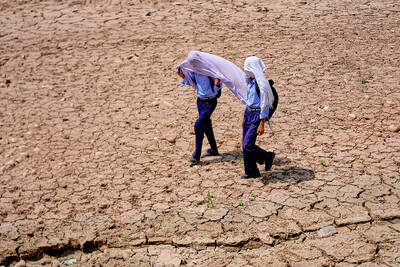
HOTTER: While Indians are accustomed to summer heat, climate change has caused northwestern India to warm faster than other parts of the country, an academic said Roads and markets have emptied during afternoons and some farmers have switched to nighttime work to avoid scorching temperatures as a heat wave grips large parts of India. The India Meteorological Department forecast maximum temperatures for yesterday of about 45°C in the capital, New Delhi, where authorities have opened temporary “cooling zones” to help people cope. The weather department warned that conditions would likely persist across several northern regions in the coming days, with temperatures staying well above seasonal averages. Authorities urged people to stay indoors during the hottest hours and take precautions against heat-related illnesses. India declares a heat wave whenever maximum temperatures
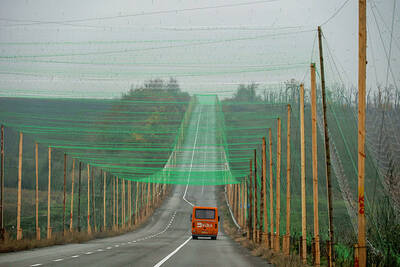
BIGGER ROLE: Beijing has said it maintains an impartial stance on the war in Ukraine, but by training Russian troops, China is far more involved than previously known China’s armed forces secretly trained about 200 Russian military personnel in China late last year, and some have since returned to fight in Ukraine, according to three European intelligence agencies and documents seen by Reuters. While China and Russia have held a number of joint military exercises since Moscow’s full-scale invasion of Ukraine in 2022, Beijing has repeatedly said that it is neutral in the conflict and presents itself as a peace mediator. The covert training sessions, which predominantly focused on the use of drones, were outlined in a dual-language Russian-Chinese agreement signed by senior Russian and Chinese officers in Beijing on


 RSS
RSS