


Worsening wildfires, soaring heat waves and rising water levels have prompted Greek officials to take a closer look at protecting priceless archeological sites that draw hundreds of thousands of visitors each year.
The monuments, scattered across the nation, earn Greece millions of dollars in tourism revenue, but many of the sites are in rural areas and officials believe better planning is needed in case large crowds of tourists need to be evacuated in an emergency.
After a three-year study by some of the nation’s leading scientific institutions, the Greek Ministry of Culture and Sports has earmarked 19 monuments that most urgently need protection against natural threats, with several more to be bolstered by 2030.
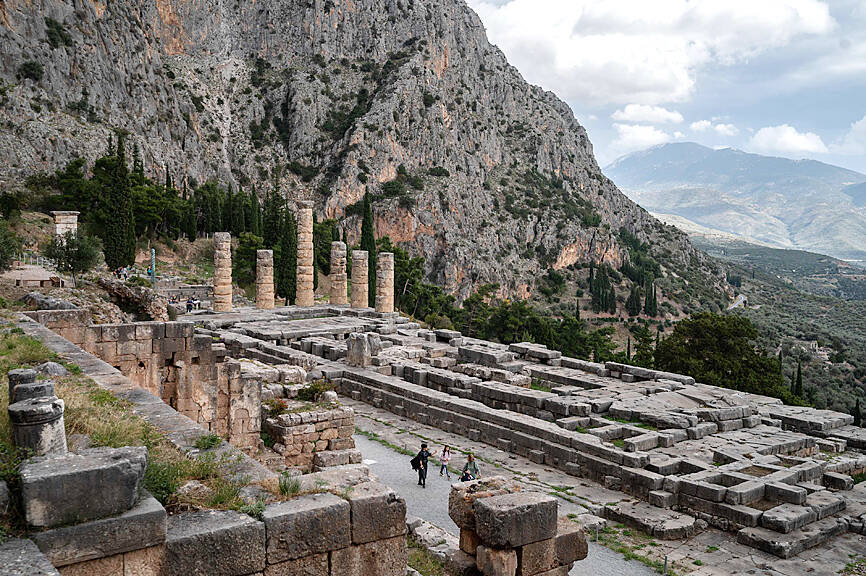
Photo: AFP
The ministry says it is the first time a nationwide evaluation of this scope has been attempted.
The sites under scrutiny include Olympia, habitually threatened by forest fires, the ancient theater of Delphi, where rock slides are a concern, and the sanctuary of Dion, which is prone to flooding.
Olympia Mayor Aristides Panagiotopoulos said that protecting the birthplace of the Olympics, which houses the ancient stadium, a sprawling sanctuary and two museums, requires “constant vigilance.”
“Our concern remains acute, as the area of Ancient Olympia is extensive, with a large expanse of greenery and dense, often unregulated, spontaneous vegetation,” Panagiotopoulos said in an e-mail. “Despite the significant interventions that have been carried out, it is clear that they are not sufficient on their own to cover all needs.”
Wildfires in Olympia in 2007 decimated the natural environment around the archeological site and left more than 40 dead in the broader region of Elis.
Panagiotis Lattas, the head forester for the region of Elis, said that more recently, major fires had broken out in the area in 2021, 2022 and 2024.
Lattas said that significant rainfall this year generated additional vegetation that must be cleared in both urban and agricultural areas before the wildfire season.
“This year, after a very large amount of rainfall — about 40 percent above the annual average — and with the hot and dry conditions expected during the dry season, vegetation will be particularly abundant,” he said.
Greece has already reduced visiting hours at its most popular archeological site, the Acropolis in Athens, to shield visitors from heat waves during the warmest hours of the day, but the increasing frequency of extreme events calls for something more extensive.
From 2022 to last year, scientists at the National University of Athens and the National Research Foundation examined past and present climate and geological conditions at the 19 sites, looking at prior damage to help determine future vulnerability to extreme events.
Exposure to fire, floods, heat waves and rising sea levels were studied by a team of climatologists, geologists, engineers, conservators, architects and building material experts.
In addition to Olympia, Delphi and Dion, they scrutinized Brauron near Athens, Philippi in the north, Mycenae, Messene, Mystras and the temple of Apollo Epicurius in the Peloponnese, Minoan palaces including Knossos in Crete, the ancient city of Rhodes, and Delos and the Heraion in Samos, which face coastal erosion.
The National Observatory of Athens and the capital’s Demokritos research center also contributed research on weather, wildfires and building resilience to the project, which was budgeted at more than 20 million euros (US$23 million) in EU and national funding.
The plan is to cover a network of 40 sites by 2030, Greek Minister of Culture and Sports Lina Mendoni told a conference in Athens last month.
“Our homeland has a uniquely high density and wide geographical distribution of outdoor monuments, inextricably tied to the landscape, which are exposed to fluctuations in temperature, increased humidity, heavy rainfall and wind,” Mendoni told the conference. “Climate change does not necessarily create entirely new risks from scratch. It usually intensifies existing ones, increasing the frequency and severity of such phenomena.”
New fire sensors at 21 sites are to be delivered this year, and fire protection plans drawn up for more than 60 archeological sites, the ministry said.
According to official statistics, Ancient Olympia in 2024 drew more than 300,000 visitors. Knossos had more than 1 million and Delphi more than 290,000.
Delphi Mayor Panagiotis Tagalis said that rockfalls on the Amfissa-Livadeia road in November 2024 caused “serious problems for access to the archeological site and museum of Delphi, as well as for the residents, employees, businesses, and visitors of the wider area.”
The ministry installed wire mesh to the side of cliffs overlooking the archeological site and the municipality said it had cleared a nearby rural road as a backup emergency route for small vehicles.
“Twenty years ago it was absolutely forbidden to create firebreaks ... in protected areas,” Mendoni said. “Fortunately, the mentality has changed.”

PHISHING: The con might appear convincing, as the scam e-mails can coincide with genuine messages from Apple saying you have run out of storage For a while you have been getting messages from Apple saying “your iCloud storage is full.” They say you have exceeded your storage plan, so documents are no longer being backed up, and photos you take are not being uploaded. You have been resisting Apple’s efforts to get you to pay a minimum of £0.99 (US$1.33) a month for more storage, but it seems that you cannot keep putting off the inevitable: You have received an e-mail which says your iCloud account has been blocked, and your photos and videos would be deleted very soon. To keep them you need

For two decades, researchers observed members of the Ngogo chimpanzee group of Kibale National Park in Uganda spend their days eating fruits and leaves, resting, traveling and grooming in their tropical rainforest abode, but this stable community then fractured and descended into years of deadly violence. The researchers are now describing the first clearly documented example of a group of wild chimpanzees splitting into two separate factions, with one launching a series of coordinated attacks against the other. Adult males and infants were targeted, with 28 deaths. “Biting, pounding the victim with their hands, dragging them, kicking them — mostly adult males,
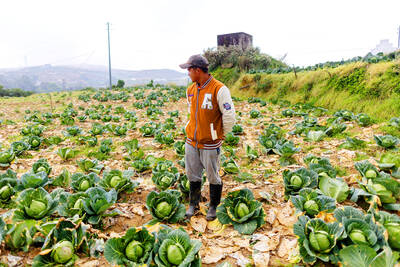
Filipino farmers like Romeo Wagayan have been left with little choice but to let their vegetables rot in the field rather than sell them at a loss, as rising oil prices linked to the Iran war drive up the cost of harvesting, labor and transport. “There’s nothing we can do,” said Wagayan, a 57-year old vegetable farmer in the northern Philippine province of Benguet. “If we harvest it, our losses only increase because of labor, transportation and packing costs. We don’t earn anything from it. That’s why we decided not to harvest at all,” he said. Soaring costs caused by the Middle East
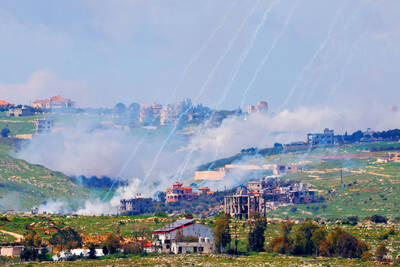
The Israeli military has demolished entire villages as part of its invasion of south Lebanon, rigging homes with explosives and razing them to the ground in massive remote detonations. The Guardian reviewed three videos posted by the Israeli military and on social media, which showed Israel carrying out mass detonations in the villages of Taybeh, Naqoura and Deir Seryan along the Israel-Lebanon border. Lebanese media has reported more mass detonations in other border villages, but satellite imagery was not readily available to verify these claims. The demolitions came after Israeli Minister of Defense Israel Katz called for the destruction of


 RSS
RSS