

Cuban authorities on Friday began to free prisoners after announcing it would pardon 2,010 inmates, the second release in less than a month as it faces heightened US pressure.
More than 20 inmates came out of La Lima penitentiary in east Havana, holding their release papers, crying and hugging relatives who had been waiting for them all morning.
“Thank you for this opportunity that they gave us,” said Albis Gainza, 46, who had served half of a six-year sentence for robbery.
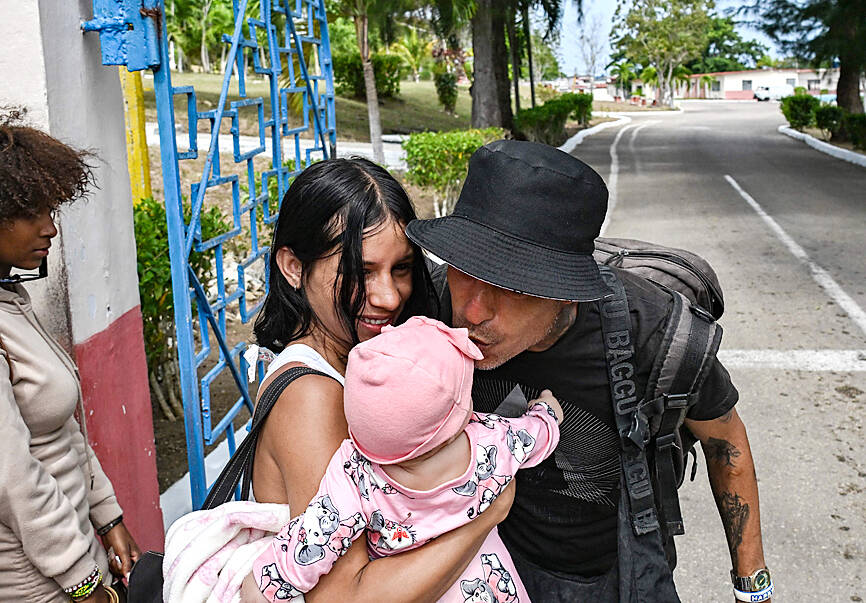
Photo: AFP
He said he could not sleep after learning he would be released.
“This needs to keep going... [and] more are released,” Gainza said.
The Cuban government on Thursday announced that it would pardon 2,010 prisoners as a “humanitarian and sovereign gesture” to mark Holy Week.
It did not link it to talks with the US, but the move came days after US President Donald Trump eased a de facto oil blockade of Cuba by allowing a Russian tanker to deliver crude to the fuel-starved island.
Releasing political prisoners has long been a core US demand in Cuba, but it was not immediately clear if any were among those pardoned, as no list was published.
The US Department of State said it was aware of reports of the prisoner release, “though it is unclear how many, if any, political prisoners will be released.”
“We continue to call for the immediate release of the hundreds of other brave Cuban patriots who remain unjustly detained,” a department spokesperson said.
Cuba is holding 775 political prisoners, rights group Justicia11J said.
“Any release represents immediate relief, especially for the families,” Justicia11J said, but warned that the gesture “does not constitute a change in the Cuban State’s repressive policies.”
The Cuban government said the releases would be based on the nature of the crimes, good behavior, health reasons and time served.
Those released would not include people who committed murder, sex assault, drug-related crimes, theft, illegal slaughter of livestock and “crimes against authority,” it said.
Justicia11J said the mention of the all-encompassing “crimes against authority” was “particularly concerning,” as the charges have served as “instruments of political repression in Cuba.”
The Cuban government said the people being freed include young people, women and prisoners older than 60 years old who are scheduled for early release within the next six months to a year.
The government last month announced that it would free 51 prisoners as a sign of “good will” toward the Vatican, which has often acted as a mediator between Washington and Havana.
At least 20 political prisoners were released in the wake of that announcement, rights group Cubalex said.
Of half a dozen former prisoners interviewed by Agence France-Presse outside La Lima, none were jailed for political reasons.

Japan has started its first nationwide survey of animal cafes amid concerns over animal welfare, hygiene and public health, a government official said, bringing greater scrutiny to the popular but lightly regulated sector. The desktop survey, which began this month, will examine the number of facilities, the types of animals they house and the conditions they are held in, and how visitors interact with the animals. Exotic animal cafes, where visitors can interact with species ranging from otters to owls and marmots, have become popular attractions for Japanese and foreign tourists. However, researchers say some facilities keep threatened species, raising

OLD WOUNDS: Protestant marchers seized on an overturned injunction to stage a march, which drew thousands of counterprotesters to block the road in Portadown UK leaders called for calm as a tense standoff with residents seeking to halt a pro-British Protestant march through a primarily Catholic area stretched into the night on Sunday, in one of the worst crises for Northern Ireland in the past few years. The tensions were triggered after a Belfast appeal court overturned a High Court injunction in the early hours of Sunday to clear the march by the Orange Order to go ahead for the first time since 1997. The Parades Commission, Northern Ireland’s independent body regulating contentious processions, had authorized 35 Orangemen to march silently along Garvaghy Road in Portadown,
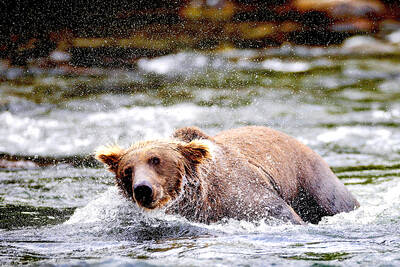
The winner of this year’s Fat Bear Week has been crowned after a nail-biting final — and it’s the son of a former champion. Backpack, a 20-year-old male beloved by rangers in Alaska for his quiet determination, edged out female fellow finalist Dancing Queen in the annual ursine eating competition at Katmai National Park. More than 2.3 million people voted in the week-long competition that sees bears unwittingly jostle in a series of head-to-head contests to decide which one of them has most impressively piled on the pounds ahead of hibernation. Viewers watch a livestream of the enormous animals as they scoop salmon

A shark stranded in a canal in the South Korean port of Busan has become the country’s latest wildlife sensation, with the city saying about 600,000 people have flocked to see it over the past two weeks. The 3.5m shark was first spotted in a narrow waterway in North Port on Sept. 18. As the days passed without the shark finding its way back to the ocean, authorities on Tuesday launched a rescue operation to guide it out, but the effort failed. The South Korean Coast Guard and other agencies deployed vessels to spray jets of water behind the shark


 RSS
RSS