


Each spring, a pink veil unfolds across the plains of Greece’s largest peach-producing region. The blossoming peach trees create a spectacular sight that attracts visitors every year, mostly from Greece, but also increasingly from the rest of Europe.
“It’s something that people must experience and see at least once in their lifetime, because it’s a huge area,” said Gianna Pilitsidou, president of the Veria Tourism Club, based in the northern city of Veria.
The plain, which stretches for 170 square kilometers (about 65 square miles), turns completely pink, she said.
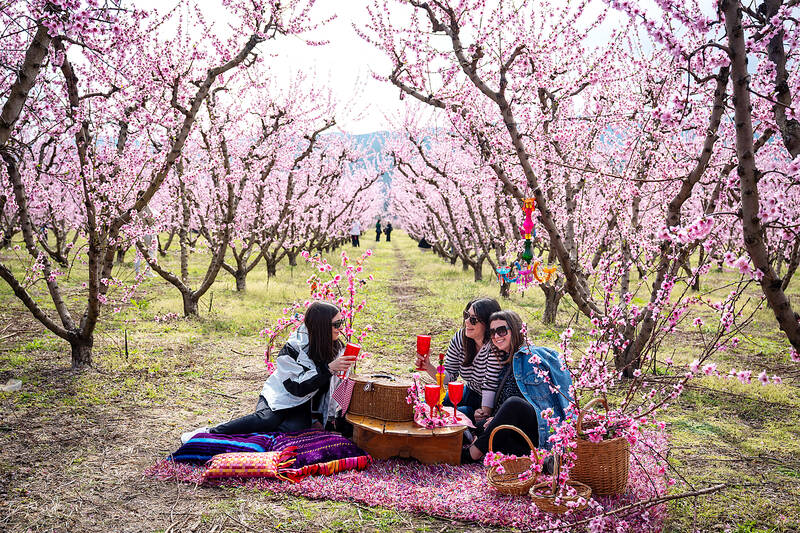
Photo: AP
Over the past few years, the Veria Tourism Club has been organizing events in the blossoming peach orchards to mark the occasion: photography activities, cycling tours and the promotion of local farmers’ products.
“Every year we welcome spring with celebrations in the fields, inviting people to visit us and experience it,” Pilitsidou said.
Over two weekends, thousands of visitors wandered among the blooming peach trees around Veria, 72km west of Greece’s second largest city of Thessaloniki.
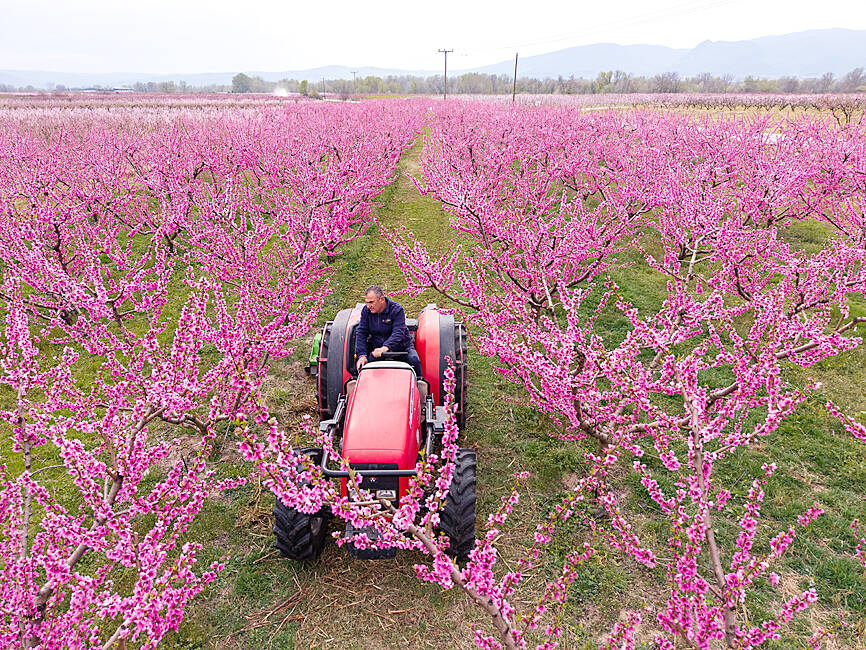
Photo: AP
“I want the people in Holland and Belgium to know what amazing spots there still are besides all the places that people already know,” said Wesley van Eijk, a blogger from the Netherlands who travels around Greece. “For example, Veria. I mean more and more people get to know it, but you have to feel it and be here.”
The events aim to promote the region and support farmers involved in peach production.
“For all of this to happen, it takes a lot of hard work — a lot of effort from us farmers,” said Anastasios Chalkidis, president of the local farmers’ union. “We’re happy that this beautiful event takes place, this great promotion for the wonderful product we have.”
The events have been a boon to the region, with hotel workers saying they have visibly increased the number of visitors.
“I came all the way from Germany to this fabulous event to have a look at the peach blossom, which I absolutely adore,” traveler Andrea Lachnit said. “You have to come because it’s stunning and beautiful and heavenly. I have never seen anything like this before.”
The peach trees in the Veria region blossom roughly between mid-March and mid-April.

PHISHING: The con might appear convincing, as the scam e-mails can coincide with genuine messages from Apple saying you have run out of storage For a while you have been getting messages from Apple saying “your iCloud storage is full.” They say you have exceeded your storage plan, so documents are no longer being backed up, and photos you take are not being uploaded. You have been resisting Apple’s efforts to get you to pay a minimum of £0.99 (US$1.33) a month for more storage, but it seems that you cannot keep putting off the inevitable: You have received an e-mail which says your iCloud account has been blocked, and your photos and videos would be deleted very soon. To keep them you need

For two decades, researchers observed members of the Ngogo chimpanzee group of Kibale National Park in Uganda spend their days eating fruits and leaves, resting, traveling and grooming in their tropical rainforest abode, but this stable community then fractured and descended into years of deadly violence. The researchers are now describing the first clearly documented example of a group of wild chimpanzees splitting into two separate factions, with one launching a series of coordinated attacks against the other. Adult males and infants were targeted, with 28 deaths. “Biting, pounding the victim with their hands, dragging them, kicking them — mostly adult males,
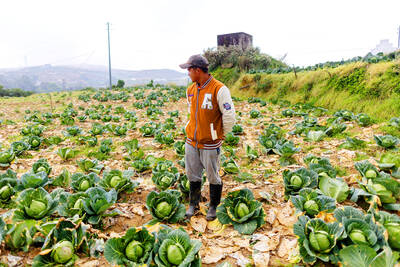
Filipino farmers like Romeo Wagayan have been left with little choice but to let their vegetables rot in the field rather than sell them at a loss, as rising oil prices linked to the Iran war drive up the cost of harvesting, labor and transport. “There’s nothing we can do,” said Wagayan, a 57-year old vegetable farmer in the northern Philippine province of Benguet. “If we harvest it, our losses only increase because of labor, transportation and packing costs. We don’t earn anything from it. That’s why we decided not to harvest at all,” he said. Soaring costs caused by the Middle East
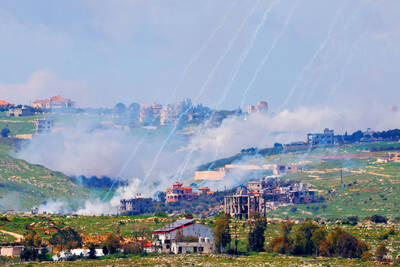
The Israeli military has demolished entire villages as part of its invasion of south Lebanon, rigging homes with explosives and razing them to the ground in massive remote detonations. The Guardian reviewed three videos posted by the Israeli military and on social media, which showed Israel carrying out mass detonations in the villages of Taybeh, Naqoura and Deir Seryan along the Israel-Lebanon border. Lebanese media has reported more mass detonations in other border villages, but satellite imagery was not readily available to verify these claims. The demolitions came after Israeli Minister of Defense Israel Katz called for the destruction of


 RSS
RSS