


More than 20 plaster casts of victims who died in the catastrophic volcano eruption in Pompeii, Italy, went on display for the first time on Thursday in a permanent exhibition.
The casts, which academics call “imprints of pain,” dramatically capture the exact position each resident of the city died in 79 AD. The reproductions were created by pouring liquid plaster into the voids left by the decomposed bodies in the hardened ash.
Curators wanted to “give dignity to these people who are like us — women, children, men — who died during the eruption, but at the same time make it understandable, inclusive and somehow joyful to understand what really happened in Pompeii,” said Gabriel Zuchtriegel, director of the Archaeological Park of Pompeii.
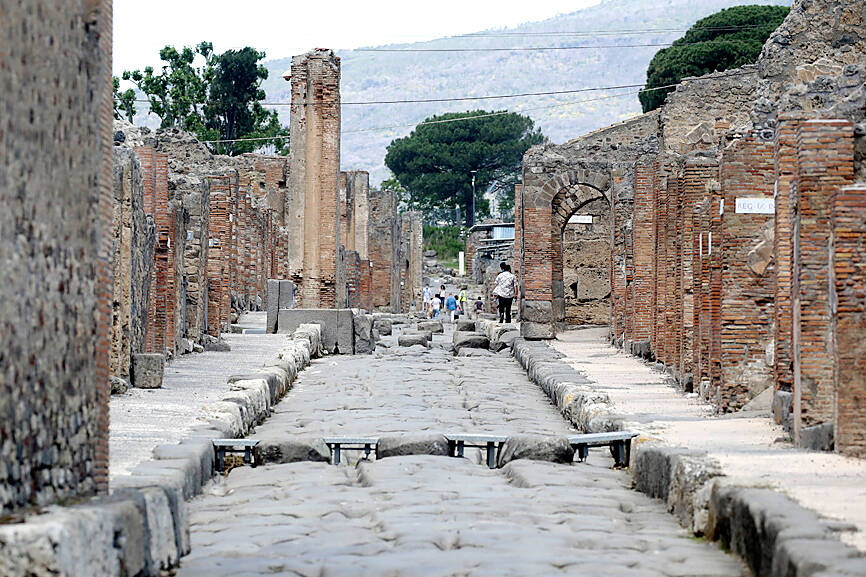
Photo: AP
Invented by Giuseppe Fiorelli in 1863, the recreation technique faithfully preserves the position, expression of pain and clothing details of the victims, making them unique testimonies. It is still used by the team of academics conducting research at the park.
Pompeii is the only site in the world that allows the recovery of this type of evidence, enabling visitors to see the reproduction of objects that were destroyed, and the people who lived and died at that moment.
The eruption of Mount Vesuvius killed an estimated 2,000 residents within the city, with total regional casualties reaching up to 16,000. The city of Pompeii was covered by ash, then later solidified by pyroclastic flows.
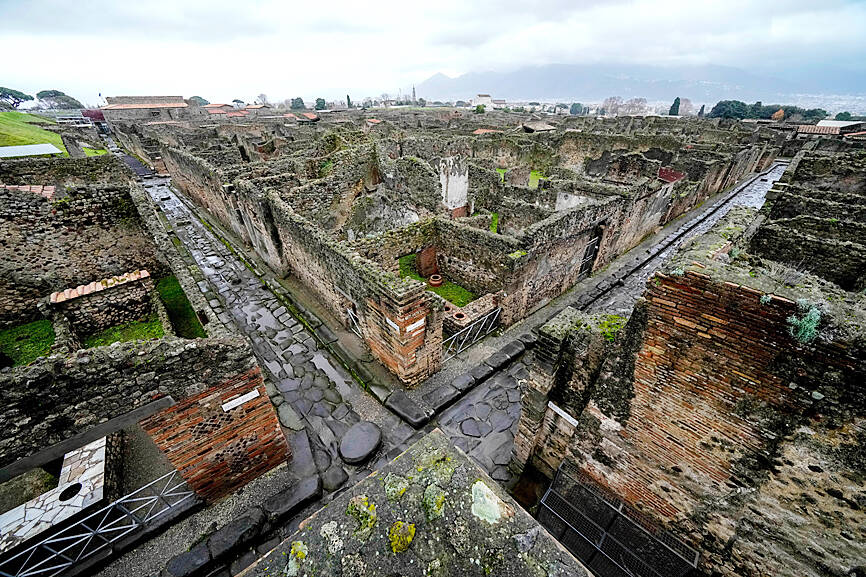
Photo: AP
During the excavations in Pompeii, the remains of more than a thousand victims of the eruption were found trapped in their homes or shelters, buried by a rain of pumice stones and volcanic rock, or killed by the collapse of roofs and walls under the weight of the volcanic debris, which reached a height of about 3m.
The 22 casts were chosen among the best preserved remains. The victims were found across the city, from the inner areas to the gates and roads leading out of the town, where the inhabitants fled in search of safety.
“They have a strong emotional impact on visitors and can be very moving,” said Silvia Martina Bertesago, archeologist at the park.
“Through the analyzes we can carry out today with increasingly advanced techniques, we can also understand their age and sex, but also whether they had particular diseases or particular types of diet,” she said.
The exhibition is housed in the porticoes of the Palestra Grande, located opposite the amphitheater. As well as an area dedicated to human remains, it also includes displays of findings such as plants and food that remained buried for centuries under meters of ash and lava.

Through the noise of rushing papers and whirring belts at a print factory in Kyoto, two creators watch their photo essay come to life in broadsheet form — part of an effort to win new audiences in the age of artificial intelligence (AI). Despite the decline of the publishing industry, self-publication and handmade “zine” magazines are growing in popularity in Japan, reflecting the nation’s enduring love of paper in the digital era. While speaking to Agence France-Presse at the plant, his hands black with ink, one of the creators, Kazuma Obara, said: “I think [paper] is a medium that engages all five
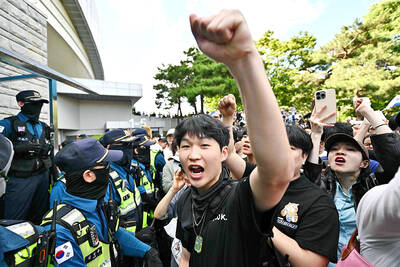
‘ABSURD MISTAKE’: The election commission said that there had been a failure to anticipate turnout after 14 polling stations ran short of ballot papers South Korean riot police yesterday cleared protesters from a Seoul polling station after a 35-hour blockade sparked by a shortage of ballot papers during local elections earlier this week. Wednesday’s election was the first nationwide vote since South Korean President Lee Jae-myung took office following the ouster of Yoon Suk-yeol over his short-lived martial law declaration. Lee’s ruling Democratic Party swept most races, but failed to flip the crucial Seoul mayoral seat. The South Korean National Election Commission apologized, blaming a failure to anticipate turnout after 14 polling stations in Seoul ran short of ballot papers. Some polling stations stayed open until 10pm to

Australian researchers have trained lab-grown brain cells on a silicon computer chip to play the 1990s shooter game Doom and said they are just scratching the surface of what the neurons could be capable of doing. It is the science-fiction work of biotech boffins at Cortical Labs, who researched and developed the technology that harnesses the workings of the brain’s networking system. Each so-called “biological computer” contains about 200,000 living human brain cells, grown from stem cells that were harvested from blood donations. Having mastered the simple computer game Pong, where a paddle is moved up and down to send a ball

France experienced its hottest spring on record, the French weather service said on Tuesday, after an exceptional early heat wave that also broke highs for the season in England and Wales. Meteo-France said the average nationwide temperature over March to May was 13.8°C — about 1.7°C above the norm, and surpassing records set in 2011 and 2020. “The warmest spring since records began in 1900,” it said in a bulletin. All three months were warmer than average, but the onset of an “unprecedented heatwave” late last month pushed the mercury to highs typically seen at the height of the summer. “Our country had never


 RSS
RSS