


Press freedom in the Americas suffered a “dramatic deterioration” last year, a regional watchdog said on Tuesday in an assessment of conditions for the profession in 23 countries across the western hemisphere.
The Miami-based Inter American Press Association (IAPA) has been publishing an annual freedom of speech list, known as the Chapultepec index, since 2020. It evaluates how the US, Canada and Latin American countries do when it comes to protecting media freedoms.
“This has been one of the worst years in the region, with homicides, arbitrary arrests and impunity” for crimes committed against journalists, the organization said in its annual report.

Photo: AP
The index for last year ranked Venezuela and Nicaragua as nations “without freedom of speech,” while Ecuador, Bolivia, Honduras, Peru, Mexico, Haiti, Cuba and El Salvador fall into the “high restriction” category. Other democracies including Canada, Brazil, Chile and Panama were ranked as countries with “low restrictions” on freedom of speech.
The US ranks as a nation with “restrictions” on freedom of speech, the IAPA said, adding that there were 170 attacks against journalists in the US last year.
Attacks during coverage of procedures undertaken by US Immigration and Customs Enforcement agents had raised concerns about journalistic freedoms, it said.
In the US, “there was poor government action against disinformation, as well as government actions aimed at limiting free expression and access to information,” the researchers found.
US President Donald Trump and other White House officials have “stigmatized” media outlets that are critical of the administration, they added.
The Committee to Protect Journalists (CPJ), another group that tracks attacks on press freedoms around the world, said that last year, 13 journalists were murdered in Latin America, almost twice as many as in 2024, when it registered seven murders.
CPJ Latin America coordinator Cristina Zahar said that press freedom and democracy in Latin America have suffered “important setbacks.”
“What CPJ has observed in the region are deliberate attacks by public agencies against the press with the objective of delegitimizing its work,” Zahar said in a WhatsApp message.
Many countries in the region are also using anti-terrorism laws, laws against cybercrimes and laws against nonprofit organizations to criminalize the work of journalists, she added.
Attacks on journalists have increased in the region as “authoritarian presidents” emerge in different countries, the IAPA said.
In Venezuela, “self-censorship” became the norm among local media outlets, which provided almost no coverage of the Nobel Peace Prize granted to Venezuelan opposition leader Maria Corina Machado, fearing government reprisals, it said.
In Nicaragua censorship is “institutionalized,” with a constitutional reform that put all branches of government under the control of the presidency, the report said.
The report classifies El Salvador as a country with “high restrictions” on freedom of speech, saying that government officials try to intimidate journalists with lawsuits and criminal investigations.
The report said that 180 attacks against media workers were recorded in the Central American country between May and July last year.
There were 290 acts of aggression against journalists in Ecuador last year, including four murders, committed allegedly by criminal gangs. One journalist was also shot in the shoulder by police while broadcasting a protest organized by an indigenous community.
Haiti was included for the first time in the annual report and was ranked as one of the countries with the least press freedom in the Americas.


PHISHING: The con might appear convincing, as the scam e-mails can coincide with genuine messages from Apple saying you have run out of storage For a while you have been getting messages from Apple saying “your iCloud storage is full.” They say you have exceeded your storage plan, so documents are no longer being backed up, and photos you take are not being uploaded. You have been resisting Apple’s efforts to get you to pay a minimum of £0.99 (US$1.33) a month for more storage, but it seems that you cannot keep putting off the inevitable: You have received an e-mail which says your iCloud account has been blocked, and your photos and videos would be deleted very soon. To keep them you need
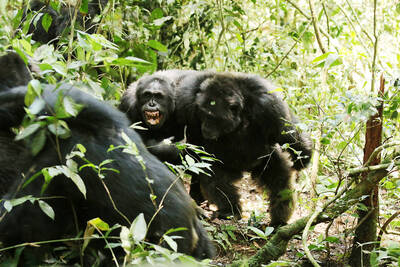
For two decades, researchers observed members of the Ngogo chimpanzee group of Kibale National Park in Uganda spend their days eating fruits and leaves, resting, traveling and grooming in their tropical rainforest abode, but this stable community then fractured and descended into years of deadly violence. The researchers are now describing the first clearly documented example of a group of wild chimpanzees splitting into two separate factions, with one launching a series of coordinated attacks against the other. Adult males and infants were targeted, with 28 deaths. “Biting, pounding the victim with their hands, dragging them, kicking them — mostly adult males,
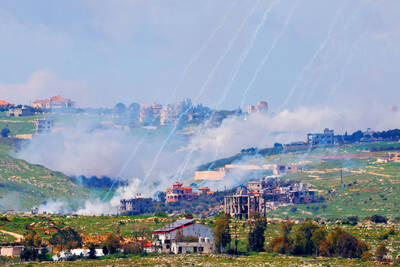
The Israeli military has demolished entire villages as part of its invasion of south Lebanon, rigging homes with explosives and razing them to the ground in massive remote detonations. The Guardian reviewed three videos posted by the Israeli military and on social media, which showed Israel carrying out mass detonations in the villages of Taybeh, Naqoura and Deir Seryan along the Israel-Lebanon border. Lebanese media has reported more mass detonations in other border villages, but satellite imagery was not readily available to verify these claims. The demolitions came after Israeli Minister of Defense Israel Katz called for the destruction of

SUPERFAN: The Japanese PM played keyboard in a Deep Purple tribute band in middle school and then switched to drums at university, she told the British rock band Legendary British rock band Deep Purple yesterday made Japanese Prime Minister Sanae Takaichi’s day with a brief visit to their high-profile superfan as they returned to the nation they first toured more than half a century ago. Takaichi’s reputation as an amateur drummer, and a fan of hard rock and heavy metal has been well documented, and she has referred to Deep Purple as one of her favorite bands along with the likes of Black Sabbath and Iron Maiden. “You are my god,” a giddy Takaichi said in English to Deep Purple drummer Ian Paice, presenting him with a set of made-in-Japan


 RSS
RSS