


Hungarian authorities temporarily detained seven Ukrainian citizens and seized two armored cars carrying tens of millions of euros in cash across Hungary on suspicion of money laundering, officials said on Friday.
The Ukrainians were released on Friday, following their detention on Thursday, but Hungarian officials held onto the cash, prompting Ukraine to accuse Hungary’s Russia-friendly government of illegally seizing the money.
“We will not tolerate this state banditism,” Ukrainian Minister of Foreign Affairs Andrii Sybiha said.
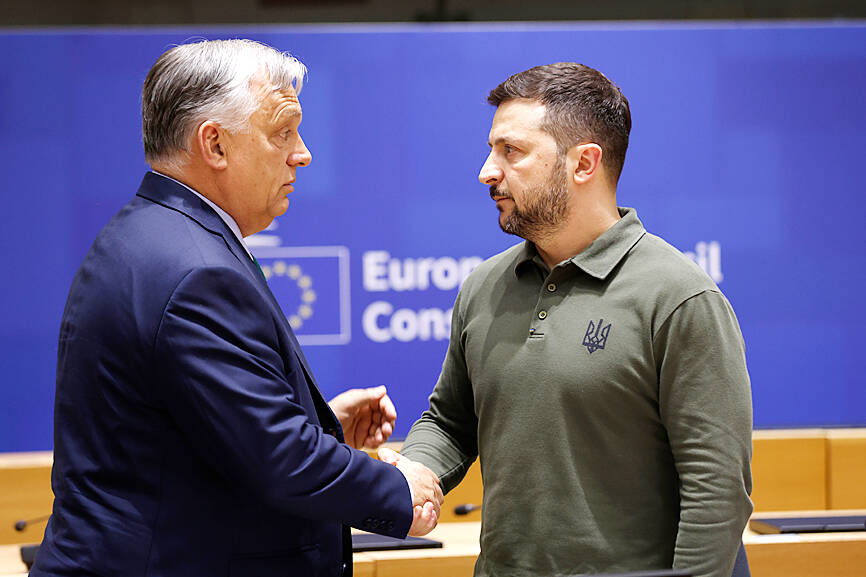
Photo: AP
The seven detained Ukrainians were employees of the Ukrainian state-owned Oschadbank, who were traveling in the two armored cars that were carrying the money between Austria and Ukraine as part of regular services between state banks, Sybiha said.
Oschadbank board chairman Yurii Katsion wrote on Facebook that Hungary “groundlessly questions the source of the state bank’s funds, transported in accordance with international agreements and supported by all necessary documentation.”
The shipment seized by Hungary included US$40 million, 35 million euros (US$40.66 million) and 9kg of gold — worth about US$1.5 million at current prices — a separate statement by Oschadbank said.
The Hungarian government said it would expel the seven detained Ukrainians, but did not give details on why they would be released if they were suspected of money laundering.
The incident further inflamed rising tensions between Hungary and Ukraine, which are embroiled in a bitter feud over Hungary’s access to Russian oil through a pipeline that crosses Ukrainian territory.
Oil shipments through the Druzhba pipeline have been interrupted since Jan. 27.
Ukraine said a Russian drone strike damaged the pipeline’s infrastructure, and repairing it carried risks to technicians.
Even if restored, it would remain vulnerable to further Russian attacks, Ukraine said.
The Hungarian government has accused Ukraine of deliberately holding up supplies of Russian crude, and has vowed to take strong countermeasures against Kyiv until oil flows resume.
Hungarian Prime Minister Viktor Orban, who has maintained close relations with the Kremlin while escalating an aggressive anti-Ukraine campaign ahead of crucial elections next month, has called Ukraine Hungary’s “enemy,” and accused Ukrainian President Volodymyr Zelenskiy of seeking to provoke an energy crisis to sway the April 12 vote.
“The best way for the Ukrainians to achieve their demands on Hungary is if they get rid of the national government and the prime minister who is standing in their way,” Orban said.
While he did not directly mention the detention of the bank vehicles, Orban alluded to the incident, saying: “We will stop things that are important to Ukraine passing through Hungary until we get the approval of the Ukrainians for oil shipments.”
“The Ukrainians will run out of money sooner than we will run out of oil,” he added.
Trailing in most polls behind a popular center-right challenger, the populist Orban has staked the election on convincing voters that Ukraine poses an existential threat to Hungary’s security.
In office since 2010, the EU’s longest-serving leader said that if he loses the election, the EU would force Hungary into bankruptcy by cutting Russian energy imports, and that Hungarian youth would be sent to their deaths on the front lines in Ukraine.
Sybiha cast Orban’s conduct as electoral politicking, saying the detention of the seven Ukrainians and seizure of money was “part of Hungary’s blackmail and electoral campaign.”
“We reserve the right to take appropriate action, including initiating sanctions and other restrictive measures,” Sybiha said. “We once again demand Hungary stop dragging Ukraine into its domestic politics and electoral campaign.”
Hungary has defied EU efforts to wean off Russian fossil fuels, and continued to purchase them despite Moscow’s invasion.
Orban previously ceased diesel shipments to Ukraine, vetoed a new round of EU sanctions against Russia and blocked a major 90 billion euro loan for Kyiv in retaliation for the interruption in oil shipments.
He on Thursday told an economic forum that Hungary would use “force,” including “political and financial tools,” to compel Ukraine to resume oil shipments.

Kouri Richins, a Utah mother who published a children’s book about grief after the death of her husband is to serve a life sentence for his murder without the possibility of parole, a judge ruled on Wednesday. Richins was convicted in March of aggravated murder for lacing a cocktail given to her husband, Eric Richins, with five times the lethal dose of fentanyl at their home near Park City in 2022. A jury also found her guilty of four other felonies, including insurance fraud, forgery and attempted murder for trying to poison her husband weeks earlier on Feb. 14, 2022, with a

‘PERSONAL MISTAKES’: Eileen Wang has agreed to plead guilty to the felony, which comes with a maximum sentence of 10 years in federal prison A southern California mayor has agreed to plead guilty to acting as an illegal agent for the Chinese government and has resigned from her city position, officials said on Monday. Eileen Wang (王愛琳), mayor of Arcadia, was charged last month with one count of acting in the US as an illegal agent of a foreign government. She was accused of doing the bidding of Chinese officials, such as sharing articles favorable to Beijing, without prior notification to the US government as required by law. The 58-year-old was elected in November 2022 to a five-person city council, from which the mayor is selected

DELA ROSA CASE: The whereabouts of the senator, who is wanted by the ICC, was unclear, while President Marcos faces a political test over the senate situation Philippine authorities yesterday were seeking confirmation of reports that a top politician wanted by the International Criminal Court (ICC) had fled, a day after gunfire rang out at the Philippine Senate where he had taken refuge fearing his arrest. Senator Ronald “Bato” dela Rosa, the former national police chief and top enforcer of former Philippine president Rodrigo Duterte’s “war on drugs,” has been under Senate protection and is wanted for crimes against humanity, the same charges Duterte is accused of. “Several sources confirmed that the senator, Senator Bato, is no longer in the Senate premises, but we are still getting confirmation,” Presidential
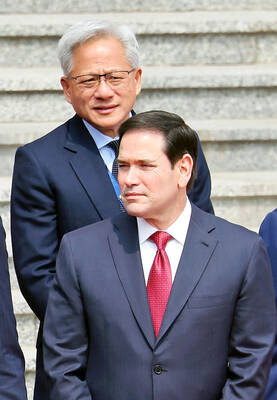
HELP DENIED? The US Department of State said that the Cuban leadership refuses to allow the US to provide aid to Cubans, ‘who are in desperate need of assistance’ US Secretary of State Marco Rubio on Wednesday said that Cuba’s leadership must change, as Washington renewed an offer of US$100 million in aid if the communist nation agrees to cooperate. Cuba has been suffering severe economic tumult led by an energy shortage that plunged 65 percent of the country into darkness on Tuesday. Cuba’s leaders have blamed US sanctions, but Rubio, a Cuban American and critic of the government established by Fidel Castro, said the system was to blame, including corruption by the military. “It’s a broken, nonfunctional economy, and it’s impossible to change it. I wish it were different,” he told


 RSS
RSS