


Aaron Spencer, an Arkansas man accused of killing his teenage daughter’s alleged abuser, won the Republican nomination for local sheriff while waiting to stand trial for murder in his rural county, where he ran on a message of seeing the failures of law enforcement.
Spencer defeated Lonoke County Sheriff John Staley in Tuesday’s primary elections, unofficial results posted by the Arkansas secretary of state showed.
He would not be able to serve if he is convicted of killing Michael Fosler, 67, who at the time was out on bond after being charged with numerous sexual offenses against Spencer’s then-13-year-old daughter.

Photo: AP
Spencer’s attorneys do not deny that he shot and killed Fosler, but say that he acted within the law to protect his child from a predator.
Spencer won more than 53 percent of the vote with all precincts reporting, the results showed.
Staley, whose department arrested Spencer in 2024, conceded the loss.
“Congratulations to Mr Spencer. Tonight the voters made their decision in the Republican primary and I respect the decision,” Staley wrote on Facebook.
Spencer in a statement said that his message of accountability resonated with voters.
“Tonight, the people of Lonoke County stood up and chose transparency and accountability,” Spencer said. “This wasn’t a campaign about me. It was about every family who called for help and got nothing. That betrayal ends tonight.”
He is to face Democrat Brian Mitchell Sr in the heavily Republican county in November.
Spencer has pleaded not guilty and is out on bond while awaiting trial, which was originally scheduled to start in January. The trial was delayed after the presiding judge was removed from the case. A new date has not been set.
Court documents show that on the night of the October 2024 shooting, Spencer woke up to find his daughter missing from her bedroom and went out in his truck to search for her. He found the girl in the passenger seat of a vehicle Fosler was driving. Spencer eventually forced Fosler’s truck off the highway and, after an altercation, called emergency services to report he had shot the man, records show.
Prosecutors say that Spencer had planned to kill Fosler even before that night and that he could have called police while pursuing Fosler.
Spencer’s attorney, Erin Cassinelli, wrote in an e-mail to reporters that the election results have no bearing on the facts of the case.
“Aaron Spencer did exactly what the law allows and exactly what any father would do: He protected his daughter and himself from harm,” Cassinelli said. “At some point, those responsible for this prosecution will have to reckon with that.”
Spencer on Facebook last month said that if elected, he would establish a dedicated team to combat sex crimes against children.
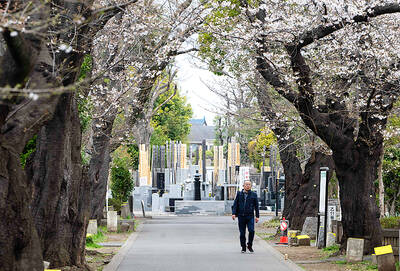
ROCKY RELATIONS: The figures on residents come as Chinese tourist numbers drop following Beijing’s warnings to avoid traveling to Japan The number of Chinese residents in Japan has continued to rise, even as ties between the two countries have become increasingly fractious, data released on Friday showed. As of the end of December last year, the number of Chinese residents had increased by 6.5 percent from the previous year to 930,428. Chinese people accounted for 22.6 percent of all foreign residents in Japan, making them by far the largest group, Japanese Ministry of Justice data showed. Beijing has criticized Tokyo in increasingly strident terms since Japanese Prime Minister Sanae Takaichi last year suggested that a military conflict around Taiwan could

A retired US colonel behind a privately financed rocket launch site in the Dominican Republic sees the project as a response to China’s dominance of the space race in Latin America. Florida-based Launch on Demand is slated to begin building a US$600 million facility in a remote region near the border with Haiti late this year. The project is designed to meet surging demand for the heavy-lift rockets needed to put clusters of satellites into orbit. It is also an answer to China’s growing presence in the region, said CEO Burton Catledge, a former commander of the US Air Force’s 45th Operations

Germany is considering Australia’s Ghost Bat robot fighter as it looks to select a combat drone to modernize its air force, German Minister of Defense Boris Pistorius said yesterday. Germany has said it wants to field hundreds of uncrewed fighter jets by 2029, and would make a decision soon as it considers a range of German, European and US projects developing so-called “collaborative combat aircraft.” Australia has said it will integrate the Ghost Bat, jointly developed by Boeing Australia and the Royal Australian Air Force, into its military after a successful weapons test last year. After inspecting the Ghost Bat in Queensland yesterday,
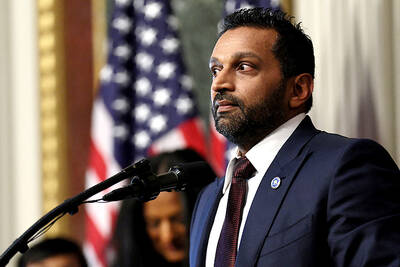
A pro-Iran hacking group claimed to breach FBI Director Kash Patel’s personal e-mail inbox and posted some of the contents online. The e-mails provided by the hacking group include travel details, correspondence with leasing agents in Washington and global entry, and loyalty account numbers. The e-mail address the hackers claim to have compromised has been previously tied to Patel’s personal details, and the leaked e-mails contain photos of Patel and others, in addition to correspondence with family members and colleagues. “The FBI is aware of malicious actors targeting Director Patel’s personal email information,” the agency said in a statement on


 RSS
RSS