


Japan yesterday switched on the world’s biggest nuclear power plant again, its operator said, after an earlier attempt was quickly suspended due to a minor glitch.
A problem with a monitoring alarm last month forced the suspension of its first restart since the 2011 Fukushima disaster.
The Kashiwazaki-Kariwa plant in the Niigata region restarted at 2pm, Tokyo Electric Power Co (TEPCO) said in a statement.
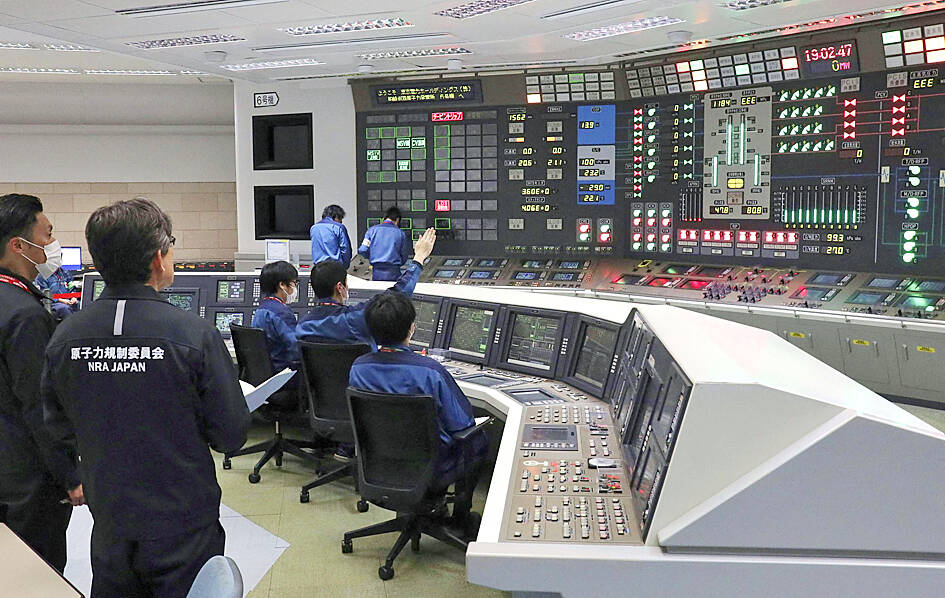
Photo: Kyodo via Reuters
The facility had been offline since Japan pulled the plug on nuclear power after a colossal earthquake and tsunami sent three reactors at the Fukushima atomic plant into meltdown.
However, Japan is now turning to atomic energy to reduce its reliance on fossil fuels, achieve carbon neutrality by 2050 and meet growing energy needs from artificial intelligence.
Conservative Japanese Prime Minister Sanae Takaichi, who pulled off a thumping election victory on Sunday, has promoted nuclear power to energize the Asian economic giant.
TEPCO initially moved to start one of seven reactors at the Kashiwazaki-Kariwa plant on Jan. 21, but shut it off the following day after a monitoring system alarm sounded.
The alarm had picked up slight changes to the electrical current in one cable even though these were still within a range considered safe, TEPCO officials told a news conference last week.
The firm has changed the alarm’s settings as the reactor is safe to operate.
Commercial operations are to commence on or after March 18 after another comprehensive inspection, TEPCO officials said.
Kashiwazaki-Kariwa is the world’s biggest nuclear power plant by potential capacity, although just one reactor of seven was restarted.
Fourteen reactors, mostly in western and southern Japan, have resumed operation since the post-Fukushima shutdown under strict safety rules, with 13 running as of the middle of last month.
Kashiwazaki-Kariwa is the first TEPCO-run unit to restart since 2011. The company also operates the stricken Fukushima Dai-ichi plant, now being decommissioned.
The vast Kashiwazaki-Kariwa complex has been fitted with a 15m-high tsunami wall, elevated emergency power systems and other safety upgrades.
However, public opinion in the area around the plant is deeply divided: About 60 percent of residents oppose the restart, while 37 percent support it, a survey conducted by Niigata Prefecture in September showed.
Residents have raised concerns about the risk of a serious accident, citing frequent cover-up scandals, minor accidents and evacuation plans they say are inadequate.
On Jan. 8, seven groups opposing the restart submitted a petition signed by nearly 40,000 people to TEPCO and Japan’s Nuclear Regulation Authority.
“We will continue to demonstrate our commitment to safety as our priority at the Kashiwazaki-Kariwa Nuclear Power Station through our actions and results,” TEPCO said in a statement yesterday.
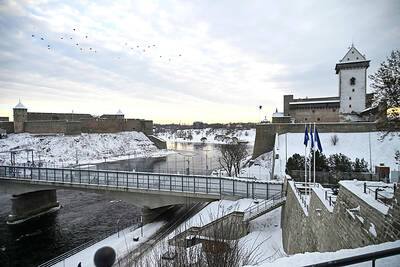
Two medieval fortresses face each other across the Narva River separating Estonia from Russia on Europe’s eastern edge. Once a symbol of cooperation, the “Friendship Bridge” connecting the two snow-covered banks has been reinforced with rows of razor wire and “dragon’s teeth” anti-tank obstacles on the Estonian side. “The name is kind of ironic,” regional border chief Eerik Purgel said. Some fear the border town of more than 50,0000 people — a mixture of Estonians, Russians and people left stateless after the fall of the Soviet Union — could be Russian President Vladimir Putin’s next target. On the Estonian side of the bridge,

DIPLOMATIC THAW: The Canadian prime minister’s China visit and improved Beijing-Ottawa ties raised lawyer Zhang Dongshuo’s hopes for a positive outcome in the retrial China has overturned the death sentence of Canadian Robert Schellenberg, a Canadian official said on Friday, in a possible sign of a diplomatic thaw as Canadian Prime Minister Mark Carney seeks to boost trade ties with Beijing. Schellenberg’s lawyer, Zhang Dongshuo (張東碩), yesterday confirmed China’s Supreme People’s Court struck down the sentence. Schellenberg was detained on drug charges in 2014 before China-Canada ties nosedived following the 2018 arrest in Vancouver of Huawei chief financial officer Meng Wanzhou (孟晚舟). That arrest infuriated Beijing, which detained two Canadians — Michael Spavor and Michael Kovrig — on espionage charges that Ottawa condemned as retaliatory. In January

Jeremiah Kithinji had never touched a computer before he finished high school. A decade later, he is teaching robotics, and even took a team of rural Kenyans to the World Robotics Olympiad in Singapore. In a classroom in Laikipia County — a sparsely populated grasslands region of northern Kenya known for its rhinos and cheetahs — pupils are busy snapping together wheels, motors and sensors to assemble a robot. Guiding them is Kithinji, 27, who runs a string of robotics clubs in the area that have taken some of his pupils far beyond the rural landscapes outside. In November, he took a team
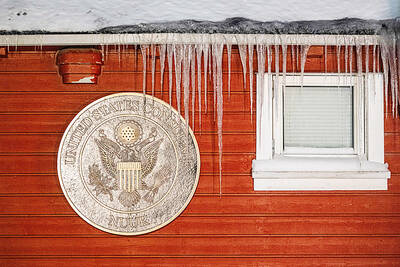
SHOW OF SUPPORT: The move showed that aggression toward Greenland is a question for Europe and Canada, and the consequences are global, not just Danish, experts said Canada and France, which adamantly oppose US President Donald Trump’s wish to control Greenland, were to open consulates in the Danish autonomous territory’s capital yesterday, in a strong show of support for the local government. Since returning to the White House last year, Trump has repeatedly insisted that Washington needs to control the strategic, mineral-rich Arctic island for security reasons. Trump last month backed off his threats to seize Greenland after saying he had struck a “framework” deal with NATO chief Mark Rutte to ensure greater US influence. A US-Denmark-Greenland working group has been established to discuss ways to meet Washington’s security concerns


 RSS
RSS