


Two US troops and a civilian interpreter were killed in central Syria on Saturday after an alleged member of the Islamic State (IS) group opened fire on a joint US-Syrian patrol, officials said.
“We mourn the loss of three Great American Patriots in Syria,” US President Donald Trump said on his Truth Social platform, vowing “very serious retaliation.”
Pentagon spokesman Sean Parnell said the attack took place in Palmyra, home to UNESCO-listed ancient ruins and once controlled by the IS — also known as ISIS — during the height of its territorial expansion in Syria.
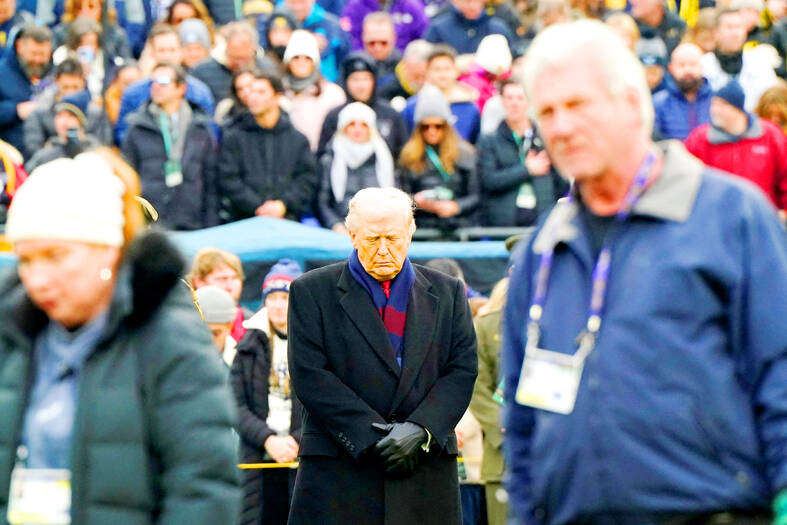
Photo: Reuters
The deadly attack had been “an ambush by a lone ISIS gunman,” who was “engaged and killed,” US Central Command said on X.
Trump called it “an ISIS attack against the US, and Syria, in a very dangerous part of Syria, that is not fully controlled by them.”
Three other wounded US troops were “doing well,” he said.
The soldiers “were conducting a key leader engagement” in support of counterterrorism operations when the attack occurred, Parnell said, while US envoy to Syria Tom Barrack said the ambush targeted “a joint US-Syrian government patrol.”
The incident is the first of its kind reported since rebel forces overthrew longtime Syrian ruler Bashar al-Assad in December last year, and rekindled the country’s ties with the US.
Trump said Syria President Ahmed al-Sharaa, who visited the White House last month, was “extremely angry and disturbed by this attack.”
Syrian Minister of Foreign Affairs and Expatriates Asaad al-Shaibani said in a post on X that Damascus “strongly condemns the terrorist attack that targeted a joint Syria-US counterterrorism patrol near Palmyra.”
“We extend our condolences to the families of the victims, as well as to the American government and people, and wish the wounded a speedy recovery,” he said.
A Syrian military official who requested anonymity said the shots were fired “during a meeting between Syrian and American officers” at a Syrian base in Palmyra.
A witness, who asked to remain anonymous, said he heard the shots coming from inside the base.
However, a Pentagon official speaking on the condition of anonymity said the attack “took place in an area where the Syrian president does not have control.”
In an interview on state television, Syrian Ministry of the Interior spokesman Anwar al-Baba said there had been “prior warnings from the internal security command to allied forces in the desert region” of a potential IS “infiltration.”
“The international coalition forces did not take the Syrian warnings of a possible IS infiltration into consideration,” he said.
According to the Syrian Observatory for Human Rights monitor, which has a wide network of sources inside Syria, the meeting came as part of an “American strategy to strengthen its presence and foothold in the Syrian desert.”
The official SANA news agency reported that helicopters evacuated the wounded to the al-Tanf base in southern Syria, where US troops are deployed as part of the Washington-led global coalition against the IS group.
Last month, during al-Sharaa’s historic visit to Washington, Damascus formally joined the coalition.
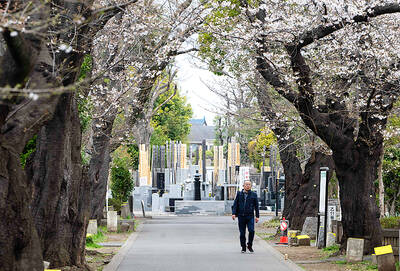
ROCKY RELATIONS: The figures on residents come as Chinese tourist numbers drop following Beijing’s warnings to avoid traveling to Japan The number of Chinese residents in Japan has continued to rise, even as ties between the two countries have become increasingly fractious, data released on Friday showed. As of the end of December last year, the number of Chinese residents had increased by 6.5 percent from the previous year to 930,428. Chinese people accounted for 22.6 percent of all foreign residents in Japan, making them by far the largest group, Japanese Ministry of Justice data showed. Beijing has criticized Tokyo in increasingly strident terms since Japanese Prime Minister Sanae Takaichi last year suggested that a military conflict around Taiwan could
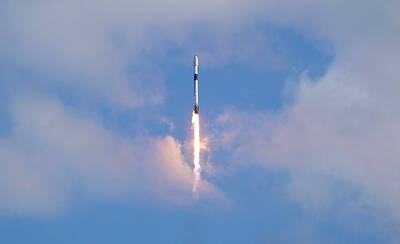
A retired US colonel behind a privately financed rocket launch site in the Dominican Republic sees the project as a response to China’s dominance of the space race in Latin America. Florida-based Launch on Demand is slated to begin building a US$600 million facility in a remote region near the border with Haiti late this year. The project is designed to meet surging demand for the heavy-lift rockets needed to put clusters of satellites into orbit. It is also an answer to China’s growing presence in the region, said CEO Burton Catledge, a former commander of the US Air Force’s 45th Operations
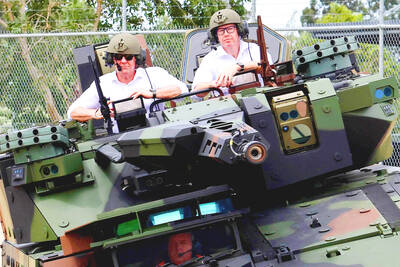
Germany is considering Australia’s Ghost Bat robot fighter as it looks to select a combat drone to modernize its air force, German Minister of Defense Boris Pistorius said yesterday. Germany has said it wants to field hundreds of uncrewed fighter jets by 2029, and would make a decision soon as it considers a range of German, European and US projects developing so-called “collaborative combat aircraft.” Australia has said it will integrate the Ghost Bat, jointly developed by Boeing Australia and the Royal Australian Air Force, into its military after a successful weapons test last year. After inspecting the Ghost Bat in Queensland yesterday,
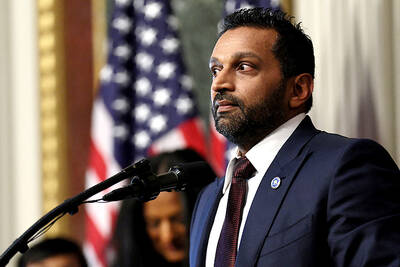
A pro-Iran hacking group claimed to breach FBI Director Kash Patel’s personal e-mail inbox and posted some of the contents online. The e-mails provided by the hacking group include travel details, correspondence with leasing agents in Washington and global entry, and loyalty account numbers. The e-mail address the hackers claim to have compromised has been previously tied to Patel’s personal details, and the leaked e-mails contain photos of Patel and others, in addition to correspondence with family members and colleagues. “The FBI is aware of malicious actors targeting Director Patel’s personal email information,” the agency said in a statement on


 RSS
RSS