


A 28-point peace plan floated by US and Russian envoys would force Ukraine to cede large chunks of territory taken by Russia, cap the size of its military and lift sanctions on Moscow over time, acceding to many of Russian President Vladimir Putin’s wartime demands.
Crimea, Luhansk and Donetsk would be “recognized as de facto Russian, including by the United States,” the proposal says, a copy of which was seen by Bloomberg News. Ukraine would also be required to hold elections in 100 days and give up any hope of NATO membership.
Kyiv’s forces would withdraw from parts of Donetsk that Russia does not occupy and that area would become a “neutral demilitarized buffer zone, internationally recognized as territory belonging to the Russian Federation,” it states, adding that Russian military would not enter this demilitarized zone.
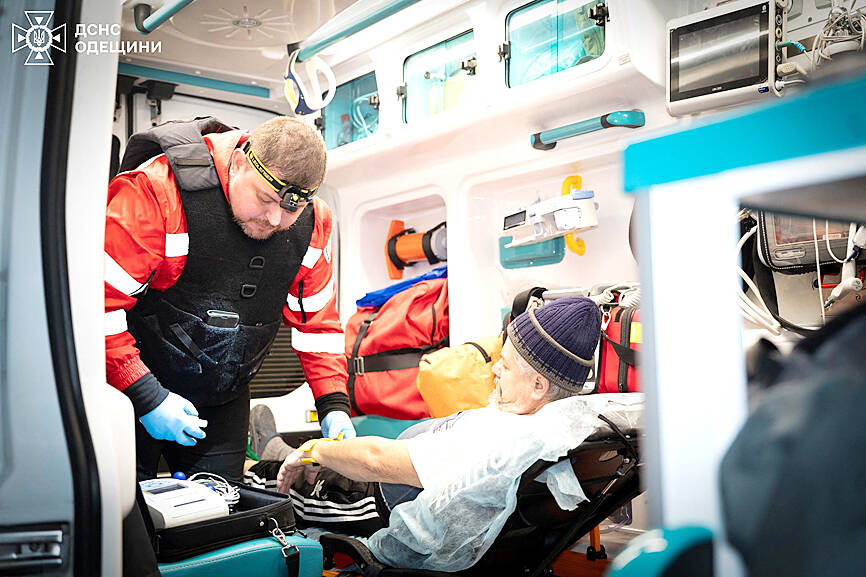
Photo: State of Emergency Service of Ukraine in Odesa via Reuters
Ukraine would receive a US security guarantee — albeit one that Washington would be compensated for. The US would also get 50 percent of profits to rebuild and invest in Ukraine, and enter an economic partnership with Russia once sanctions are lifted.
While Ukrainian President Volodymyr Zelenskiy said he was reviewing the idea, there is little indication he would be prepared to accept many of its terms. NATO members would also object, given that the plan would curtail the alliance’s ability to expand as it sees fit. Such a move would need the buy-in of all 32 of its members.
The latest proposal was worked out between US President Donald Trump’s envoy Steve Witkoff and Putin’s envoy Kirill Dmitriev, people familiar with the matter said.
While White House officials said the plan had Trump’s backing, one person familiar with the matter said conversations remain fluid.
A delegation of top US military officials, led by US Army Secretary Dan Driscoll, was in Kyiv this week discussing avenues for progress, and options include ramping up military support, the person said.
The scale of the concessions to Moscow and the US is massive, and would need buy-in from other countries not involved in the latest discussions. Not only would Ukraine have to promise not to join NATO — it would have to enshrine such a vow in its constitution. Russia would be brought back into the G8 nations, a symbolic move that would end its international isolation and is opposed by other members of the group.
It is not clear how much leeway Zelenskiy has to push back against the plan, or whether the US would use its supplies of weapons and intelligence as leverage to push Kyiv to accept.
The response from Ukraine’s allies has been swift and negative.
British Prime Minister Keir Starmer said any proposal for a peace agreement with Russia must have Ukraine’s consent. So did Greek Prime Minister Kyriakos Mitsotakis.
“A lot of the points that I saw are quite problematic,” Mitsotakis said. “We’ve also made it quite clear that at the end of the day, the most important security guarantee for Ukraine is a strong Ukrainian army.”
His remarks echoed EU High Representative for Foreign Affairs and Security Policy Kaja Kallas, who said that any attempt to bring peace to Ukraine must involve Kyiv.
While the document gives Russia much of what it wants, some vague limits would be imposed on Russia. It would be expected not to invade other countries and enshrine non-aggression toward Europe into law.
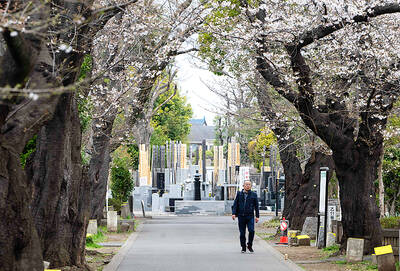
ROCKY RELATIONS: The figures on residents come as Chinese tourist numbers drop following Beijing’s warnings to avoid traveling to Japan The number of Chinese residents in Japan has continued to rise, even as ties between the two countries have become increasingly fractious, data released on Friday showed. As of the end of December last year, the number of Chinese residents had increased by 6.5 percent from the previous year to 930,428. Chinese people accounted for 22.6 percent of all foreign residents in Japan, making them by far the largest group, Japanese Ministry of Justice data showed. Beijing has criticized Tokyo in increasingly strident terms since Japanese Prime Minister Sanae Takaichi last year suggested that a military conflict around Taiwan could
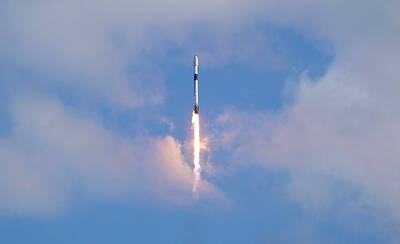
A retired US colonel behind a privately financed rocket launch site in the Dominican Republic sees the project as a response to China’s dominance of the space race in Latin America. Florida-based Launch on Demand is slated to begin building a US$600 million facility in a remote region near the border with Haiti late this year. The project is designed to meet surging demand for the heavy-lift rockets needed to put clusters of satellites into orbit. It is also an answer to China’s growing presence in the region, said CEO Burton Catledge, a former commander of the US Air Force’s 45th Operations

Germany is considering Australia’s Ghost Bat robot fighter as it looks to select a combat drone to modernize its air force, German Minister of Defense Boris Pistorius said yesterday. Germany has said it wants to field hundreds of uncrewed fighter jets by 2029, and would make a decision soon as it considers a range of German, European and US projects developing so-called “collaborative combat aircraft.” Australia has said it will integrate the Ghost Bat, jointly developed by Boeing Australia and the Royal Australian Air Force, into its military after a successful weapons test last year. After inspecting the Ghost Bat in Queensland yesterday,
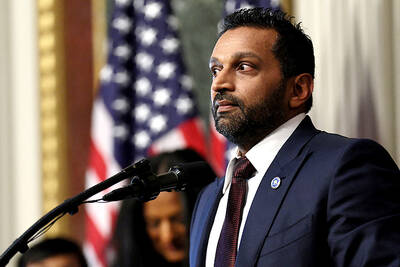
A pro-Iran hacking group claimed to breach FBI Director Kash Patel’s personal e-mail inbox and posted some of the contents online. The e-mails provided by the hacking group include travel details, correspondence with leasing agents in Washington and global entry, and loyalty account numbers. The e-mail address the hackers claim to have compromised has been previously tied to Patel’s personal details, and the leaked e-mails contain photos of Patel and others, in addition to correspondence with family members and colleagues. “The FBI is aware of malicious actors targeting Director Patel’s personal email information,” the agency said in a statement on


 RSS
RSS