


Russian President Vladimir Putin has said Russia would never bow to US pressure, but conceded new sanctions could cause some economic pain, as China and India were reported to be scaling back Russian oil imports after Washington targeted Moscow’s two largest producers.
The US on Wednesday imposed sanctions on Rosneft and Lukoil, as well as nearly three dozen of their subsidiaries, as the US President Donald Trump administration increased pressure on the Kremlin to negotiate an end to its war against Ukraine.
The EU separately agreed to a phased ban on the import of Russian liquefied natural gas, and added two Chinese oil refiners to its Russian sanctions list.
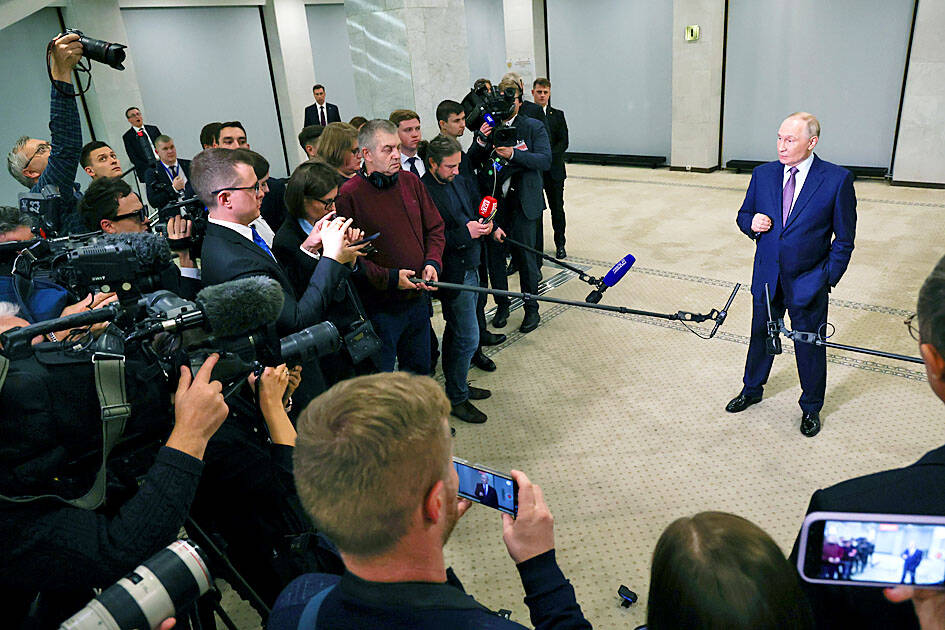
Photo: EPA
The measures against Rosneft and Lukoil — which together account for just less than half of Russia’s crude exports, and follow UK sanctions last week on the companies — were the first sanctions imposed on Moscow since Trump returned to the White House in January and are aimed at choking off the vital oil revenues that fund the Kremlin’s war machine.
Washington hopes the sanctions, which led to a 5 percent increase in global oil prices, would pressure Putin to return to the negotiating table by hitting Russia’s economic lifelines.
The Russian leader on Thursday described the US sanctions as an “unfriendly act that does nothing to strengthen Russian-American relations” and “an attempt to put pressure on Russia,” which he said was futile.
“No self-respecting country ever does anything under pressure,” Putin added in comments to Russian journalists.
While he said the new sanctions would not have a significant impact on Russia, he added that “some losses are expected.”
He also said that Trump should “think about who his administration is really working for” when advisers urge him to impose sanctions on Russian oil, adding that the measures would lead to a rise in prices.
He also said that Trump should be aware of a “very strong, if not overwhelming” response if Russia were attacked with the US Tomahawk cruise missiles that Ukraine has been seeking unsuccessfully from Washington.
The latest US sanctions bar foreign countries and companies from doing business with Moscow’s major oil producers and cut them off from much of the international financial system.
There were early signs on Thursday that Russia’s two biggest energy customers, India and China, were suspending their energy imports in response to the new US sanctions.
India’s largest buyer of Russian oil, the privately owned Reliance Industries, hinted that it was preparing to scale back or even temporarily halt purchases.
“Recalibration of Russian oil imports is ongoing and Reliance will be fully aligned with the [government of India] guidelines,” a spokesperson said.
Several sources also said that China’s state-owned oil companies have suspended purchases of seaborne Russian crude, at least in the short term, amid concerns about falling foul of the new sanctions.
The oil and gas sector accounts for about one-fifth of Russia’s GDP, and a sudden fall in demand from Russia’s two main buyers would be a devastating hit to the Kremlin’s oil revenues, while pushing global prices higher.
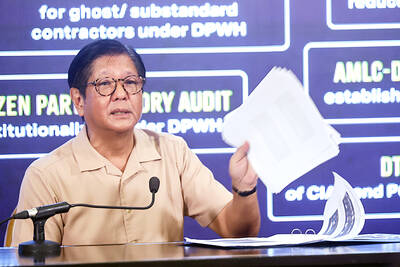
Philippine President Ferdinand Marcos Jr yesterday vowed that those behind bogus flood control projects would be arrested before Christmas, days after deadly back-to-back typhoons left swathes of the country underwater. Scores of construction firm owners, government officials and lawmakers — including Marcos’ cousin congressman — have been accused of pocketing funds for substandard or so-called “ghost” infrastructure projects. The Philippine Department of Finance has estimated the nation’s economy lost up to 118.5 billion pesos (US$2 billion) since 2023 due to corruption in flood control projects. Criminal cases against most of the people implicated are nearly complete, Marcos told reporters. “We don’t file cases for
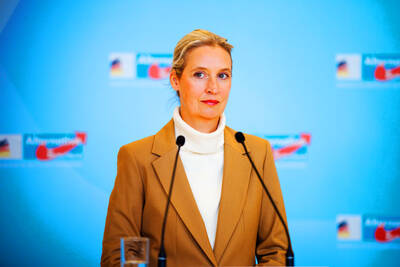
A feud has broken out between the top leaders of the far-right Alternative for Germany (AfD) party on whether to maintain close ties with Russia. The AfD leader Alice Weidel this week slammed planned visits to Russia by some party lawmakers, while coleader Tino Chrupalla voiced a defense of Russian President Vladimir Putin. The unusual split comes at a time when mainstream politicians have accused the anti-immigration AfD of acting as stooges for the Kremlin and even spying for Russia. The row has also erupted in a year in which the AfD is flying high, often polling above the record 20 percent it

Ecuadorans are today to vote on whether to allow the return of foreign military bases and the drafting of a new constitution that could give the country’s president more power. Voters are to decide on the presence of foreign military bases, which have been banned on Ecuadoran soil since 2008. A “yes” vote would likely bring the return of the US military to the Manta air base on the Pacific coast — once a hub for US anti-drug operations. Other questions concern ending public funding for political parties, reducing the number of lawmakers and creating an elected body that would
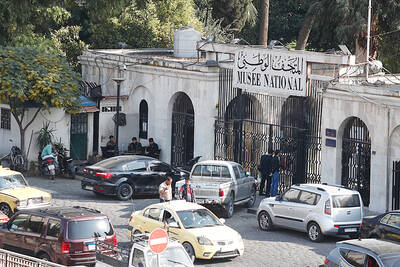
‘ATTACK ON CIVILIZATION’: The culture ministry released drawings of six missing statues representing the Roman goddess of Venus, the tallest of which was 40cm Investigators believe that the theft of several ancient statues dating back to the Roman era from Syria’s national museum was likely the work of an individual, not an organized gang, officials said on Wednesday. The National Museum of Damascus was closed after the heist was discovered early on Monday. The museum had reopened in January as the country recovers from a 14-year civil war and the fall of the 54-year al-Assad dynasty last year. On Wednesday, a security vehicle was parked outside the main gate of the museum in central Damascus while security guards stood nearby. People were not allowed in because


 RSS
RSS