


Thailand and Cambodia have agreed to an “immediate and unconditional” ceasefire from midnight to resolve deadly border clashes, Malaysian Prime Minister Anwar Ibrahim said yesterday.
Anwar, who chaired the talks as head of the ASEAN, said both sides had reached a common understanding to take steps to return to normalcy.
Cambodian Prime Minister Hun Manet and Acting Thai Prime Minister Phumtham Wechayachai have agreed to “an immediate and unconditional ceasefire with effect from ... midnight of 28 July,” Anwar said as he read out a joint statement.
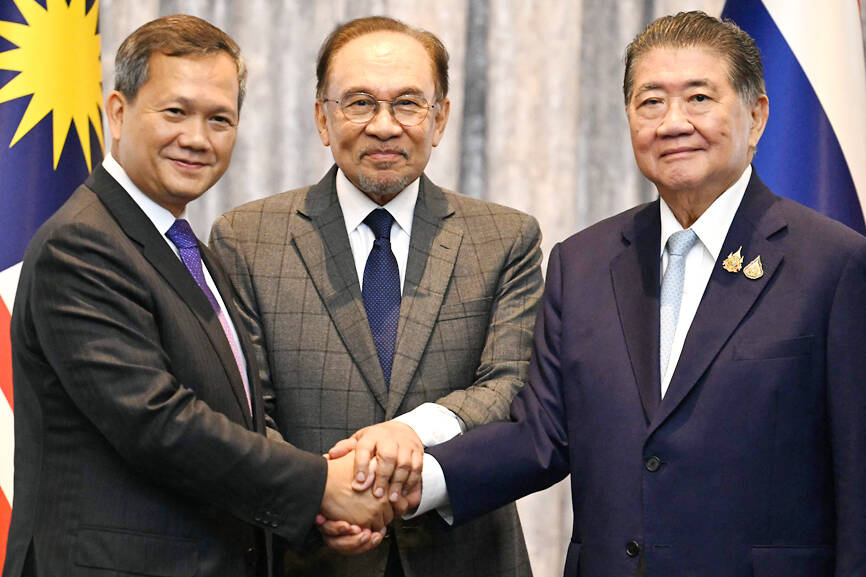
Photo: AFP
Hun Manet and Phuntam hailed the outcome of the meeting and shook hands at the conclusion of the brief press conference.
Ceasefire talks between Thai and Cambodian leaders started yesterday in Malaysia in an urgent effort to resolve deadly border clashes that entered a fifth day, despite mounting international calls for peace.
The fighting flared on Thursday last week after a land mine explosion along the border wounded five Thai soldiers. Both sides blamed each other for starting the clashes, which have killed at least 35 people and displaced more than 260,000 people on both sides.
Both countries recalled their ambassadors and Thailand shut all border crossings with Cambodia, with an exception for migrant Cambodian workers returning home.
Troops from both sides yesterday reported ongoing fighting along border areas. Gunfire could be heard as dawn broke in Samrong in Cambodia’s Oddar Meanchey Province, Associated Press reporters covering the conflict said.
Cambodian Ministry of National Defense spokesperson Maly Socheata yesterday said the Thai assault was “ongoing and strong.”
Anwar said late on Sunday that both sides would present their conditions for peace, but “what is important is immediate ceasefire.”
“I hope this can work,” Anwar was quoted as saying by Malaysian national news agency Bernama. “Although it’s not as bad as many other countries, we have to put a stop [to the violence].”
The meeting followed direct pressure from US President Donald Trump, who has warned that Washington might not proceed with trade deals with either country if hostilities continue.
Before departing for Kuala Lumpur, Phumtham told reporters in Bangkok that representatives from China and the US would also attend as observers.
He said the key focus would be on an immediate truce, but added that trust could be an issue as Cambodia has not stopped its strikes.
“We have informed that we don’t have trust in Cambodia. All they have done reflect that they are not sincere in solving this problem. So they have to show the detail how they will do to prove their sincerity,” he said.
Officials later said that the Chinese and US ambassadors to Malaysia were attending the meeting.
The violence marks a rare instance of open military confrontation between ASEAN member states, a 10-nation regional bloc that has prided itself on non-aggression, peaceful dialogue and economic cooperation.
In a statement yesterday, ASEAN foreign ministers reiterated concern over the rising death toll, destruction of public properties and displacement of a large number of people along the disputed border areas.
They urged the two countries to resolve their disputes through negotiations and expressed support for efforts to find a middle ground during yesterday’s talks.
The conflict also drew the attention of Pope Leo XIV. At the Vatican on Sunday, the pontiff said he was praying for all those affected by war in the world, including “for those affected by the clashes on the border between Thailand and Cambodia, especially the children and displaced families.”
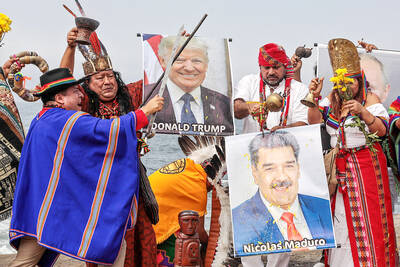
Shamans in Peru on Monday gathered for an annual New Year’s ritual where they made predictions for the year to come, including illness for US President Donald Trump and the downfall of Venezuelan President Nicolas Maduro. “The United States should prepare itself because Donald Trump will fall seriously ill,” Juan de Dios Garcia proclaimed as he gathered with other shamans on a beach in southern Lima, dressed in traditional Andean ponchos and headdresses, and sprinkling flowers on the sand. The shamans carried large posters of world leaders, over which they crossed swords and burned incense, some of which they stomped on. In this
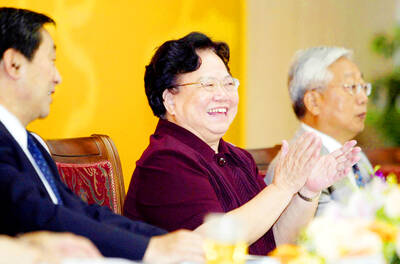
The death of a former head of China’s one-child policy has been met not by tributes, but by castigation of the abandoned policy on social media this week. State media praised Peng Peiyun (彭珮雲), former head of China’s National Family Planning Commission from 1988 to 1998, as “an outstanding leader” in her work related to women and children. The reaction on Chinese social media to Peng’s death in Beijing on Sunday, just shy of her 96th birthday, was less positive. “Those children who were lost, naked, are waiting for you over there” in the afterlife, one person posted on China’s Sina Weibo platform. China’s
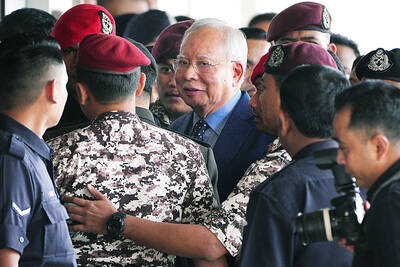
‘NO COUNTRY BUMPKIN’: The judge rejected arguments that former prime minister Najib Razak was an unwitting victim, saying Najib took steps to protect his position Imprisoned former Malaysian prime minister Najib Razak was yesterday convicted, following a corruption trial tied to multibillion-dollar looting of the 1Malaysia Development Berhad (1MDB) state investment fund. The nation’s high court found Najib, 72, guilty on four counts of abuse of power and 21 charges of money laundering related to more than US$700 million channeled into his personal bank accounts from the 1MDB fund. Najib denied any wrongdoing, and maintained the funds were a political donation from Saudi Arabia and that he had been misled by rogue financiers led by businessman Low Taek Jho. Low, thought to be the scandal’s mastermind, remains

Australian Prime Minister Anthony Albanese yesterday announced plans for a national bravery award to recognize civilians and first responders who confronted “the worst of evil” during an anti-Semitic terror attack that left 15 dead and has cast a heavy shadow over the nation’s holiday season. Albanese said he plans to establish a special honors system for those who placed themselves in harm’s way to help during the attack on a beachside Hanukkah celebration, like Ahmed al-Ahmed, a Syrian-Australian Muslim who disarmed one of the assailants before being wounded himself. Sajid Akram, who was killed by police during the Dec. 14 attack, and


 RSS
RSS