


US Secretary of State Antony Blinken insisted during a visit to Tokyo yesterday that ties with Japan were stronger than ever, days after US President Joe Biden blocked Nippon Steel’s takeover of US Steel.
Business groups say the move could have a chilling effect on Japan’s standing as the biggest foreign investor in the US, just as Washington seeks closer relations to counter China.
Two weeks before US president-elect Donald Trump takes office, and with Marco Rubio slated to replace Blinken, the top US diplomat recalled that he came to Japan on his first trip in 2021.
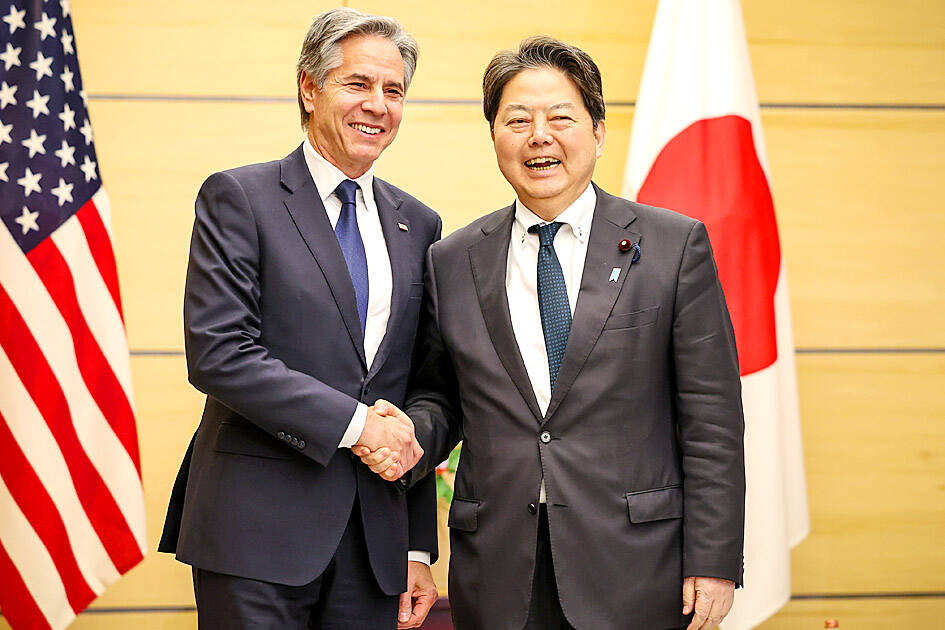
Photo: EPA-EFE
The visits at the beginning and end of his tenure show “the centrality of the US-Japan alliance” for Washington, Blinken told reporters after meeting Japanese Prime Minister Shigeru Ishiba.
“As we look at the last four years, we’ve seen an alliance, a partnership, a friendship, that’s grown stronger than it’s ever been,” Blinken said.
He pointed to expanding security ties — including three-way partnerships with South Korea and the Philippines, and a four-way grouping with Australia and India.
“Our economies are extraordinarily intertwined. We are the largest investors in each other’s economies,” Blinken said.
Japanese firms invested almost US$800 billion in the US in 2023.
Blinken made no mention of Biden’s decision last week to block Nippon Steel’s US$14.9 billion takeover of long-struggling US Steel.
The two companies filed a lawsuit on Monday against the Biden administration’s “illegal interference” in the transaction.
“We’re certain the lawsuit will reveal a set of facts that clearly violate the constitution and the law, so I believe we have a chance of winning,” Nippon Steel CEO and chairman Eiji Hashimoto said yesterday.
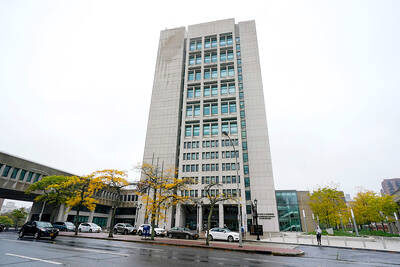
A coalition of civil rights groups on Tuesday asked a New York State judge to order one of its largest suburban counties to stop its deployment of nearly 600 license plate readers, calling it a warrantless and “indiscriminate surveillance system” that violates the state constitution. The class action lawsuit also alleged that Westchester County never got proper authorization to launch the program, which has amassed a database of 1.6 billion plate scans that has been shared with more than 50 outside law enforcement agencies. The complaint said the network “records the long-term travel patterns, daily habits, and intimate information of millions of
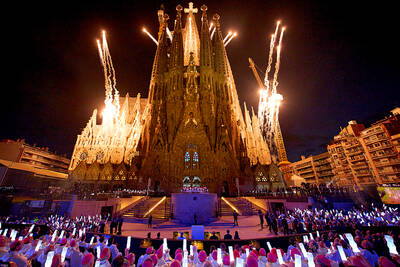
Pope Leo XIV on Wednesday blessed a giant new tower at Barcelona’s famed Sagrada Familia Basilica after celebrating mass inside what is now the world’s tallest church. A fireworks and light show illuminated the exterior of the temple at the end of the ceremony, bathing the unfinished basilica in shifting colours that highlighted its towering spires. A choir of 600 singers performed at the service which lasted around 90 minutes and was attended by Spanish Prime Minister Pedro Sanchez as well as King Felipe VI and Queen Letizia. The stained-glass windows in various colours shone brightly in between the tree-like

Scientists have discovered communities of marine life — including jellyfish, tubeworms and brittle stars — thriving on a whale graveyard. The graveyards form when whale carcasses fall to the sea floor, becoming a sustaining snack for nearby critters. This one, which is up to 7km below the surface of the southeastern Indian Ocean, spans the largest area, and is so far the deepest found. A whale’s sheer size and the unique chemistry of its bones are the keys to forming these unique underwater neighborhoods, said Song Xikun (宋希坤), a biologist with the Chinese Academy of Sciences’ Institute of Deep-sea Science and Engineering
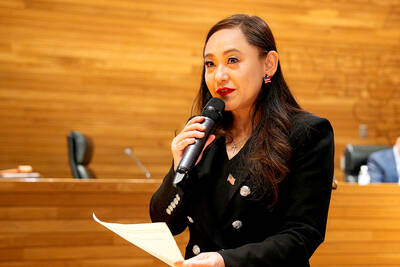
IMAGE ‘DAMAGED’? Ted Tseng, who emigrated to the US from Taiwan, was concerned the espionage case would deepen animosity against Asian Americans In 2024, voters in the Southern California city of Arcadia elected the first all-Asian city council in the city’s history. Now, one of those politicians has pleaded guilty to being an illegal agent of the Chinese government. Former Arcadia mayor Eileen Wang’s (王愛琳) plea, entered in federal court on Friday last year, continues a saga that some residents of the area worry could bring unfair scrutiny on the broader Chinese and Asian American community. Arcadia has gone under rapid demographic change in the past two decades as immigrants from Taiwan, China and Hong Kong flocked to the San Gabriel Valley


 RSS
RSS